Inside Edmonton

Pabian Realty Presents

Sign up below for new weekly content on the market, the charm, and the people that make Edmonton like no other city in Canada

What’s happening in the market today?

RSS

Open House. Open House on Sunday, November 16, 2025 1:00PM - 4:00PM

Please visit our Open House at 6 6004 Rosenthal Way in Edmonton. See details here

Open House on Sunday, November 16, 2025 1:00PM - 4:00PM

This meticulously maintained home features a professionally upgraded and fully permitted finished basement. Located next to a multi-use trail, near a future school site and on a major bus route, you'll enjoy balance between peace and quiet with easy access to amenities, shopping, and recreation. The cozy living room boasts lots of natural light and seating, perfect for entertaining. Outside you'll enjoy a full patio with planters and enough space for several chairs - perfect for relaxing with a good book. Upstairs features a generous primary bed with blackout curtains, and the east exposure is great for gorgeous sunrises to start any day. Future LRT access and shops being added weekly to the Webber Greens shopping area make this a perfect location that will grow up with you. You're also walking distance to maintained trails year round, a spray park, bike paths that connect you to the river valley and so much more. Starbucks, Save-On-Foods, No Frills, A&W, Brewhouse and more within walking distance!

Read

New property listed in Rosenthal

I have listed a new property at 6 6004 Rosenthal Way in Edmonton. See details here

This meticulously maintained home features a professionally upgraded and fully permitted finished basement. Located next to a multi-use trail, near a future school site and on a major bus route, you'll enjoy balance between peace and quiet with easy access to amenities, shopping, and recreation. The cozy living room boasts lots of natural light and seating, perfect for entertaining. Outside you'll enjoy a full patio with planters and enough space for several chairs - perfect for relaxing with a good book. Upstairs features a generous primary bed with blackout curtains, and the east exposure is great for gorgeous sunrises to start any day. Future LRT access and shops being added weekly to the Webber Greens shopping area make this a perfect location that will grow up with you. You're also walking distance to maintained trails year round, a spray park, bike paths that connect you to the river valley and so much more. Starbucks, Save-On-Foods, No Frills, A&W, Brewhouse and more within walking distance!

Read

Edmonton Real Estate Market Update — October 2025

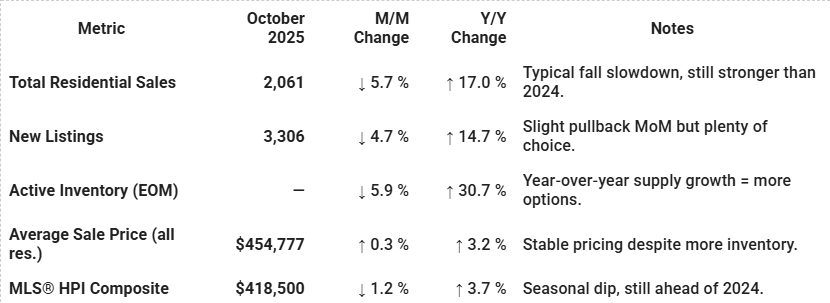
October brought Edmonton’s market a few steps closer to balance. Activity cooled slightly from September—as expected in the fall—but both sales and prices remain stronger than a year ago. The story right now: more listings, a bit more negotiation, and continued stability for well-priced homes.

At a Glance — City of Edmonton (October 2025)

Source: REALTORS® Association of Edmonton — October 2025 Market Update🏘️ Segment Breakdown — October 2025

🏘️ Segment Breakdown — October 2025

What This Means for Buyers

More balance = more breathing room. Inventory is up 30 % over last year, so you can shop and compare without the panic of 2024’s bidding frenzy. This is especially true for semi-detached, rowhouses, and condos where longer days-on-market are creating negotiation opportunities.

Detached homes remain competitive. Well-priced properties still move quickly. The difference now is that you can make decisions based on value rather than urgency.

Pro tip: Get pre-approved with a 90–120 day rate hold, then track micro-market data weekly. That’s how we spot undervalued listings before the crowd.


What This Means for Sellers

Price for today’s market — not for spring. Buyers are more price-sensitive as inventory rises. The first two weeks on market are critical: homes that launch close to recent comps see the most activity and best offers.

Presentation sells. With more competition, details matter: fresh paint, decluttered spaces, strong lighting, and professional media help you stand out. Detached sellers still see steady demand; semis and condos require a tighter marketing plan and strategic incentives like flexible possession.

Local data over headlines. Market averages hide neighbourhood differences. I’ll run a hyper-local CMA for your property and adjust pricing within two weeks if showings don’t convert.


Planning a Move in Early 2026?

The timing could be ideal. Two tailwinds are working in your favour:

  1. More inventory than last year, giving buyers time and options to find the right fit without bidding pressure.

  2. The Bank of Canada’s October rate cut (–25 bps to 2.25 %) has already boosted buyer confidence. While mortgage rates don’t move in lockstep with the policy rate, the cut helps hold borrowing costs steady heading into 2026.

If you’re buying: We may benefit from putting a focus on properties that have been listed longer than 30 days or have recent price adjustments — often your best entry points.
If you’re selling: Start prep now. Aim for a late-winter launch when active inventory is at its lowest. Well-timed, well-priced homes still command strong results.


FAQ

Is Edmonton in a buyer’s market yet?
Not yet. October’s trend shows the market balancing out, but with only around 2.7 months of inventory, it still leans toward sellers overall.

What segment offers the best opportunity right now?
Condos and some row homes offer the most negotiating power, especially in areas with higher supply and longer DOM.

Should I wait until spring to list?
Not necessarily. Motivated buyers remain active through winter — and less competition often means more attention on your listing.


Let’s Make a Plan

If you’re thinking about buying, selling, or planning a move in early 2026, now’s the time to get ahead of the market. Let’s build a custom strategy for your neighbourhood and goals that’s based on your reality and what you’re looking to achieve. Call or text Mike Pabian at 780-232-2064 or email mike@pabianrealty.ca.

Sources

  • REALTORSÂŽ Association of Edmonton, Softening Edmonton market makes a shift towards balance (October 2025 data; published Nov 3 2025).

  • Bank of Canada, Policy Rate Lowered to 2.25 % (Oct 29 2025).

Read

What Happens After You Sell? Your Alberta Home-Seller Closing Guide

You’ve accepted an offer, conditions are waived, and the countdown to possession is on. From here to keys-handed-over, a lot happens behind the scenes—lawyers, paperwork, payouts, adjustments, movers, utilities, and (yes) timing curveballs. This guide walks Edmonton sellers through what happens after condition removal, what you’re responsible for, and how to avoid last-minute stress.

1) Loop in your real estate lawyer (right away)

As soon as conditions come off, your lawyer starts “conveyancing”—coordinating documents, payoffs, and the transfer of title/funds. They’ll ask for:

  • The signed purchase contract and any amendments

  • Two pieces of government ID (for FINTRAC—more on that below)

  • Your mortgage details (lender, account, payout date)

  • Any lines of credit on title

  • A void cheque for surplus-proceeds deposit

They’ll book your signing 5–10 business days before possession to review the Statement of Adjustments (what gets debited/credited) and your payout numbers. The signing is an in-person meeting where you will discuss the final details of the transaction. You will go over who gets what, including a detailed overview of fees owing. These can include cooperating commissions to the buyer’s agent, owed back taxes, outstanding HOA fees and the cost of a Title Insurance policy, if you are offering this in lieu of a Real Property Report and compliance certificate. If you’re buying another place the same day, work with your Realtor and lawyer now so they can coordinate money flows and timing.

Why timing matters: Alberta Land Titles has had periodic backlogs that can ripple into how firms schedule and process files. The province has even adjusted counter services to help address processing delays—another reason to give your lawyer runway. (Alberta.ca)


2) Understand your key deliverables as a seller

The Real Property Report (RPR) + municipal compliance (single-family/fee simple)

In a typical Alberta resale, the standard contract requires the seller to provide a Real Property Report with evidence of municipal compliance (unless the parties agreed on a different arrangement like title insurance). Practically, that means your RPR must reflect current improvements (decks, sheds, fences, AC pads, etc.). If you built since your last RPR, you may need a new one or an update. (galbraith.ab.ca)

Quick hits:

  • “Current” refers to accuracy, not age; what matters is that the RPR shows present-day improvements. Your RPR could be considered current if no modifications have been made to the structures or features of the property, even if the document itself is several years or even decades old. (documents.lawsociety.ab.ca)

  • If compliance is tough (e.g., an old fence encroaches), your lawyer can discuss options—including whether title insurance is acceptable under your contract—before you commit to a path. (Robertson LLP.)

Condo sellers: Estoppel certificate + fee status

If you’re selling a condominium, your lawyer typically orders an estoppel certificate from the corporation. Lenders rely on it to confirm fee amounts, arrears, special assessments, and insurance particulars right up to completion. Order it early to avoid rush fees. (galbraith.ab.ca)


3) FINTRAC identity verification (yes, for sellers too)

Canada’s anti-money-laundering rules require identity checks on real estate transactions. Expect your brokerage and/or lawyer to verify and record your ID. It’s quick but mandatory—build it into your to-do list. This is absolutely non-negotiable, and the transaction can not go through until this is completed. All that your realtor will need in order to complete this on your behalf is a current copy of your ID. Buyers have this too and it is a legal requirement for all transactions nationwide. (Mike Pabian)


4) The Statement of Adjustments: where the math happens

Your lawyer prepares a statement that reconciles what you owe and what you’re owed on possession day:

  • Debits: mortgage/LOC payouts, real estate commissions, property tax share, condo fees to possession, any agreed holdbacks

  • Credits: buyer’s deposit, buyer’s share of property taxes/condo fees after the possession date (if you prepaid), any prepaid utilities that are adjustable under your contract

You’ll review and sign this at your appointment so your lawyer can disburse funds accurately on possession.


5) Mortgage payout & penalties

Your lawyer requests an official payout statement from your lender for the possession date. If you’re breaking a fixed term, there may be an interest-rate differential (IRD) or three-month-interest penalty. This comes off the sale proceeds automatically—no separate cheque required.

Tip: If you’re porting your mortgage to your next home, loop in your lender early so the “sell” and “buy” legs line up. Your lawyer can coordinate funds if both deals close the same day.


6) Tenanted properties: deposits, notices, and handover

Selling with a tenant? Alberta’s Residential Tenancies Act has rules around notice, showings, and—on sale—transferring the tenant’s security deposit to the new owner with a statement of account. Your lawyer handles the adjustments, but you’re responsible for ensuring compliance. (Alberta.ca)

Heads-up: Some buildings also require separate “building” deposits (common in condos) that may need to be adjusted or transferred on sale—your lawyer will include these on the statement. (clarklegal.com)


7) What condition must you leave the home in?

Short answer: as agreed in your contract. Practically, Edmonton buyers expect “broom-clean,” all included fixtures/chattels left in place, and systems in the same working order as when the offer was accepted (ordinary wear and tear excepted). If anything changes before possession (e.g., a leak), disclose it to your agent/lawyer immediately so you can resolve it well before key release.

While it’s not legally required that you clean the house before you leave it for the buyers, it is common courtesy. Mike works with cleaners that are able to complete a move-out clean quickly and efficiently, and Mike has also been known to provide this as a gift to his clients in the right circumstances.

Pro move: Book cleaners for the day before possession and photograph rooms once empty as proof that cleaning occured.


8) Utilities, property taxes, and final reads

  • Utilities: Call to cancel/transfer service effective possession day and arrange final meter reads (power, gas, water). Keep confirmation numbers.

  • Property taxes: You’ll be credited/debited for your share up to possession. If Land Titles registration delays mean assessment notices still come to you later, forward them to the buyer or your lawyer—municipalities note ongoing Land Titles backlogs. (HTM Law | Edmonton Lawyers)


9) Possession day: when do the buyers get keys?

Your lawyer receives the buyer’s funds. Once funding is confirmed, the buyer’s agent gets the official go-ahead to release keys. Even if the contract says noon, expect variability due to bank cut-off times, wire queues, and law-office workflows. If anyone’s closing on a Friday (or before a long weekend), small hiccups can push key release later in the day. Stagger movers accordingly. (I advise buyers and sellers to avoid Monday and Friday when possible.) Also note that it’s not possible to have a possession day during the 2 weeks that the Government of Alberta is closed over the Christmas break, as all land titles offices will be closed. (Mike Pabian)


10) Holdbacks, repairs, and “after-close” loose ends

If you agreed to complete repairs before possession, your lawyer may structure a holdback until proof of completion is provided. Keep invoices/warranties handy. For condos, special-assessment timing can also trigger adjustments or targeted holdbacks—your lawyer will advise based on your contract and the corporation’s status. Holdbacks can be contentious and aggravating to both parties, so be sure to discuss your options with both your lawyer and your realtor.  (galbraith.ab.ca)


11) What happens to your money?

After paying out mortgages/LOCs, commissions, adjustments, and any holdbacks, your lawyer deposits the net proceeds into your account (same day or next banking day, depending on timing). If you’re closing a purchase the same day, funds may move directly between trust accounts to keep everything on schedule. It’s important to note that given the amount of money that is being moved, you may not have full access to all funds for up to a week after closing, depending on your bank’s policies.


12) Common seller mistakes (and how to dodge them)

  • RPR surprises late in the game. If you added or altered structures since your last RPR, talk to your lawyer early and book the surveyor if needed. (Robertson LLP.)

  • Ordering the condo estoppel too late. Leave buffer to avoid rush fees or closing delays. (galbraith.ab.ca)

  • Friday closings with noon movers. Build in slack; keys only release after funding. (Mike Pabian)

  • Forgetting security-deposit transfer on tenant sales. It must follow the property—with proper accounting. (Alberta.ca)

  • Assuming Land Titles is instant. Backlogs happen; stay responsive to your lawyer’s requests so your file isn’t one of the ones that gets kicked back for corrections. (Law Society of Alberta)


Seller’s mini-timeline (Edmonton, typical resale)

  • Day 0: Conditions removed. Hire/confirm lawyer. Start RPR/estoppel tasks.

  • Day 3–5: Lawyer requests mortgage payout and drafts early adjustments.

  • ~1 week before possession: Sign with your lawyer; adjustments finalized.

  • Possession day: Buyer’s funds land → your lawyer confirms funding → keys released → proceeds disbursed.

  • After: Cancel utilities, keep records, and forward any stray mail or tax notices if they arrive due to Land Titles lag. (HTM Law | Edmonton Lawyers)


FAQ (For Alberta Sellers)

Do I always have to provide an RPR with compliance?
In a typical Alberta resale using the standard contract, yes—that’s the default. Parties can agree to alternate arrangements (e.g., title insurance), but that must be negotiated. If you’ve added improvements, expect to update the RPR. (galbraith.ab.ca)

How “new” does my RPR need to be?
There’s no strict age limit; it just needs to accurately show current improvements. Municipal compliance relates to what’s on the ground today. (documents.lawsociety.ab.ca)

I’m selling a condo. What’s this estoppel certificate and who pays?
It’s proof from the condo corporation about fee amounts, arrears, insurance, and financial status. The seller’s lawyer usually orders it and the seller commonly pays (check your contract). Order early to avoid rush charges. (galbraith.ab.ca)

We have a tenant. What happens to the security deposit?
It must be transferred to the buyer with a statement of account, and interest rules apply under the Residential Tenancies Act. Your lawyer will adjust it on closing. (Alberta.ca)

Why do closings sometimes miss “noon” possession?
Keys only release after funds are received and verified. Wires, bank cut-offs, and law-office workflows can push timing—especially on Fridays and long-weekend eves. (Mike Pabian)

Land Titles shows delays—does that affect me?
Registration backlogs don’t usually stop you from closing, but they can affect how municipalities route tax mail and how lawyers schedule filings. Stay responsive and expect your lawyer to double-check documents to avoid rejections. (Alberta.ca)


Final thoughts

Selling is a project with a lot of moving parts—but with the right prep (RPR/estoppel early, clean condition, utility planning) and a proactive lawyer, possession day can be smooth and drama-free. If you’d like my checklists (cleaning, utility notifications, movers) or you want me to quarterback the timeline with your lawyer and the buyer’s agent, I’m happy to make this easy.

Disclaimer: This is general information for Alberta resales and isn’t legal advice. Always confirm specifics with your lawyer and your purchase contract.

Read

Your First Home in Edmonton in 2026: What to Know & How to Plan (From a Local REALTORÂŽ)

If you’re aiming to buy your first place in Edmonton in 2026, you’re already doing the smartest thing—starting early. Edmonton’s market rewards preparation: a clear budget, a steady plan, and a local guide who can translate policy changes (and winter-reality house details) into good decisions. Below is my complete game plan—how to prep month-by-month, what costs to expect, and how to make sure the home you choose is one you’ll love living in.


Step 1: Build a realistic 2026 money plan

First Home Savings Account (FHSA — “First Home Savings Account”).
Open and fund your FHSA as early in the year as you can. Contributions are tax-deductible, and qualifying withdrawals are tax-free when you buy a first home (annual room $8,000, lifetime $40,000). I’ll help you plan the timing so your tax refund boomerangs back into your down payment. (Canada.ca)

Home Buyers’ Plan (HBP — “Home Buyers’ Plan”).
You can withdraw up to $60,000 from your RRSP for a qualifying purchase, and you can use HBP and FHSA together if you meet each program’s conditions. We’ll map a repayment plan that keeps your monthly budget comfortable. (Canada.ca)

Down payment rules (Canada-wide).

  • Up to $500,000: 5% minimum.

  • $500,000–$1,499,999: 5% of the first $500,000 + 10% of the rest.

  • $1,500,000+: 20% (no mortgage default insurance available). (Canada.ca)

Why this matters now: Canada raised the insured-mortgage price cap from $1,000,000 to $1,500,000, and first-time buyers of new builds can access 30-year insured amortization—a combo that can lower the monthly payment on certain properties (while total interest over the life of the mortgage will be higher). (Canada.ca)

It’s also important to remember that your debt ratios (the amount of money you have versus how much you owe) will come into play. Therefore, it’s very important to be patient. Don’t go out and purchase a new vehicle, or a bunch of furniture and electronics, on credit unless you can pay these items off in full prior to your move in day. Otherwise, these wants can potentially prevent you from qualifying for the type of home you want.


Step 2: Qualify wisely (and painlessly)

Pre-approval > rate email.
A true pre-approval stress-tests your file under current underwriting rules and the Minimum Qualifying Rate (MQR)—that’s the “mortgage stress test,” which is the greater of your contract rate + 2% or 5.25% for uninsured mortgages. We’ll use that higher number to “pressure-test” your budget so you don’t get surprised later. (OSFI)

If you aren’t sure where to start, call or text Mike Pabian at 780-232-2064. He works with mortgage professionals that can help you come up with a plan, whether you’re looking to purchase now, next month, or years down the road. It’s literally our job, so don’t be shy!

Credit tune-up.
Six to nine months before you buy: pay down revolving balances, avoid new loans/credit cards, and keep clean payment history. This lines up with the best-practice lists for first-timers (and it’s exactly what lenders look at). (RE/MAX Canada)


Step 3: Choose your lane—new-build vs resale

New-build advantages (especially for first-timers).

  • Potential for 30-year insured amortization on newly built homes (first-time buyers).

  • Builder warranty, energy-efficiency upgrades, and possession dates that give you runway to save a little more.
    Trade-offs: watch for upgrade pricing, GST treatment on new homes, and possible build-delay overlap with your current rent. (CMHC applies a 0.20% premium surcharge on insured 30-year files.) (cmhc-schl.gc.ca)

Resale advantages.

  • Faster possession in established neighbourhoods (think Edgemont, The Hamptons, Secord, Rosenthal, Lymburn).

  • Mature trees, finished landscaping, and comparable sales data you can see.
    Trade-offs: older mechanicals to evaluate—insulation, windows, furnace, grading, roof/attic ventilation (Edmonton winters make these critical).


Step 4: Tour with intent (and an Edmonton lens)

Before we book showings, we’ll lock your must-have vs nice-to-have list (garage depth, parking, pet rules, commute, school access, yard). Then we’ll overlay Edmonton-specific checks: snow load on roofs, window condition, attic insulation/venting, and sump/backwater setups in areas that need them. RE/MAX’s national first-timer guides echo this structure—it’s how you avoid regret. (RE/MAX Canada)


Step 5: Offers, conditions, and timing that work

Your offer strategy should fit both the house and the week you write it:

  • Finance condition that actually gives your lender/insurer time.

  • Inspection that covers roof, attic, structure, grading, HVAC (the winterizers).

  • Condo docs (for condos) reviewed by a pro.

  • Possession dates that line up with movers (and snowstorms).


Step 6: Closing costs in Alberta (separate from your down payment)

Alberta doesn’t have a land-transfer tax, but you’ll budget for Land Titles registration fees on title and mortgage, plus legal fees, inspection, appraisal if required, and tax/utility adjustments. The provincial fee formula is $50 base + $5 per $5,000 (or portion) of value for both transfers and mortgages; I’ll quote the exact amounts for your price point before we write an offer. (Alberta.ca)


What default insurance is (and when you’ll see it)

Mortgage default insurance (CMHC, Sagen, Canada Guaranty) is typically required when your down payment is under 20%. Premiums are a percentage of the mortgage amount and usually get added (“capitalized”) to your mortgage. If you choose a 30-year insured amortization under the new-build/first-time rules, CMHC adds a 0.20% premium surcharge. We’ll price your exact scenario so there are no surprises. (cmhc-schl.gc.ca)


A do-now checklist (12 months to keys)

  • Open/fund your First Home Savings Account (FHSA); schedule contributions around tax time. (Canada.ca)

  • Map a Home Buyers’ Plan (HBP) withdrawal (up to $60,000) and the repayment. (Canada.ca)

  • Get a real pre-approval that models the MQR stress test, not just a rate e-mail. (OSFI)

  • Price Alberta Land Titles fees and inspections so your closing buffer is realistic. (Alberta.ca)

  • If new-build is on your radar, compare 25- vs 30-year insured payments and possession timelines. (cmhc-schl.gc.ca)

  • Use a simple wants/needs framework to keep search energy focused. (RE/MAX Canada)


Edmonton examples: minimum down payments (quick math)

  • $400,000 home → $20,000 minimum (5%). (Canada.ca)

  • $550,000 home → $25,000 (first $500k at 5%) + $5,000 (10% of $50k) = $30,000. (Canada.ca)

  • $700,000 home → $25,000 + $20,000 (10% of $200k) = $45,000. (Canada.ca)

  • $1,200,000 home → $25,000 + $70,000 (10% of $700k) = $95,000. (Insurable under the $1.5M limit if it meets insurer rules.) (Canada.ca)


Where this playbook aligns with national guidance

RE/MAX’s first-time buyer resources are spot-on about pre-approvals, budgeting, and a clear wants/needs list—we’re taking those best practices and applying them to Edmonton streets, winter realities, and Alberta closing fees. (RE/MAX Canada)


FAQ (First-Timer Edition, 2026)

Q: What’s the minimum down payment—really?
A: Canada’s rules are tiered: 5% up to $500,000; 5% of the first $500,000 + 10% above that to $1,499,999; and 20% at $1.5M+ (no insurance available). We’ll also confirm that your price and file meet the current insured-mortgage rules. (Canada.ca)

Q: What’s the “stress test” and how does it affect me?
A: The Minimum Qualifying Rate (MQR), often called the stress test, means lenders must qualify you at the higher of your contract rate + 2% or 5.25% for uninsured mortgages. We use that rate to make sure your payment is comfortable under different scenarios. (OSFI)

Q: Can I use both the FHSA (First Home Savings Account) and HBP (Home Buyers’ Plan)?
A: Yes—you can combine them if you qualify for each. FHSA has $8k/year and $40k lifetime limits; HBP lets you withdraw up to $60k from your RRSP. Done right, that pairing can materially boost your down payment and reduce monthly payments. (Canada.ca)

Q: What changed about insured mortgages and amortizations?
A: Two big shifts: the federal insured-mortgage price cap increased to $1.5M, and 30-year insured amortizations became available to first-time buyers of new builds (with a small premium surcharge). Those changes can help payment-sensitive buyers, especially on new construction. (Canada.ca)

Q: Is the First-Time Home Buyer Incentive still around?
A: No—the program stopped accepting new applications in March 2024. We’ll focus on FHSA, HBP, and lender options instead. (cmhc-schl.gc.ca)

Q: What closing costs should I expect in Alberta?
A: Plan for legal fees, inspection, appraisal (if required), tax/utility adjustments, and Land Titles registration fees. Alberta’s formula is $50 base + $5 per $5,000 (or portion) of value for both transfers and mortgages. I’ll run exact numbers for your target price. (Alberta.ca)

Q: Should I choose fixed or variable?
A: We’ll model both under the MQR and compare cash-flow, prepayment flexibility, and renewal risk to your comfort level. There isn’t a one-size-fits-all answer—your sleep-at-night factor wins. (OSFI)


Let’s make a 2026 plan that fits you

If you want a calm, step-by-step path to keys this year—without buyer’s remorse—I’ll quarterback the whole thing: FHSA/HBP plan, pre-approval strategy, neighbourhood short-list, and a contract/conditions game plan that fits the week you write. When you’re ready, I’ll also run side-by-side payment scenarios (5%, 10%, 15%, 20% down; 25- vs 30-year where eligible) so you can see it all in black and white.

Call/Text Mike Pabian — Pabian Realty (RE/MAX Excellence)
First-time buyer consults are zero-pressure. I’ll bring the coffee and the spreadsheets.


Sources & further reading

  • RE/MAX Canada: 5 Essential Tips for First-Time Homebuyers; 10 Tasks to Do Now if You Plan to Buy a Home in 2026; How to Buy a New Home in Canada as a First-Time Homebuyer. (RE/MAX Canada)

  • Government of Canada (FCAC/CRA): Minimum down-payment rules; FHSA contribution and deduction limits; HBP rules and $60,000 withdrawal limit. (Canada.ca)

  • Department of Finance Canada / CMHC: Insured-mortgage cap increased to $1.5M; 30-year insured amortization for first-time buyers of new builds; CMHC 30-year premium surcharge (0.20%). (Canada.ca)

  • CMHC: First-Time Home Buyer Incentive — program closed to new applications (March 2024). (cmhc-schl.gc.ca)

  • Government of Alberta: Land Titles & Surveys common document fee schedule (formula for transfer/mortgage registration). (Alberta.ca)

General information only—verify details with your lender, lawyer, and accountant. I’ll help coordinate the team so nothing falls through the cracks.

Read

Land Lease Communities in Edmonton: What They Are, How They Work, and Whether They’re a Good Fit for You

If you’re hunting for a more affordable way to get into a home in Edmonton—without giving up a yard, a driveway, and a little breathing room—you’ve likely stumbled across land lease communities. They show up under a few labels (“land lease,” “leasehold,” “manufactured home community,” “pad sites”), and for the right buyer they can be a smart, budget-friendly path into homeownership.

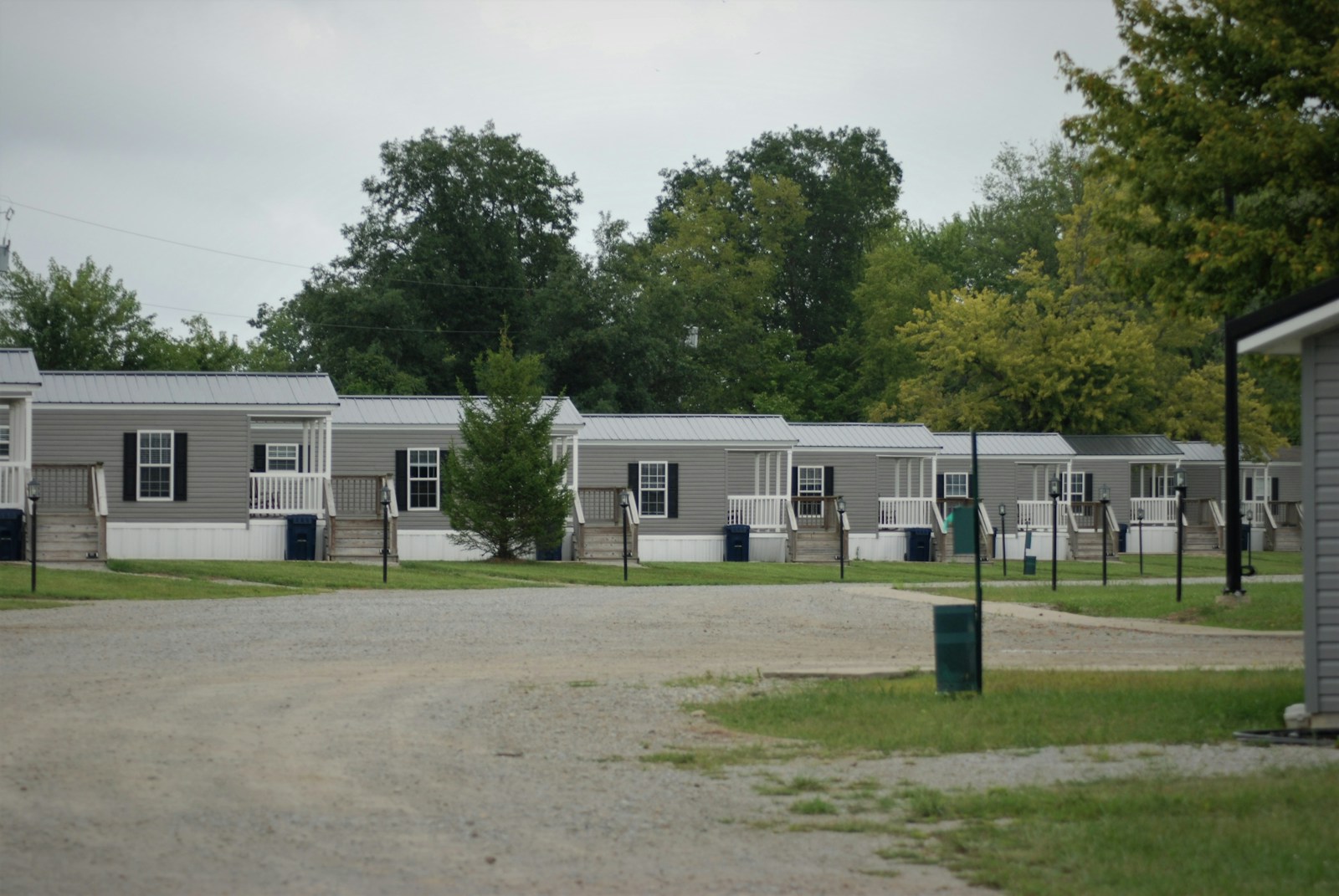
Here’s the full picture in plain English: what land lease communities are, how they differ from buying a condo or fee-simple townhome, how financing and Alberta’s rules come into play, and the real-world pros and cons for buyers and sellers. In the Edmonton area, there are 3 main communities - Evergreen, Maple Ridge, and Westview Village.

Quick definition: in a land lease, you own the home but lease the land underneath it from a community owner or landlord. You pay monthly pad/site rent for the lot, and you’re responsible for the house itself. (RE/MAX Blog)

What is a Land Lease Community?

At its simplest, a land lease community is a neighbourhood where residents own their dwelling (often a manufactured or modular home, sometimes site-built) but rent the lot it sits on. In Alberta, when you own the home and rent the site, your tenancy is governed by the Mobile Home Sites Tenancies Act (MHSTA)—a statute with rules specific to mobile/manufactured home sites (rent increases, notices, assignments, dispute resolution, etc.). (Alberta.ca)

Many communities include paved roads, landscaping, and basic services; some add amenities like a clubhouse or park space. You’ll typically budget for:

  • Pad (site) rent to lease the lot

  • Utilities/services (sometimes bundled)

  • Insurance, taxes, and maintenance on your home (the community owner covers land costs; your lease explains the breakdown)

Leasehold vs. Freehold (and Where Condos Fit)

  • Freehold single family/townhome: you own land + building.

  • Condominium: you own your unit plus a share of common property through the condo corporation; you pay condo fees for operations and reserves.

  • Leasehold (land lease): you own the structure but lease the land from a landlord; you pay pad rent and follow community rules.

Functionally, leasehold swaps the condo board for a landlord/community operator and swaps the condo fee for pad rent (some communities also have HOA-style fees if they offer additional amenities). RE/MAX Canada’s primers on land leases underline these differences and why buyers consider the model in the first place. (RE/MAX Blog)

How Long Are Land Leases?

Across Canada, long-term leases are common—often 20 to 99 years—with the agreement spelling out payment schedules, permitted uses, renewal mechanics, and how fees can be reviewed or adjusted. Always read those sections closely and line them up with your intended holding period. (RE/MAX Blog)

Financing: The Big Non-Negotiable

Before you shop, talk to your mortgage broker about current leasehold underwriting. For insured loans, CMHC typically requires the remaining lease term at the start of the mortgage to exceed the amortization by at least five years; importantly, renewal/option periods usually don’t count toward that test. If the lease is too short, financing can be limited or more expensive. (Your lender’s policy controls—confirm for your file.) (CMHC)


Land Lease vs. Condo vs. Freehold: The Side-by-Side

Feature Land Lease (Leasehold) Condo (Unit in a Condo Corp) Freehold Townhome
You own… The home The unit + share of common property Land + building
Monthly mandatory cost Pad rent (site), sometimes HOA Condo fee None (beyond taxes/HOA if present)
Rulebook Lease + community rules Bylaws, board rules Municipal bylaws; any HOA
Financing nuance Lease term must satisfy lender/insurer rules Standard condo underwriting Standard freehold underwriting
Exit complexity Buyer must accept lease + get landlord approval Buyer accepts bylaws/financials Typical resale process

(Details vary. Your offer should be conditional on financing and legal review of the lease or bylaws/estoppel package.)


Why Buyers Choose Land Lease (Pros)

Lower upfront price. Because you’re not buying the land, purchase prices for the home are usually lower than comparable freehold properties—one of the biggest drivers for first-time buyers and downsizers. RE/MAX highlights affordability as a core benefit. (RE/MAX Blog)

Access to better locations or amenities. Some land lease communities sit in desirable areas or package in amenities—clubhouses, greenspace, sometimes security—delivering lifestyle value without the land price tag. (RE/MAX Blog)

Simple living, community feel. Consistent standards, quiet internal roads, and a neighbourly vibe are common draws.

Budget clarity. Pad rent is known in advance and is governed by the MHSTA’s rules on notice and increases, so you can plan cash flow more confidently. (Alberta.ca)


Where Land Lease Can Fall Short (Cons)

You still have a monthly site cost. Pad rent sits beside your mortgage, utilities, and insurance. Leases can include periodic reviews or renewal adjustments—model both the likely and worst-case scenarios in your budget. (RE/MAX Blog)

Lease term risk. A short remaining term can limit financing and affect resale value (remember the CMHC “amortization + five years” rule of thumb). (CMHC)

Rules and approvals. Expect community standards: pets, parking, exterior changes, additions—all subject to the lease and operator approvals.

Resale complexity. Your buyer must qualify with both the lender and the landlord and accept the lease. Higher pad rent or restrictive rules can narrow the buyer pool vs. a similar freehold.

Appreciation dynamics. Because you’re not buying the land, your equity growth is tied more to the home’s condition, age, and demand than to rising land values. RE/MAX calls out the potential for lower appreciation relative to freehold in some markets—something to bake into your long-term plan. (RE/MAX Blog)


Seller/Homeowner Considerations

Pros:

  • Stable demand at lower price points. Separating land cost can open the door to first-time buyers and right-sizers.

  • Predictable community standards. Well-run sites maintain curb appeal, which helps values.

Watch-outs:

  • Marketability depends on the paperwork. Remaining lease term, current/forecast pad rent, and renewal mechanics are front-and-centre for buyers and lenders.

  • Renovation ROI math changes. Since land is the main appreciation engine in freehold, big upgrades in a leasehold need sharper scrutiny.


Alberta-Specific: The MHSTA (What It Means in Practice)

Alberta’s Mobile Home Sites Tenancies Act applies when a resident owns the mobile/manufactured home but rents the pad. It sets minimum standards for landlords and tenants, including rules for rent increases and notice, assignments (selling your home and transferring the lease), and dispute processes. If you’re buying or selling in a land lease community around Edmonton, your contract should reference the MHSTA and the site lease; get a lawyer to explain how the clauses interact with your possession timeline and financing. (Alberta.ca)


Where These Fit in Edmonton (and How I Help You Compare)

In West Edmonton communities I work in daily—Edgemont, The Hamptons, Secord, Rosenthal, Lewis Estates—we can put land lease homes head-to-head with condos and fee-simple townhomes. The key is an apples-to-apples total cost of ownership view:

  • Land lease: mortgage + pad rent + taxes/insurance + routine upkeep

  • Condo: mortgage + condo fee (ops + reserves) + taxes/insurance + routine upkeep

  • Freehold: mortgage + taxes/insurance + routine upkeep (+ any HOA)

From there, we layer in lease term, amenities, community rules, and your preferred lifestyle. Often the answer reveals itself once we run the numbers for your price point and timeline.


Frequently Asked Questions (FAQ)

What exactly is a land lease, again?
You own the structure (home) and lease the land (the lot) from a landlord or community owner, paying pad rent for the site. (RE/MAX Blog)

How long are land leases?
Residential land leases are commonly long-term—often 20 to 99 years—with payment schedules, use restrictions, and renewal terms spelled out in the agreement. (RE/MAX Blog)

Do banks lend on land lease homes?
Often, yes—but lease terms matter. For insured mortgages, CMHC typically expects the lease term to outlast the amortization by at least five years (renewal options usually don’t count). Confirm current policy with your lender/broker before waiving financing. (CMHC)

Is pad rent like a condo fee?
Both are ongoing monthly costs but pay for different things. Pad rent compensates the landowner and may include shared services; condo fees fund your own condominium corporation’s operations and reserve fund (future capital work).

Can pad/site rent go up?
Yes. Leases often include review and renewal mechanisms, and the MHSTA sets rules for increases and notice in Alberta. Read the clause and model both likely and conservative scenarios. (Alberta.ca)

Who pays property taxes?
You insure, maintain, and pay taxes on your home; the landowner pays taxes on the land (typically recovered through pad rent). Your lease will spell out specifics.

Are land lease homes always “mobile” or moveable?
Most are sold in place. Moving a manufactured home is possible in certain cases but costly and regulated. Plan to buy and sell on the same site, subject to landlord approval.

Is this the same as buying on Crown or Indigenous land?
Different frameworks. Some land-lease situations involve Crown or Indigenous lands with distinct authorities and policies; your lender and lawyer will treat those differently. Start the disclosure and financing conversation early. (RE/MAX Blog)


Bottom Line (and Next Steps)

A land lease can be a fantastic fit if you value lower upfront cost, amenities, and simple living, and you’re comfortable with pad rent in exchange for not tying up capital in land. It’s less ideal if you want maximum control over the land itself, dislike recurring site rent, or you’re working with a lease that’s too short for your financing.

If you’re curious about a specific community or a listing you’ve seen, I’ll:

  1. Run the math—mortgage + pad rent vs. mortgage + condo fee vs. freehold.

  2. Review the lease with you (term, assignments, renewals, scheduled increases) and coordinate the legal/financing checkpoints.

  3. Compare communities so you buy into the lifestyle you actually want.

Want a side-by-side for two properties you’re eyeing? Shoot me the links—I’ll build you a clear, Edmonton-specific comparison so you can decide with confidence.

Disclaimer: I’m a REALTOR®, not a lawyer or financial advisor. This article is general information for Alberta and may not reflect your exact situation. Always obtain legal and mortgage advice before making a decision.

Sources & references:

  • RE/MAX Canada, “What is a Land Lease?” (definition, model overview). (RE/MAX Blog)

  • RE/MAX Canada, “The Land Lease Option: An Affordable Way to Own a Home” (lease length ranges, amenities, affordability, renewal considerations). (RE/MAX Blog)

  • Government of Alberta, “Renting a mobile home site” (MHSTA overview for pad tenancies in Alberta). (Alberta.ca)

  • CMHC, “Affordable Housing Fund: Land Lease Requirements” (lease term must exceed amortization by 5 years; renewal/options typically excluded). (CMHC)

Read
Data last updated on December 5, 2025 at 05:15 AM (UTC).
Copyright 2025 by the REALTORSÂŽ Association of Edmonton. All Rights Reserved.
Data is deemed reliable but is not guaranteed accurate by the REALTORSÂŽ Association of Edmonton.
The trademarks REALTORÂŽ, REALTORSÂŽ and the REALTORÂŽ logo are controlled by The Canadian Real Estate Association (CREA) and identify real estate professionals who are members of CREA. The trademarks MLSÂŽ, Multiple Listing ServiceÂŽ and the associated logos are owned by CREA and identify the quality of services provided by real estate professionals who are members of CREA.