
Inside Edmonton

Pabian Realty Presents

Sign up below for new weekly content on the market, the charm, and the people that make Edmonton like no other city in Canada

What’s happening in the market today?

RSS

Edmonton's Haunted History: 14 Ghost Stories, Spooky Landmarks and Urban Legends That Refuse to Die

By Mike Pabian | Pabian Realty – RE/MAX Excellence

Edmonton has a ghost problem. Not the kind that requires an exorcist or a moving truck. More the kind involving a phantom horse in a grand hotel, an opera-loving caretaker, a theatre ghost with a flair for mischief, and a few old buildings that apparently have very long-term tenants.

When people think of haunted Canadian cities, they often picture the narrow streets of Quebec City or Victorian mansions in Ontario. Edmonton doesn't immediately spring to mind. But scratch the surface of our local history and you'll find a remarkable collection of spooky tales.

Some are attached to genuinely important historic sites. Others are classic urban legends that have grown a little more dramatic with every retelling. A few come directly from the people who worked in the buildings. None should be mistaken for scientific proof that ghosts exist.

And that's part of the fun. Whether you're a believer, a skeptic, or someone who thinks an unexplained noise usually means it's time to call an HVAC technician, there's plenty to discover.

As a born-and-raised Edmontonian and a REALTOR®, I've always been fascinated by the stories our neighbourhoods and buildings carry. So come along for a trip into Edmonton's haunted history—with real street addresses, interesting historical context and just enough ghostly nonsense to keep things entertaining.

Why Edmonton Has So Many Ghost Stories

Long before railways, hotels and brick schools appeared, the Edmonton area—amiskwacîwâskahikan—was an important place of gathering, trade and travel for Indigenous peoples. The region's history reaches back thousands of years, and that history deserves far more attention than any supernatural rumour.

By the late nineteenth century, however, the communities that would become modern Edmonton were changing rapidly. The arrival of the railway on the south side in 1891 fuelled growth in South Edmonton, later Strathcona. Hotels, theatres, schools and shops followed. Strathcona became a city in 1907 and amalgamated with Edmonton in 1912.

Those years left us some extraordinary buildings. They also left fertile ground for stories: a noise in an abandoned firehall becomes a phantom bell; an unfamiliar shadow in a theatre becomes a heartbroken bride; a forgotten worker turns into a ghost still finishing his shift.

In other words, Edmonton doesn't need a castle on every corner to be haunted. It just needs history, good storytellers and the occasional unexplained thump in a hallway.

Historical background: City of Edmonton Archives and City of Edmonton, “Eerie Edmonton.”

1. Fairmont Hotel Macdonald: The Phantom Horse That Never Checked Out

At 10065 100 Street NW, the Fairmont Hotel Macdonald looks like a French château transported to the edge of Edmonton's river valley. Its copper roofs, turrets and limestone exterior have made it one of downtown's most recognizable landmarks since it opened in 1915.

Built for the Grand Trunk Pacific Railway, the hotel represented the kind of sophistication a rapidly growing city wanted to project. Over the years it has welcomed royalty, celebrities, dignitaries and more than a few wedding receptions.

It also has a rather unexpected alleged guest: a horse.

The story behind the hoofbeats

According to a well-known local legend, a horse died during construction in 1914. Some versions say the animal fell into the foundation area. Guests have supposedly heard the sound of galloping hooves or a horse-drawn carriage passing through hotel corridors, especially near the eighth floor.

Now, if I checked into a beautiful hotel suite and heard a horse trotting past the door at 2 a.m., I'd have questions. Starting with whether it paid for parking.

The historical hotel is beyond dispute. The phantom horse is folklore. And the building itself has an inspiring survival story: it closed in 1983, was saved from possible demolition, received municipal historic designation in 1985 and reopened after restoration in 1991.

Even if the only thing you encounter is excellent architecture, it's worth admiring.

Sources: Edmonton Historical Board; City of Edmonton.

2. Alberta Block: Sam, the Opera-Singing Caretaker

Walk west along Jasper Avenue to 10526 Jasper Avenue NW and you'll find the Alberta Block, a commercial building constructed in 1909 and expanded in 1913. For decades it was closely tied to CKUA, the radio network that helped shape Alberta's musical culture.

CKUA occupied the building from the mid-1950s until 2012. The stories collected there suggest that one former caretaker, known as Sam, was particularly reluctant to give up his workplace.

A haunting with a soundtrack

Former workers have described the smell of cigar smoke when nobody was smoking and the sound of a man singing opera in an apparently empty building. Local lore identifies the performer as Sam, who supposedly died at the property.

Compared with the usual ghost who spends eternity slamming doors, Sam sounds pretty civilized: a little opera, a cigar, and possibly some unpaid building maintenance.

Of course, an old broadcast facility—with its acoustic oddities, equipment and long working hours—can produce plenty of perfectly earthly mysteries. But the story says something important about how strongly workplaces become associated with the people who spent their lives in them.

Sources: City of Edmonton; CKUA Radio Network.

3. McKay Avenue School: A Ghost With an Unfinished To-Do List

The imposing red-brick McKay Avenue School at 10425 99 Avenue NW has one of the most impressive résumés of any building in Edmonton. Completed in 1905, it hosted the first working sessions of Alberta's Legislative Assembly in 1906 and 1907, before the present Legislature Building was completed.

McKay Avenue School, once the meeting place of Alberta’s legislature. Photo: Jeffery J. Nichols (Arctic.gnome) , CC BY-SA 3.0 . No changes made to the original photograph. | File source: Wikimedia Commons

Think about that for a moment: provincial politicians were shaping Alberta's future in a schoolhouse. It's hard to imagine modern Question Period taking place next to a classroom full of multiplication tables.

Knocking, moving chairs and mysterious hammering

Local ghost stories describe chairs shifting, lights operating unexpectedly and unexplained knocking. One story blames the activity on a construction worker said to have died during renovations. In some retellings, visitors hear the tapping of a hammer as if someone is still on the job.

The worker's identity and alleged haunting aren't firmly established historical facts. The site's political and educational significance, however, absolutely is. The property also includes Edmonton's original 1881 schoolhouse, making it an unusually rich window into the city's beginnings.

I like to imagine the ghost is simply a very conscientious contractor. But 100-plus years is a rather generous completion schedule.

Sources: City of Edmonton, “Eerie Edmonton”; City of Edmonton Archives.

4. Walterdale Theatre: The Friendly Firefighter Who Won't Retire

At 10322 83 Avenue NW in Old Strathcona stands Walterdale Theatre, a red-brick building that first opened as Strathcona Fire Hall No. 1 in 1910. Fire crews occupied it until 1954; the Walterdale theatre group took it over in 1974.

Walterdale Theatre occupies the former Strathcona Fire Hall No. 1. Photo: Arctic.gnome , CC BY-SA 3.0 . No changes made to the original photograph. | File source: Wikimedia Commons

That transformation—from a place of alarms and emergency calls into a home for live theatre—would be interesting enough on its own. But Walterdale also has one of Edmonton's more appealing alleged ghosts.

Meet Walt

According to local stories, Walt was an early firefighter who died in the building. Actors and volunteers have described bells ringing unexpectedly, lights flickering and objects turning up in strange places.

One frequently told account involves the sort of prop-related mishap that could fit right into a backstage comedy: a wig apparently moving from one part of the theatre to another without an obvious explanation.

It would be very on-brand for a theatre ghost to be more interested in wardrobe than terror.

Walt is usually described as a friendly presence, and that has made him part of the building's folklore rather than simply a scary story. Whether the cause is human forgetfulness, old wiring or something no one has identified, the tale makes a visit to this historic venue more memorable.

Sources: Alberta Historic Places; Global News.

The Princess Theatre has been a Whyte Avenue landmark for over a century. Photo: Solange Gagnebin , CC BY-SA 3.0 . No changes made to the original photograph. | File source: Wikimedia Commons


5. Princess Theatre: The Woman in White on Whyte Avenue

Just a short walk away, the Princess Theatre at 10337 82 Avenue NW has watched more than a century of changes along Whyte Avenue. Opened in 1915, it became an important destination for films and live entertainment in the growing community of Strathcona.

Old theatres have everything a good ghost story needs: balconies, dark stairwells, projection booths, backstage passages and acoustics that can make a distant footstep sound like it came from directly behind you.

The bride who allegedly never left

The Princess is associated with sightings of a pale woman wearing white. The figure has reportedly been seen near the projection room, around the lobby and on the grand staircase.

The most dramatic version claims she was a jilted bride who died during the theatre's rooming-house years. It's a powerful story, but that tragedy and the supposed identity of the apparition have not been independently established as historical facts.

As folklore, though, it's hard to beat. A beautiful old theatre, a mysterious figure on the stairs, and a tale of heartbreak that refuses to leave the building.

If I ever see a woman floating above the projection booth, I'm not sticking around to test the acoustics.

Sources: Alberta Historic Places; Global News.

The Strathcona Hotel dates to the railway era of South Edmonton. Photo: Arctic.gnome , CC BY-SA 3.0 . No changes made to the original photograph. | File source: Wikimedia Commons

6. Strathcona Hotel: The Woman at the End of the Hallway

The Strathcona Hotel at 10302 82 Avenue NW predates most of the Whyte Avenue landmarks around it. Built in 1891, it catered to travellers arriving in South Edmonton by rail and is one of the city's oldest surviving commercial buildings.

Long before Whyte Avenue was known for restaurants, pubs and late-night pizza, the hotel was part of a busy railway town. Its walls have witnessed tremendous change, including the period when Edmonton and Strathcona were separate communities.

A very unsettling apparition

Ghost-tour stories have described a female apparition with long dark hair in the hotel's hallways. The legend is sometimes connected to an alleged violent death in the 1980s. Some versions include disturbing visual details.

We should be careful here: a reported sighting is not proof of a spirit, and the connection between the apparition and any specific deceased person should not be stated as established fact.

What we can say with confidence is that this building has a genuine railway-era history and a long life at the centre of Old Strathcona. That's fascinating even before the lights start flickering.

Sources: Canadian Register of Historic Places; Global News.
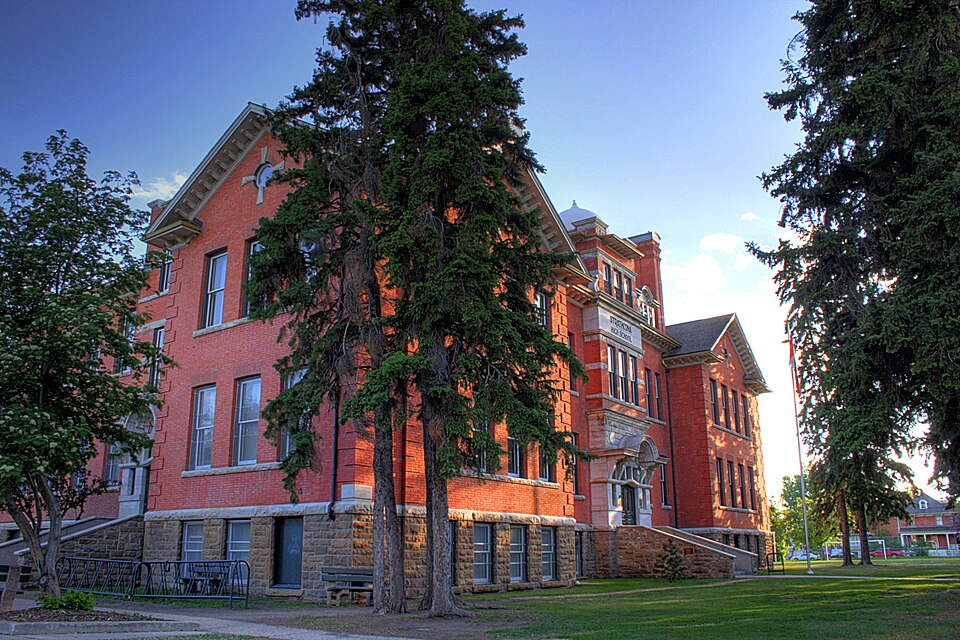
Old Scona Academic, where a long-running school legend lives on. Photo: WinterE229 / WinterforceMedia , Public domain (creator release) . No changes made to the original photograph. | File source: Wikimedia Commons

7. Old Scona Academic: The Mystery in the Foundations

A few blocks south, Old Scona Academic at 10523 84 Avenue NW is another landmark with a far more substantial history than its spooky reputation might suggest.

The building opened in the early 1900s as Strathcona Collegiate Institute. It later played a part in the early history of the University of Alberta, accommodating some of the young university's classes.

The worker who was never found

The school's best-known urban legend says a labourer died during construction and was hidden or trapped in the foundation. Versions differ on exactly how it happened. Subsequent stories attribute unexplained noises, moving desks or unusual lights to the man's restless spirit.

The problem? The lurid claim about a body concealed in concrete has not been backed up by reliable historical documentation in the sources consulted for this article.

It's the perfect example of a school legend: dramatic, faintly horrifying and easy to retell during a late-night study session. As a historical claim, though, it deserves a large question mark.

Old Scona is worth visiting for its architecture and educational legacy alone. The possible ghost is an optional extracurricular activity.

Sources: Global News; Old Scona Academic.

8. Fringe Theatre Arts Barns: The Man in Blue Overalls

Only a short walk away, the Fringe Theatre Arts Barns at 10330 84 Avenue NW are among the places that help make Edmonton a theatre city. Today they host performances, rehearsals and arts events. Their earlier life was considerably more industrial.

The building was associated with Edmonton's transit operations, serving as a bus and trolley facility. And that earlier chapter gave rise to an unusual ghost story.

A maintenance worker takes the stage

According to a story shared on Edmonton Ghost Tours and reported by Global News, a worker died during an explosion at the transit facility in the 1950s. Witness accounts in the legend describe a man wearing blue overalls who appears around the performance spaces, sometimes near the stage or in the wings.

Imagine you're rehearsing for a show when a stranger in work clothes quietly appears, watches for a moment and then seems to vanish. At the very least, you'd want to know who approved the surprise cast member.

As always, the story is a reported legend rather than proof of an afterlife. But it is also a reminder that many of Edmonton's arts venues began life as something else entirely. Those layers of history are well worth noticing.

Sources: Global News; Fringe Theatre.
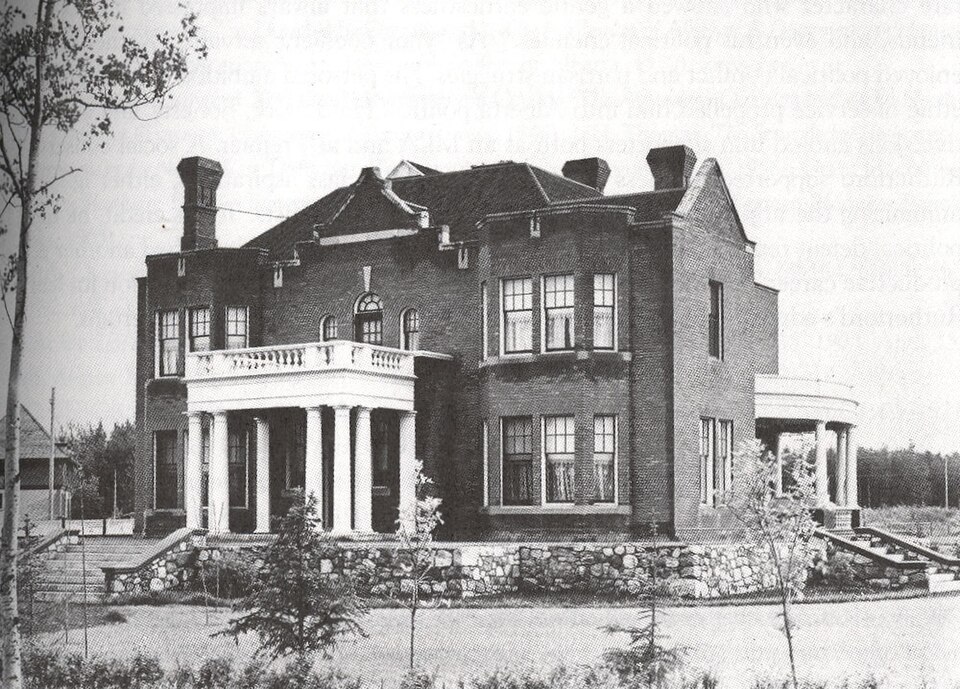
Rutherford House photographed around 1913—almost the same era as the stories it inspires. Photo: Unknown photographer / Glenbow Archives , Public domain in Canada . No changes made to the original photograph. | File source: Wikimedia Commons

9. Rutherford House: A Little Boy Running Upstairs

On the University of Alberta campus, Rutherford House at 11153 Saskatchewan Drive NW offers a glimpse into the life of Alexander Cameron Rutherford, Alberta's first premier. Built in 1911, the stately house remains one of the city's most evocative historic residences.

There's beautiful woodwork, period architecture and that unmistakable sense of a home from a very different age. And naturally, a story about an unexpected occupant.

The whistling child

Local ghost-tour accounts describe the sound of a young boy running or whistling on the upper floor. Some people have reported seeing a childlike figure who disappears before anyone can get a closer look.

Ghost-tour founder Nadine Bailey has also recounted noticing a light turn on in an upper room while conducting a tour outside the house.

Could it have been a person in the building, an electrical issue or a misunderstanding? Certainly. But the moment became another strand in the house's folklore.

As a REALTOR®, I find historic houses particularly interesting because their rooms reveal so much about the people who lived in them. It's not only about square footage; it's about how a family actually occupied the space, entertained guests and watched their neighbourhood change.

Rutherford House has more than enough real history to keep a visitor interested. The unexplained footsteps just add a little atmosphere.

Sources: Edmonton Historical Board; Global News.

Fort Edmonton Park recreates several chapters of the city’s past. Photo: Mack Male , CC BY-SA 2.0 . No changes made to the original photograph. | File source: Wikimedia Commons

10. Fort Edmonton Park: Firkins House and the Park's Restless Residents

Fort Edmonton Park at 7000 143 Street NW is probably the city's most concentrated collection of places with a supernatural reputation. Its historic buildings and reconstructed streets make Edmonton's past tangible—and provide a wonderfully atmospheric setting for ghost stories.

Firkins House and its mysterious young visitor

Firkins House, on the park's 1905 Street, is frequently described as one of its most haunted sites. Reported experiences include a frail-looking boy, a male voice singing, unusual lights and objects that appear to have moved.

Other buildings at the park have also gathered stories. Fort Edmonton Park's own paranormal programming mentions the Rowand House, Kelly's Saloon and the Bellerose School among the places explored in investigations. The Rowand House has been linked to accounts of running footsteps and moving shadows.

The park openly acknowledges that paranormal experiences cannot be guaranteed. That seems reasonable. Ghosts, after all, are apparently under no obligation to keep appointments.

Even without anything unexplained, a visit is a great way to learn about Edmonton's fur-trade roots, streetscapes, early businesses and daily life. It's living history—with an occasional shiver added.

Sources: Fort Edmonton Park, Paranormal Tours; City of Edmonton; Global News.

11. The Gibbard Block: The Murder Story That History Can't Confirm

The Gibbard Block at 6423 112 Avenue NW is a striking early commercial building in the Highlands neighbourhood. Constructed in 1912, it was intended to combine attractive apartments with street-level businesses in an ambitious new suburb.

Decades later, many Edmontonians came to know the property as the home of La Bohème, the French restaurant and bed-and-breakfast. The building subsequently found new life through preservation and redevelopment.

A gruesome tale—and a historian's reality check

The legend claims that a jealous caretaker murdered his wife during the Depression and disposed of her remains in the building's furnace. In some tellings, the crime was discovered and the caretaker convicted.

It's sensational. It's disturbing. And there's a major problem: local historian Dane Ryksen, writing for Forgotten Edmonton, examined the story and reported being unable to find contemporary newspaper accounts confirming the alleged murder.

A crime followed by an arrest and conviction would normally leave records. That doesn't allow us to prove that no incident happened, but it does mean the familiar version should not be presented as established history.

Frankly, the genuine story of Highlands development, changing economic fortunes and the building's restoration is compelling enough. It doesn't need a fictional criminal record.

Source: Dane Ryksen, “The Gibbard Block,” Forgotten Edmonton.

12. Mount Pleasant Cemetery: Shadows, Strange Lights and Old Stories

Mount Pleasant Cemetery at 5420 106 Street NW is a peaceful south-side burial ground filled with mature trees, memorials and reminders of generations of Edmonton families.

Cemeteries naturally inspire ghost stories, and Mount Pleasant has its share. In a 2024 Global News report, historian and podcaster Craig Baird discussed accounts of shadowy figures, unusual lights and orbs. Some visitors have reportedly experienced camera batteries draining unexpectedly.

Not every orb is an apparition

Digital photographs can produce floating-looking lights when dust, insects, moisture or reflective particles catch a flash. Cold temperatures can also shorten battery life, which is hardly a rare condition in Alberta.

None of that makes the stories less interesting. It simply gives us sensible explanations to consider before declaring every suspicious speck of light a spirit.

Most importantly, this is an active place of remembrance—not a set for a haunted-house attraction. If you visit for its local history, follow the cemetery's rules, stay respectful of graves and other visitors, and keep the ghost-hunting theatrics for places that actually sell tickets.

Sources: Global News; City of Edmonton, Mount Pleasant Cemetery.

13. ATB Financial's Strathcona Branch: Ghosts in the Filing Cabinet

Even a modern workplace can accumulate a haunting reputation. ATB Financial's Strathcona branch, at 8008 104 Street NW, is a wonderful example.

In October 2018, ATB published an article based on staff accounts of strange experiences in the branch: unexplained knocking, door handles moving by themselves, doors opening unexpectedly, and oddities involving stored equipment and keys.

The ghost meets the HVAC system

Perhaps the best detail in the entire article is that an employee interrupted talk of a mysterious cold spot by pointing out the air-conditioning vent responsible.

Perfect. This is exactly how a paranormal investigation should begin.

Before you consult the spirit world, check the thermostat.

The employees weren't especially alarmed. They often joked about the building's resident ghost and occasionally blamed little everyday mishaps on it. In time, those conversations became part of the branch's own local folklore.

ATB also reported rumours involving an earlier hotel on the site, but those rumours should not be confused with verified historical accounts of a death or fire.

This one is charming precisely because its witnesses seem to have maintained their sense of humour.

Source: ATB Financial, “An ATB Ghost Story” (2018).

14. The High Level Bridge: Legends Above the River Valley

Unlike the other locations in this article, the High Level Bridge doesn't have one conventional street address. Its roadway crosses the North Saskatchewan River on 109 Street, linking the downtown side near 97 Avenue with the south side near 88 Avenue.

[Photo in fully illustrated HTML edition] The High Level Bridge: plenty of genuine history, plus a few ghost stories. Photo: WinterE229 / WinterforceMedia , CC0 1.0 . No changes made to the original photograph. | File source: Wikimedia Commons

Built between 1910 and 1913, the bridge accommodated trains, streetcars, vehicles and pedestrians. It remains one of Edmonton's most recognizable engineering achievements.

Its size, age and dramatic setting naturally make it a favourite for eerie storytelling. Edmonton Ghost Tours has included stories about bridge construction and the surrounding area in specialty trolley experiences.

Why the bridge is atmospheric enough without ghosts

Stand near the bridge on a grey October evening and you'll understand the appeal. There's the steel structure, the deep river valley, the wind and the knowledge that generations of Edmontonians have crossed the same span.

A little mysterious noise at the wrong moment? You have the beginning of a ghost story.

But the actual engineering history is well established, while stories about specific spirits remain folklore. There's no need to pretend otherwise.

For a memorable historical outing, check the Edmonton Radial Railway Society's streetcar operations and Edmonton Ghost Tours' seasonal offerings. A trip over the bridge is enjoyable even when the only ghostly sound comes from the brakes.

Sources: City of Edmonton Archives; Edmonton Ghost Tours.

Three Edmonton Urban Legends That Deserve a Second Look

Was there really a bride at the Princess Theatre?

The woman-in-white story is well documented as a story. The alleged tragedy used to explain it has not been demonstrated through definitive historical records in the material consulted here. Enjoy the tale—but don't treat the bride's identity as a proven biography.

Is someone buried in Old Scona's foundations?

There is a long-running story about an unfortunate construction worker. The claim that a body was concealed in the school foundations is not adequately corroborated. If that sounds like a classic schoolyard legend, that's because it has all the ingredients.

Did the Gibbard Block caretaker commit murder?

Local historian Dane Ryksen couldn't find period newspaper evidence for the lurid, often-repeated crime. It's a great example of why a good historical article needs both a storyteller and a fact-checker.

Rossdale: A Real History That Deserves Respect

Some Edmonton locations are solemn for reasons far more important than ghost stories. The historic burial ground in Rossdale, near the former power plant, is one of them.

It is connected with Indigenous peoples, Métis families and the city's fur-trade history. Its recognition and memorialization are part of a continuing effort to respect those buried there and understand a much older Edmonton.

Rather than frame it as a haunted attraction, I encourage readers to learn about the people, histories and cultural significance of the area. Not every place with a powerful past needs a ghost attached to it.

Source: City of Edmonton Archives.

How to Explore Edmonton's Haunted History

Old Strathcona: The ideal haunted-history walk

Old Strathcona is the easiest place to see several locations in one outing. Start near Old Scona Academic and the Fringe Theatre Arts Barns, wander toward Walterdale Theatre, then head to Whyte Avenue to admire the Strathcona Hotel and Princess Theatre. Everything can be appreciated from public sidewalks, even when interior access isn't available.

Combine the walk with dinner at one of Whyte Avenue's restaurants. It's a terrific Edmonton evening, ghosts or no ghosts.

Downtown: Grand hotels and political history

The Hotel Macdonald, Alberta Block and McKay Avenue School tell a different story: the growth of Edmonton as a commercial, cultural and political centre. Take your time with the architecture. You may spot details you've driven past a hundred times without noticing.

Leave the investigation to an organized tour

Edmonton Ghost Tours has long mixed local lore with history walks and special experiences. Fort Edmonton Park offers a different approach through guided paranormal investigations in selected historic buildings. Check the operators' current schedules, restrictions and accessibility details before making plans.

And a friendly reminder: historic buildings aren't open invitations to sneak around after hours. Enjoy public spaces, respect property boundaries and don't enter restricted areas.

Frequently Asked Questions About Haunted Edmonton

What is the most haunted place in Edmonton?

There is no scientific ranking of haunted sites. But the Fairmont Hotel Macdonald, Princess Theatre, Walterdale Theatre, Rutherford House and Fort Edmonton Park are among the places most often mentioned in Edmonton ghost lore.

What is the ghost story at the Hotel Macdonald?

The hotel's best-known legend describes phantom hoofbeats linked to a horse said to have died during construction in 1914. The hotel is real and historic; the supernatural interpretation is unverified.

Is the Princess Theatre in Edmonton haunted?

Local legends describe a woman wearing white near the theatre's lobby, stairs or projection area. The alleged bride's backstory has not been conclusively established.

Where can I find haunted places in Old Strathcona?

Walterdale Theatre, Princess Theatre, the Strathcona Hotel, Old Scona Academic and the Fringe Theatre Arts Barns are all associated with stories and lie within a relatively compact neighbourhood.

Can I visit these Edmonton haunted places for free?

You can appreciate the exteriors of many heritage sites from public sidewalks without paying admission. Tours, attractions, performances and interior visits may require tickets or reservations.

Are Edmonton ghost tours suitable for kids?

It depends on the operator and individual tour. Some stories involve death or violence; Fort Edmonton Park's investigation tours can have minimum-age restrictions. Always check before booking.

Are any of the ghost stories proven?

The buildings and much of their history can be documented. The ghost sightings are stories, reports or personal experiences, not verified proof of paranormal activity. Some dramatic urban legends cannot be confirmed in surviving records.

The Real Magic of Edmonton's Haunted History

After all these ghost stories, here's the thing that sticks with me: you don't have to believe in ghosts to appreciate Edmonton's past.

The Hotel Macdonald reminds us of the railway boom. Walterdale Theatre shows how an old firehall can have a remarkable second life. The Princess Theatre helps preserve a century of entertainment history. Rutherford House connects us with Alberta's earliest provincial leadership. Old Strathcona's buildings explain why that neighbourhood still has so much character.

As a REALTOR®, I spend plenty of time talking about bedrooms, bathrooms, lot sizes and property values. Those things matter. But I also believe a neighbourhood's history and personality are part of what makes it feel like home. Edmonton has an abundance of both. And sometimes an old building has a story so good that it survives generations of owners and tenants.

So the next time you walk past an old theatre, stop outside a century-old house or cross the High Level Bridge, take a second look. The building might have an incredible story. If a seller tells you a home has had the same residents for 100 years, it might be wise to confirm everyone has actually moved out.

Happy Halloween, Edmonton. If something goes bump in the night, check the furnace before calling Ghostbusters.

Looking for a Home With Character—But Preferably Without a Ghost?

I've lived in Edmonton all my life, and one of my favourite parts of real estate is helping people get to know the neighbourhoods that make this city special. Whether you love a century-old character home, a mature neighbourhood or something brand new, I'd be happy to help you find the right fit.


Read

Edmonton's Infill Showdown: Why Alberta Is Overturning the City's Housing Rules and What It Means for Homeowners

Published October 29, 2026 | Edmonton Real Estate News & Analysis

Edmonton's infill debate has reached a boiling point.

What began as a disagreement about building more homes in established neighbourhoods has escalated into a major political confrontation between Edmonton City Hall and the Alberta government.

Premier Danielle Smith's government has ordered Edmonton to roll back key residential zoning rules, Mayor Andrew Knack has raised the possibility of challenging that directive in court, and thousands of Edmontonians are wondering what happens next.

If you're a homeowner in an established Edmonton community, the owner of a property with redevelopment potential, or someone hoping to purchase an affordable home, the outcome could affect you.

The controversy goes well beyond whether an eight-unit building should be allowed beside a single-family home. It raises some fundamental questions:

  • Who should decide what gets built in your neighbourhood?

  • How much development is too much?

  • Does infill increase or decrease surrounding property values?

  • Should existing homeowners have greater influence over neighbourhood changes?

  • Could restrictions on infill make housing more expensive for future generations?

  • And what happens when the provincial government steps in to overturn decisions made by an elected city council?

Let's examine what's actually happening, why both governments are so firmly opposed, and what these changes could mean for Edmonton's housing market.


Article Summary: What's Happening With Edmonton's Infill Rules?

For anyone who wants the short version, here are the most important developments.

1. Edmonton introduced sweeping zoning changes in January 2024. These made it easier to build multiple homes on residential lots throughout the city, including up to eight primary dwelling units on qualifying mid-block properties.

2. Residents began raising concerns. Homeowners complained about large buildings appearing beside smaller houses, a loss of privacy, parking shortages, construction disruption and possible impacts on their property values.

3. City Council made some adjustments. In 2025 and 2026, Edmonton introduced additional building-design restrictions and reduced the maximum height of buildings in its Small Scale Residential zone from 10.5 metres to 9.5 metres.

4. Alberta intervened on October 8, 2026. The provincial government announced that Edmonton must restore earlier rules governing housing types, density, height and parking.

5. The province formalized the directive on October 22. An official regulation now requires changes specifically affecting the RS — Small Scale Residential — zone by January 22, 2027.

6. The City is considering its legal options. Mayor Andrew Knack has discussed the possibility of taking Alberta to court, arguing that the province's intervention raises serious questions about local decision-making and the legal responsibilities of councillors. As of October 29, a court challenge has not been confirmed as filed.

7. The final outcome remains uncertain. Edmonton is preparing amendments, public consultation is expected, and the province has also required a broader review of zoning policy.

The bottom line: Alberta's rollback order is real and legally formalized. However, the exact replacement zoning rules and their long-term consequences have not yet been finalized.

Sources: Government of Alberta announcement | October 22 provincial order


First, What Exactly Is Infill Housing?

Infill is the construction of new homes in neighbourhoods that are already developed. Rather than building exclusively on undeveloped land at the outskirts of Edmonton, infill uses existing residential properties to accommodate additional homes.

For example, imagine a 1950s bungalow sitting on a large lot in Glenora, Parkview, Westmount or another established community. A builder might purchase that property, demolish the original house and replace it with:

  • A newly constructed single-family home.

  • Two skinny homes or a duplex.

  • A row of townhomes.

  • A fourplex or sixplex.

  • An eight-unit residential building, if the property's zoning and dimensions permit it.

Infill can also mean adding a basement suite or constructing a backyard garden or garage suite. The idea isn't particularly new. Edmonton has been redeveloping older properties for decades. What's different is how much housing the rules began permitting without requiring a separate rezoning application for each property.

For more background, you can read my earlier article: Edmonton's Infill Rules Explained: What Buyers, Builders, and Neighbours Need to Know.

How Did Edmonton Get Here? Understanding the 2024 Zoning Changes

Edmonton's modern infill debate largely centres around Zoning Bylaw 20001, which came into effect on January 1, 2024. The City replaced an older, more restrictive zoning system with a simplified framework intended to accommodate a wider variety of housing. One of the biggest changes was the introduction of the RS — Small Scale Residential Zone.

Under the new rules, eligible properties could accommodate detached houses, semi-detached homes, row housing and small multi-unit buildings. For qualifying mid-block lots, up to eight primary dwelling units could be built without requiring a separate rezoning approval. However, this was never an automatic entitlement for every lot. The number of units depended on lot area and other zoning requirements.

For example, the City required at least 75 square metres of site area per primary dwelling, meaning a mid-block property would generally need at least 600 square metres to accommodate eight primary units. Another important change had actually happened earlier. Edmonton removed minimum on-site parking requirements in 2020, allowing builders greater flexibility in deciding how much parking to provide.

These changes were intended to help Edmonton grow inward as well as outward.

Why the City believed this approach made sense

Edmonton has experienced substantial population growth, and accommodating additional residents means building more housing. Traditionally, much of that growth has occurred on the city's outskirts, in neighbourhoods requiring new roads, utility networks, schools, transit connections and other services.

The City argues that adding homes to established neighbourhoods can make better use of existing infrastructure, support local businesses, sustain schools and provide more housing choices in locations people already want to live. There is an important financial argument here, too.

Consider a large residential property that once accommodated a single household. If that property is redeveloped into several individually assessed homes, it may generate considerably more municipal property tax revenue. That does not mean density is free of infrastructure costs. Water systems, drainage, utilities, roadways, garbage collection and other services still need sufficient capacity. The City believes accommodating more residents in established areas can help reduce the long-term cost of outward expansion.

Sources: City of Edmonton — Infill in Your Neighbourhood | City of Edmonton Zoning Bylaw


Why Did Edmonton Residents Start Pushing Back?

Not everyone welcomed the changes. In established communities, homeowners began seeing developments that looked dramatically different from the houses surrounding them. Imagine living in a bungalow that you've owned for 25 years. The house next door is purchased by a developer. The original home is demolished, and a much larger three-storey building takes its place.

Instead of one household next door, you could eventually have several. That change can affect everyday life in ways that go beyond the number of people living on a street.

Privacy and sunlight

Perhaps your family enjoyed a relatively private backyard for decades. A taller building next door may now have upper-floor windows overlooking it. A larger structure can also cast additional shadows on neighbouring properties. This can be particularly frustrating for homeowners who invested in landscaping, outdoor living spaces or solar panels.

Parking and traffic

Although Edmonton's newer zoning rules removed mandatory parking minimums, residents continued to own vehicles. The result, in some cases, has been concern about increased demand for street parking. Not every infill development creates parking problems, and many builders voluntarily provide parking. However, the level of parking needed can vary substantially from one neighbourhood to another. A building near frequent transit may operate very differently from one on a quiet residential street where most households rely on vehicles.

Construction disruption

Demolishing one home and constructing several new ones can involve months of heavy equipment, noise, dust, contractor vehicles and temporary access restrictions. Even residents who support infill in principle may be frustrated by poorly managed construction.

Neighbourhood character

Some homeowners purchased in mature communities specifically because of the established trees, larger yards, traditional architectural styles and relatively low-density streets. When several large infill developments appear in a short period, the neighbourhood's appearance can change considerably. Others see the same changes positively, welcoming architectural variety, housing reinvestment and the removal of deteriorating older properties.

The feeling of losing control

Perhaps the biggest frustration has been the perception that existing residents have little influence over what happens around them. Under an as-of-right zoning system, a development that meets the zoning requirements can generally proceed without a separate neighbourhood rezoning hearing. That's very different from having an opportunity to argue against a proposed rezoning before it receives approval.

Infill critics believe the rules gave developers too much flexibility while reducing residents' ability to influence neighbourhood changes. These concerns helped generate organized opposition and demonstrations in Edmonton during 2026.

Source: CityNews — Edmonton residents protest infill housing rules, September 28, 2026


Didn't Edmonton City Council Already Change the Infill Rules?

Yes, and this is an important part of the story.

Edmonton's zoning bylaw wasn't completely unchanged after January 2024. City Council made several adjustments intended to address concerns about building size and design. In 2025, Council approved restrictions affecting building length, side-facing entrances and the appearance of row housing and multi-unit developments.

In February 2026, Council considered reducing the maximum number of units on mid-block lots from eight to six, but the proposed reduction did not pass. Council subsequently approved a reduction in the maximum RS building height from 10.5 metres to 9.5 metres, effective August 1, 2026.

The City was also considering additional measures dealing with landscaping, design and neighbourhood compatibility.  So why wasn't that enough?

For some residents, the changes were a step in the right direction. For others, they addressed only the appearance of large buildings without fundamentally changing the density permitted on residential lots. That distinction is central to the disagreement.

A building can be one metre shorter and still contain eight units, for example.

Source: City of Edmonton — Zoning Bylaw Text Amendments


Alberta Steps In: What Did Premier Danielle Smith Announce?

On October 8, 2026, Premier Danielle Smith and Municipal Affairs Minister Dan Williams announced that the Alberta government would intervene directly in Edmonton's residential zoning policies. The province argued that some infill developments had become too large, too dense and insufficiently compatible with surrounding neighbourhoods. Alberta's position is that creating more housing is important, but that it shouldn't come at the expense of established residents' quality of life.

The government pointed to concerns about parking, traffic, building scale, infrastructure and neighbourhood character. Rather than asking Edmonton to make additional voluntary adjustments, the province directed the City to restore earlier zoning parameters.This was a significant departure from the usual practice of leaving detailed local land-use planning to municipalities.

The October 22 order made the requirements official

On October 22, Alberta issued Order in Council 353/2026, establishing the City Land Use Bylaw Direction Regulation. It requires Edmonton to amend the rules for properties currently zoned RS.

Specifically:

Housing types, density and height: Rules must match those applicable to comparable residential properties under Edmonton's previous Zoning Bylaw 12800 as it existed on December 31, 2023.

Parking: Minimum on-site parking requirements must match those applicable to comparable residential properties under the former bylaw as it existed on July 1, 2020.

Deadline: Edmonton must enact the required amendments by January 22, 2027.

Longer-term review: Edmonton must also conduct a broader zoning review and make changes consistent with provincial infill policy within 18 months.

One critical detail deserves emphasis: the written order specifically targets the RS zone. It does not simply abolish Edmonton's entire zoning bylaw or prohibit all infill development.

The exact rules for different types of RS properties will depend on how Edmonton matches them to comparable properties under the previous zoning system.

Sources: Government of Alberta announcement | Official Order in Council 353/2026


Why Is the City of Edmonton So Upset?

Mayor Andrew Knack has strongly criticized the province's intervention. His objections involve two separate issues: the consequences for housing development and the precedent being set for municipal decision-making.

1. Housing affordability could suffer

Edmonton argues that restricting the number of homes permitted on residential land could reduce housing supply and make it more difficult for buyers to enter desirable established neighbourhoods. Consider a developer purchasing an older property for $600,000. If zoning permits six or eight homes on that land, the land acquisition cost can be distributed across more dwellings. If only two homes can be built, each home must carry a much larger share of that original land cost.

Of course, construction expenses, financing, servicing, design and profit margins also matter. Building more units doesn't automatically make every new home affordable, but allowing more homes on the same land can make smaller and less expensive housing formats economically feasible.

2. Edmonton's finances could be affected

The City also argues that fewer infill homes could mean reduced construction activity, fewer future property assessments and continued pressure to accommodate growth through suburban expansion.

At the October 16 council meeting, administration projected that the provincial rollback could reduce anticipated housing development by approximately 2,100 to 2,700 units in 2027, with as much as $610 million in associated construction value potentially affected. These were preliminary municipal estimates, not confirmed job losses or an established financial outcome. Even so, they illustrate why the City considers the directive consequential.

Source: Taproot Edmonton — City Council's October 16 discussions

3. Who should control local development?

The City also objects to the province imposing detailed land-use decisions on an elected municipal council. Municipalities receive their legal authority from provincial legislation, so Alberta has substantial powers over them. Zoning decisions have traditionally been made through municipal planning, public engagement and council votes, however.

Edmonton's leadership argues that the people elected to govern the city should have meaningful control over how their communities develop. The provincial government takes a different view: when municipal decisions create serious concerns for residents, Alberta believes it is justified in intervening, despite having no MLAs elected in the Greater Edmonton Area this cycle.

This is where the disagreement extends beyond infill into a larger debate about local democracy.


Is Edmonton Really Going to Sue the Alberta Government?

Possibly, but it's important to distinguish discussing legal action from actually filing a lawsuit. Mayor Andrew Knack raised the prospect of a court challenge in October, arguing that the province's directive could place councillors in a difficult legal position. The issue involves how public hearings are supposed to work.

Municipal councillors are expected to approach statutory public hearings with an open mind, consider the evidence presented and make decisions according to their legal responsibilities. But what happens when the province has already instructed council to pass a particular bylaw?

If councillors must make a predetermined decision, some question whether the public hearing can remain genuinely meaningful. A court challenge could ask a judge to determine whether the provincial directive is lawful and whether the City can implement it consistently with applicable municipal legislation.

That doesn't mean Edmonton would necessarily win. Alberta possesses significant authority over municipalities under the Municipal Government Act, and the provincial order expressly relies on that legislative framework.

The dispute would require careful interpretation of the relevant laws and procedural obligations.

As of October 29, 2026, the possibility of litigation has been publicly discussed, but a filed court challenge has not been confirmed in the sources reviewed.

Meanwhile, the City is preparing to comply with the provincial deadline despite the province providing no written framework on the proposed changes as of today. City administration told Council on October 27 that draft amendments are expected to be made public in mid-November.

In other words, this is not currently a court battle that has already overturned the province's decision. It is an active political and legal disagreement, with the province's regulation in place and the City's final response still developing.

Sources: CityNews — Edmonton may take Alberta infill battle to court | Global News — Edmonton council's special meeting


What Does This Mean for Existing Edmonton Homeowners?

The impact depends heavily on the property, the neighbourhood and whether the owner has any interest in redevelopment. Let's consider two homeowners who could be affected in very different ways.

Homeowner A: You want your neighbourhood to remain mostly single-family homes

Suppose you've lived in Laurier Heights, Parkview or another established neighbourhood for many years. You have no intention of redeveloping your property. You simply want to enjoy your home, maintain your privacy and protect the investment you've made. From your perspective, tighter restrictions could be welcome.

Reduced building sizes and lower density may alleviate some concerns about overlooking, shadowing, parking pressure and changes to neighbourhood character. However, the provincial order won't automatically remove developments that are already built or necessarily stop projects that have valid approvals. Nor does it guarantee that nearby property values will increase.

Homeowner B: Your property has substantial redevelopment potential

Now imagine you own an older bungalow on a particularly desirable lot. Perhaps you've been considering selling to a developer who could build several homes. Under Edmonton's 2024 zoning rules, a developer might have been able to justify paying a premium because the property could accommodate a higher number of units.

If the allowable development is reduced, the economics may change. A developer who can build only two or four homes may not be willing to pay what another builder would have offered when six or eight units were feasible. This could reduce the redevelopment premium for some properties.

That doesn't mean all older homes will lose value. It means the buyer pool and the amount developers are willing to pay could change. The same zoning rollback that some neighbouring homeowners welcome could disappoint owners who were counting on the redevelopment value of their land.

That is one of the most overlooked aspects of this debate.


Will Infill Lower Property Values in Edmonton?

This may be the most emotionally charged question of all. And it's also one that deserves more nuance than the political arguments sometimes provide.

Short answer: Yeah, it already is in many neighborhoods. Long answer: Sometimes, but it’s complicated.

There are actually two separate questions:

  1. Does a new multi-unit infill building reduce the value of neighbouring existing homes?

  2. Does allowing more development increase the value of the land being redeveloped?

The answers don't necessarily move in the same direction, every time.

Could living beside an eightplex hurt your home's resale value?

Potentially, depending on the development and the buyers considering your property. Some buyers may be discouraged by overlooking windows, a reduction in privacy, additional shadows or difficulty finding street parking. A buyer who wants a quiet, traditional single-family streetscape may prefer a property elsewhere.

If enough prospective buyers share those preferences, that could affect the resale appeal of a particular home. But there is an important distinction between a plausible concern and a demonstrated market-wide decline in property values.

We should not assume that every home beside an infill development will lose value. Actual sale prices depend on numerous factors, including the property's condition, location, lot size, interest rates, buyer demand, available inventory and the quality of the surrounding development.

A well-designed infill project that replaces a deteriorating property may improve the appearance of a street. In other situations, a poorly integrated project may create genuine disadvantages for adjoining owners. In August 2026, Councillor Karen Principe sought further study into whether multi-unit infill was affecting nearby property values. That request itself demonstrates why evidence matters.

Source: Global News — Edmonton councillor seeks study on infill property values

Could infill actually increase land values?

Absolutely, in certain circumstances. Land generally becomes more attractive to builders when it can accommodate additional profitable housing.

Imagine two similar older houses.

One sits on a lot that can support a profitable multi-unit development. The other has restrictions that make substantial redevelopment impractical. All else being equal, a developer may be willing to pay more for the first property. This creates an interesting contradiction.

A homeowner may dislike the possibility of a large infill next door while also benefiting from the additional redevelopment potential of their own property.

What happens when the province reduces development potential?

It's possible that some properties previously attractive to developers will see weaker demand or lower offers. At the same time, some buyers seeking established single-family neighbourhoods may feel more confident purchasing homes where large-scale redevelopment becomes less likely. Which influence dominates will differ by location and property type.

My view is that sweeping claims about infill either destroying property values or automatically increasing them are too simplistic.

The question should always be: What kind of property are we talking about, what development is realistically possible, and what are actual comparable sales showing?


What About First-Time Home Buyers and Young Families?

This is where the debate becomes particularly important for Edmonton's future. Established neighbourhoods often offer attractive amenities that many newer suburban communities are still developing. They may have mature trees, schools, parks, public transit, established local businesses and convenient access to employment.

But purchasing a detached home in one of these neighbourhoods can be expensive. A smaller townhouse or condominium-style unit may allow someone to purchase a home in a community they otherwise couldn't afford.

Why additional housing choices matter

Imagine a young couple who wants to live in an established neighbourhood near family, work and schools. They can't afford a $750,000 detached home, but they might be able to purchase a smaller infill townhouse for considerably less. Without that housing option, they may need to search farther from their preferred location or remain renters.

That doesn't mean every infill home is affordable. Many newly constructed infill properties are expensive, and some developments target the luxury market.

But having a range of housing types — detached homes, duplexes, townhomes, suites and apartments — generally offers buyers more choice than a neighbourhood consisting almost entirely of detached houses.

Will the provincial rollback make homes more expensive?

It could, if fewer units are built than would otherwise have been constructed. When housing supply grows more slowly than demand, that can create upward pressure on prices and rents. However, the actual effect will depend on how substantial the restrictions are, how much construction shifts to other locations and whether market demand changes. Higher-density zoning is one tool for improving housing supply. It is not, by itself, a guarantee of affordability.

The other side of the argument

Buyers aren't all looking for the same thing. Some young families want a detached home, a private yard, parking and a quieter residential street. Those preferences are legitimate, too.

Alberta's argument is that housing growth should preserve the qualities that make established communities attractive in the first place. The challenge is finding a reasonable balance between accommodating new residents and respecting the needs of people already living there.


What Does This Mean for Builders, Investors and Property Sellers?

For developers, the most immediate problem may be uncertainty. Real estate development requires substantial upfront investment. A builder may spend money acquiring land, preparing designs, consulting engineers and arranging financing before receiving final approvals.

If the rules change during that process, an otherwise viable project may become more difficult or financially impractical.

Important dates for development applications

The provincial order requires Edmonton's RS zoning amendments to be in force by January 22, 2027. In the meantime, development permit applications continue to be processed under the rules in effect when the decision is made. The City has identified November 8, 2026 as a recommended submission deadline for complete applications under the current RS rules, and December 2, 2026 for eligible standardized-design applications.

These are processing targets, not guarantees that an application will be approved before the zoning changes take effect. A development proposal submitted before a rule change is not necessarily protected from that change if the decision is made afterward. Projects already approved or under construction are in a different position. The province has indicated that projects already in progress can continue, although owners should confirm the specific status of their approvals.

For buyers and sellers, the critical lesson is that development potential must be verified rather than assumed.

Sources: City of Edmonton — Development Permits | October 23 zoning update from Situate


Is This Really About Housing, or Is It About Politics?

There is a political dimension to this dispute, but reducing the entire controversy to politics overlooks genuine concerns on both sides.

The provincial government believes existing homeowners have legitimate complaints about how neighbourhoods are changing. Some Edmontonians, myself included, recognize that the current provincial government doesn’t have a single seat in Edmonton, and this is likely a push to attract Edmontonians as we approach a 2027 election cycle.

Edmonton City Council believes the City needs flexibility to accommodate population growth and provide more housing choices. Community organizations opposing Edmonton's current approach argue that they are not necessarily against infill itself. Their concern is that development should be more compatible with established neighbourhoods and involve meaningful resident input.

Housing advocates, meanwhile, worry that slowing construction will make established communities less accessible to people who cannot afford detached houses. Even within City Council, opinions are divided.

Councillor Karen Principe has supported the province's intervention, while Mayor Andrew Knack and other councillors have criticized it. The interesting thing is that these positions are not necessarily as far apart as they first appear. Most participants agree that Edmonton needs more housing. Most would also agree that new buildings should be safe, thoughtfully designed and supported by adequate infrastructure.

The argument centres on how much density is appropriate, who gets to decide, and how competing interests should be balanced. Some believe that the province should focus on Education and Healthcare, and not on things like limiting land acknowledgements and bike lanes, but I digress.


What Happens Next? The Key Dates to Watch

There are several important milestones, past and present, to watch:

October 8, 2026: Alberta announces its intervention in Edmonton's infill zoning rules.

October 16, 2026: Edmonton City Council holds a special meeting and requests written clarification from the province.

October 22, 2026: Alberta formally issues Order in Council 353/2026.

October 27, 2026: Edmonton administration outlines its approach to preparing the required zoning amendments.

November 2026: Draft zoning amendments are expected to be released, with public engagement planned.

January 22, 2027: Deadline for Edmonton to implement the provincially required changes.

2028: Edmonton's broader 18-month zoning review is expected to be completed, subject to the regulation's requirements and any future legal or political developments.

There are several unanswered questions.

Will the City and province reach a compromise before January? Will Edmonton launch a court challenge? How will the new rules distinguish between different neighbourhoods and lot types? Could some properties retain more development potential than others? And will a future council or provincial government revisit the rules once the broader review is completed?

These questions matter to anyone planning to buy, sell or redevelop property in Edmonton over the next few years.


My Perspective: Edmonton Needs Housing Growth, but Good Planning Still Matters

As a REALTOR® working in Edmonton, I think it's important to recognize that there are valid concerns on both sides. I understand why someone who has owned a home for 30 years would be frustrated to see a much larger building constructed next door.  For many people, their home represents their largest financial investment.

It also represents something that doesn't appear on a property assessment: years of memories, enjoyment, financial sacrifice and emotional attachment. Privacy, sunlight, trees and neighbourhood character matter. At the same time, I believe Edmonton needs to provide realistic housing opportunities for future generations.

We cannot reasonably expect every young family or first-time buyer to afford a large detached home in a desirable central neighbourhood. We should acknowledge that well-planned redevelopment can replace deteriorating housing, support neighbourhood businesses and create appealing homes for people at different stages of life.

The question shouldn't simply be whether infill is good or bad. It should be whether we are encouraging the right kind of development, in the right locations, with the right protections for neighbouring property owners.

I also believe the impact on property values needs to be discussed carefully. For some homeowners, redevelopment restrictions may preserve the residential environment they value. For others, the restrictions could reduce the value of a property that was particularly attractive to developers. Both outcomes are possible, and neither should be dismissed.

Ultimately, I would like to see the City and province establish clear, predictable rules that protect reasonable neighbourhood expectations while allowing Edmonton to grow. Uncertainty is rarely helpful in real estate.

Buyers need to know what they're purchasing. Sellers need to understand their property's true market potential. Builders need confidence that the rules they are planning around won't abruptly change. And existing residents deserve to know how their neighbourhoods may evolve.

Those should be shared goals, regardless of which level of government ultimately determines the rules.


Frequently Asked Questions: Edmonton's Infill Rules in 2026

1. Is Edmonton banning infill housing?

No. The provincial government is directing Edmonton to restore previous restrictions affecting housing types, density, height and parking within the RS — Small Scale Residential — zone.

Infill development will still be possible, but some higher-density projects may require different approvals or may no longer qualify under the revised rules.

2. Are eightplexes still legal in Edmonton?

As of October 29, 2026, qualifying eight-unit developments remain possible under the currently applicable RS rules, subject to lot dimensions and other requirements.

However, Alberta has ordered zoning changes by January 22, 2027 that could remove the current as-of-right approval pathway for many such projects.

3. When do Edmonton's new infill restrictions take effect?

The provincial regulation was issued on October 22, 2026. Edmonton must enact the required zoning changes by January 22, 2027.

That does not mean the entire new municipal zoning framework was already in effect on October 22.

4. Is Edmonton suing the Alberta government?

Mayor Andrew Knack has publicly discussed the possibility of taking the province to court.

However, as of October 29, 2026, a filed legal challenge has not been confirmed in the sources reviewed.

5. Will my Edmonton house lose value because of infill?

Not necessarily.

Neighbouring development may affect the appeal of an individual property, but there is no reason to assume all homes near infill will decline in value.

The effect depends on the specific development, property characteristics, market conditions and buyer preferences.

6. Could these zoning changes reduce the value of my lot?

Yes, potentially.

If your land was valuable partly because a developer could build six or eight homes on it, tighter density restrictions could lower the amount a builder is willing to pay.

The actual impact would need to be evaluated on a property-by-property basis.

7. Can my neighbour still demolish their house and build multiple homes?

Potentially, yes.

The outcome depends on the property's zoning, size, permits and the rules in effect when approvals are issued.

A single-family home being demolished does not automatically mean a large multi-unit project will be permitted.

8. Will infill developments already under construction have to stop?

The province has indicated that projects already in progress can continue.

However, existing permits, pending applications and projects that have not yet received approval are not identical situations.

Anyone with a project underway should verify its specific permit status with the City.

9. Will parking requirements return to Edmonton neighbourhoods?

Yes, for properties affected by the provincial RS zoning directive.

The order requires minimum parking standards equivalent to those applicable under Edmonton's former zoning bylaw as it existed on July 1, 2020.

The exact requirements for individual property types will depend on the City's implementing amendments.

10. Will the restrictions make Edmonton homes more expensive?

They could put upward pressure on prices if they significantly reduce the number of new homes that would otherwise have been built.

But housing prices are also influenced by interest rates, employment, population growth, construction costs and inventory.

The long-term effect cannot yet be reliably quantified.

11. Can I stop an infill development from being built next door?

Not simply because you dislike the project.

Your options depend on the zoning, the type of approval required, whether the development meets applicable regulations and whether appeal rights exist. Some applications involve public hearings or appeal opportunities, while developments permitted under existing zoning may not require a separate rezoning hearing.

The City provides information about infill notices and construction concerns through its Infill in Your Neighbourhood resources.

12. Should I sell my older Edmonton home before the rules change?

Not necessarily. Selling based entirely on a proposed or pending zoning change could be premature.

If your property has redevelopment potential, it's worth understanding how much of its market value comes from the existing home and how much may come from the opportunity to develop the land. That distinction can significantly affect your pricing strategy.

13. Which Edmonton neighbourhoods will be most affected?

The greatest direct impact is likely to occur on properties currently zoned RS in established residential areas, particularly those with larger lots and strong redevelopment demand.

Neighbourhoods such as Glenora, Westmount, Grovenor, Parkview, Inglewood and other mature communities have experienced infill interest, but the precise effect depends on each property's zoning and characteristics.

Not every property in these neighbourhoods will be affected in the same way.

14. How can I check the zoning of a particular Edmonton property?

Start with the City of Edmonton's official Zoning Bylaw website and the City's property and development information resources. Before making a purchase or redevelopment decision, confirm the current zoning, any existing approvals and how pending amendments could affect the property.


Final Thoughts: Edmonton's Infill Debate Is About More Than Eightplexes

The current disagreement between Edmonton and the Alberta government may be remembered as an important turning point in how our city grows. But the outcome isn't simply a choice between maintaining single-family neighbourhoods and building as many homes as possible. Edmonton needs housing options that people can afford. It also needs neighbourhoods where existing residents feel comfortable, respected and confident in the future of their homes.

Those goals are not inherently incompatible.

The challenge is finding the right balance while creating predictable rules that are fair to homeowners, buyers, developers and the broader community. For now, the most important thing is to stay informed. The province's order is in place, Edmonton's replacement rules are still being developed, and the potential legal dispute remains unresolved.

The next few months could have a meaningful impact on Edmonton's real estate market, particularly in mature neighbourhoods where redevelopment activity has been strongest.

I'll continue watching these developments closely.

Have Questions About Your Edmonton Property's Value or Redevelopment Potential?

Whether you're thinking about selling an older bungalow, purchasing an infill home, investing in a redevelopment property or simply wondering how neighbourhood changes might affect your home's value, informed decisions begin with understanding the local market.

I'm Mike Pabian with RE/MAX Excellence, and I help Edmonton buyers and sellers navigate the changing real estate market.

If you'd like to discuss your property's current market value, possible redevelopment potential or the effects of changing zoning regulations, I'd be happy to help.

Visit pabianrealty.ca, or call or text me at 780-232-2064.

Because when it comes to your home, good information matters more than political headlines.

Author's note: This article reflects publicly available information as of October 29, 2026. Zoning rules, municipal decisions and legal proceedings may change. Property-specific development and permitting questions should always be verified with the City of Edmonton. This article provides general information, not legal or appraisal advice. Here’s a pug for no reason.

Read

Bank of Canada Raises Interest Rates to 2.50%: What You Need to Know

Posted October 28, 2026 | By Mike Pabian, REALTOR® — RE/MAX Excellence, Edmonton

Well, here we go again.

After more than three years without an interest rate increase, the Bank of Canada has officially reversed course. On October 28, 2026, Canada's central bank raised its benchmark interest rate by 0.25 percentage points, bringing it from 2.25% to 2.50%.

For homeowners across Edmonton, Sherwood Park, St. Albert and the surrounding communities, that announcement naturally raises some uncomfortable questions.

Is my mortgage payment about to increase? Does this mean buying a home is getting more expensive? What happens if I'm renewing my mortgage next year? And perhaps the biggest question of all: are we heading into another cycle of rising interest rates throughout 2027?

Before anyone starts panicking, there's something important to understand.

Today's Bank of Canada announcement does not mean everyone's mortgage rate just increased.

In fact, the immediate impact is concentrated primarily among borrowers with variable-rate mortgages and other loans tied to their lender's prime rate. If you already have a fixed-rate mortgage, your contracted interest rate generally remains exactly where it was until your mortgage term expires.

There's also another piece of the puzzle that doesn't receive nearly enough attention: Canada's bond market.

Believe it or not, the bond market can have a much greater influence on the fixed mortgage rate you're offered than the Bank of Canada's latest interest rate announcement.

Let's break down what happened, why it happened, what it means for your household budget, and what economists are anticipating as we head into 2027.

What Exactly Did the Bank of Canada Announce on October 28, 2026?

The Bank of Canada's official announcement confirmed that its target overnight lending rate increased by 25 basis points.

Here's what changed:

  • Previous overnight rate: 2.25%

  • New overnight rate: 2.50%

  • Total increase: 0.25 percentage points

  • Effective date: October 29, 2026

  • Next scheduled rate announcement: December 9, 2026

This was the Bank's first interest rate increase since July 2023.

For anyone unfamiliar with the terminology, a basis point is simply one-hundredth of a percentage point. Therefore, 25 basis points equals 0.25 percentage points. The overnight rate is the interest rate the Bank of Canada targets in the market where financial institutions lend to one another overnight. It influences the cost of borrowing across the Canadian economy, but it is not the same rate that a homeowner receives on a mortgage, and that's an important distinction.

Your mortgage rate is determined by your lender based on several factors, including the type of mortgage you select, the lender's funding costs, competition, your financial circumstances, and broader financial-market conditions.

The Bank of Canada influences mortgage interest rates. It does not directly set them.

Why Did the Bank of Canada Raise Interest Rates?

This wasn't a decision made because the Bank of Canada suddenly decided Canadians weren't paying enough to borrow money. It was primarily a response to a deteriorating inflation outlook, combined with an economy that has proven more resilient than expected. The Bank's October Monetary Policy Report identifies several reasons for the change.

1. Higher Energy Prices Are Becoming a Much Bigger Problem

The ongoing conflict in the Middle East has disrupted energy markets, keeping global oil prices and refinery margins elevated. We're all familiar with the obvious consequence: higher prices at the gas pump. But gasoline is only the beginning. When diesel, gasoline and other energy costs increase, it becomes more expensive to transport groceries, deliver construction materials, operate manufacturing facilities and move goods across the country. Eventually, many businesses have to pass at least some of those additional costs along to customers. That means higher energy prices can gradually turn into higher prices for practically everything else. This process is sometimes called inflation pass-through.

The Bank of Canada is particularly concerned about that second stage. In its October report, the Bank projected that consumer price inflation would rise to approximately 3.5% by the end of 2026 and remain around 3% through much of 2027. That's considerably higher than its previous expectations. The Bank doesn't want temporary price increases in one part of the economy to become persistent inflation across the entire economy.

2. Canada's Economy Has Been Stronger Than Expected

Higher interest rates are normally associated with an economy that's running too hot. However, the current situation is a little more complicated. According to the Bank of Canada's October 28 statement, Canadian GDP grew by 3.3% in the second quarter of 2026, with subsequent indicators suggesting continued growth during the third quarter.

Consumer spending has remained relatively solid, while business investment and exports have performed better than previously anticipated. That doesn't mean every Canadian household is thriving, however. Higher grocery prices, transportation costs, housing expenses and debt payments continue to put substantial pressure on household finances. Certain sectors of the economy remain weak, particularly those affected by American tariffs like manufacturing and logistics.

Nevertheless, the economy's relative strength gives the Bank of Canada somewhat more room to raise interest rates without necessarily causing a major economic contraction.

3. Inflation Expectations Matter Almost as Much as Inflation Itself

There's another factor that economists watch closely: what people believe prices will do next. Imagine you're operating a small Edmonton business. Your fuel costs have increased, suppliers are charging more, and you're expecting those expenses to remain elevated next year. Naturally, you might decide to increase your own prices in anticipation.

Now imagine thousands of businesses making similar decisions. Even before all those anticipated costs materialize, expectations can begin influencing actual prices. The Bank of Canada's third-quarter Business Outlook Survey found that businesses continued to face elevated cost pressures and inflation expectations, with renewed trade tensions adding further uncertainty.

Central bankers pay close attention to these expectations because inflation can become harder to control when households and businesses start assuming that significant annual price increases are simply normal.

4. The Bank Is Trying to Get Ahead of Inflation, Not Chase It

The Bank's inflation target remains 2%, within a control range of 1% to 3%. Interestingly, underlying measures of inflation have remained considerably more subdued than headline inflation. In September, inflation excluding gasoline was approximately 2.2%, and several measures of core inflation remained close to 2%.

So why raise rates?

The Bank is worried about what could happen next, rather than simply reacting to what has already happened. Governor Tiff Macklem explained that higher energy prices could spread throughout the economy, making inflation more persistent. It's worth emphasizing that the decision was not without competing considerations. The Bank also acknowledged ongoing economic weakness, trade uncertainty and the risk of placing additional pressure on borrowers.

The ultimate decision was to increase rates modestly while remaining cautious about future moves.

Who Is Actually Affected by This Interest Rate Increase?

Here's where things become particularly important for Edmonton homeowners. Not all mortgages react the same way to a Bank of Canada rate announcement.

Variable-Rate Mortgages: The Most Immediate Impact

If you have a variable-rate mortgage, your borrowing rate is generally connected to your lender's prime lending rate. For example, your mortgage contract might specify a Prime rate minus 0.75%.

If your lender increases its prime rate by 0.25 percentage points, your mortgage rate generally increases by the same amount, assuming your contractual discount remains unchanged. The important thing to understand is that a variable-rate mortgage can respond relatively quickly to an overnight rate change. However, whether your actual mortgage payment increases depends on how your mortgage is structured.

There are two common arrangements.

Adjustable-payment variable mortgages

With this arrangement, your payment changes when your mortgage interest rate changes. If rates increase, your payment generally increases. If rates decrease, your payment generally decreases.

Fixed-payment variable mortgages

This arrangement works differently. Your mortgage interest rate can increase without automatically changing the amount of your scheduled payment. Instead, a greater portion of each payment goes toward interest and less goes toward paying down the original loan. Over time, that can extend the effective amortization period.

If interest rates rise far enough, your mortgage could reach what lenders call its trigger rate, potentially requiring you to increase payments or make other adjustments. The Financial Consumer Agency of Canada provides a useful explanation of these different mortgage structures and the risks associated with variable-rate borrowing.

The takeaway is simple: Even if your monthly payment hasn't changed, a higher variable interest rate can still cost you money.

Fixed-Rate Mortgages: No Immediate Change to Your Existing Rate

If you've already secured a fixed-rate mortgage, today's announcement does not automatically change your mortgage rate.

Suppose you signed a five-year fixed-rate mortgage at 4.19% last year. Your mortgage interest rate remains 4.19% throughout the contracted term, even if the Bank of Canada raises its overnight rate several more times. That's one of the biggest advantages of fixed-rate mortgages: payment predictability. However, when your mortgage comes up for renewal, you'll be negotiating a new rate based on the lending environment at that time. That's where changes in the bond market become especially important.

Home Equity Lines of Credit and Other Variable Loans

Home equity lines of credit (HELOCs) are another product that can be affected by increases in lenders' prime rates. So are many personal lines of credit and some variable-rate business loans. 

If you have an outstanding HELOC balance of $50,000, a 0.25 percentage-point increase translates into approximately $125 in additional annual interest, assuming the balance remains unchanged and your interest rate increases by the full amount. That works out to roughly $10.42 per month.

On its own, it might not sound particularly dramatic. But for households already stretching their budgets to cover groceries, utilities, insurance, childcare and transportation, every additional expense matters. Credit cards with fixed interest rates, meanwhile, don't automatically become more expensive simply because the Bank of Canada raises its overnight rate.

How Much More Could Your Mortgage Actually Cost?

Let's put some real numbers behind the headlines.

Imagine an Edmonton homeowner with an outstanding mortgage balance of $400,000, an adjustable-payment variable mortgage and 25 years remaining on the amortization. For illustration, assume the interest rate increases from 4.50% to 4.75%.

The approximate monthly principal-and-interest payments would be:

Before the increase: $2,214 per month

After the increase: $2,270 per month

Difference: Approximately $56 per month, or $672 over 12 months.

These figures use standard Canadian mortgage calculations, including semi-annual interest compounding, and assume the remaining amortization stays at 25 years. They are examples, not advertised mortgage rates. The actual payment change will depend on your balance, remaining amortization, mortgage structure and lender.

For another way to understand the impact, every $100,000 of outstanding mortgage principal incurs approximately $250 more annual interest when its rate increases by 0.25 percentage points, assuming the balance stays constant.

That additional interest doesn't necessarily translate directly into an equivalent increase in your monthly payment because amortizing mortgages include principal repayment.

My advice: Rather than relying on a general headline saying mortgage payments are increasing, ask your lender or mortgage broker to calculate the exact impact on your own mortgage. It's also worth calculating what another 0.25% or 0.50% increase would mean. Hopefully, those additional increases won't materialize. But preparing for a possibility is a lot easier than being surprised by it.

What Does This Mean for the Average Edmonton Household?

Mortgage rates don't exist in a vacuum. They influence how much money people have available after paying their housing expenses, and those decisions eventually affect the broader real estate market.

Existing Homeowners

For variable-rate mortgage holders, higher borrowing costs may mean less disposable income. A household might postpone a kitchen renovation, delay buying a vehicle, reduce discretionary spending or adjust its savings plans. For homeowners with fixed-rate mortgages, the immediate mortgage impact is limited, but the prospect of renewing at a different rate can affect financial planning.

First-Time Homebuyers

For first-time buyers, affordability involves much more than the price displayed on a real estate listing. A mortgage payment needs to fit comfortably alongside property taxes, utilities, insurance, maintenance and other living expenses. Higher mortgage rates can reduce the amount a buyer qualifies to borrow or make an otherwise affordable property less attractive.

Under the current OSFI mortgage qualifying rules for uninsured mortgages, federally regulated lenders generally assess affordability using the greater of the mortgage contract rate plus two percentage points or 5.25%. That means buyers may need to demonstrate that they can handle payments at a significantly higher rate than the one they will actually receive. This is particularly important when you're shopping near the upper limit of your approved budget.

Home Sellers

Higher borrowing costs can affect sellers indirectly. When buyers have less purchasing power, they may become more selective about properties. Some will prioritize homes requiring fewer immediate repairs. Others may focus on lower price brackets or negotiate more aggressively.

There's no rule stating that a 0.25% interest rate increase must produce a corresponding decline in real estate prices. Edmonton home values are also influenced by housing inventory, employment, population trends, neighbourhood demand and the types of properties available. For homeowners considering a sale, competitive pricing and professional presentation remain essential.

Renters and Investors

Rental property investors with variable-rate financing may see their operating costs increase. That can affect cash flow, particularly when the property already has relatively small monthly margins. Renters, however, should not assume their rent will automatically increase because of today's announcement.

Rental prices are influenced by local supply and demand, vacancy rates, property operating costs and applicable tenancy laws. Higher borrowing costs can create pressure for landlords, but the ultimate rental-market outcome depends on many factors.

The Bond Market: The Part of Mortgage Rates That Most People Misunderstand

Now we come to what I consider one of the most important sections of this article. There's a widespread misconception that the Bank of Canada controls all mortgage rates.

It doesn't.

While the Bank's overnight rate has a relatively direct influence on variable-rate borrowing, fixed mortgage rates are influenced much more heavily by bond yields and lenders' funding costs. This is why you can see fixed mortgage rates increase even when the Bank of Canada holds its overnight rate steady. You can also see fixed rates decline before the Bank of Canada announces an interest rate cut.

What Is a Government Bond?

When the Government of Canada borrows money, it can issue bonds. Investors purchase those bonds in exchange for agreed-upon interest payments and repayment of principal at maturity. Bonds trade in financial markets, where their prices fluctuate as investors respond to inflation, economic expectations, interest rates and risk.

A bond's yield represents the return investors receive based on its current market price and expected payments.  When existing bond prices fall, their yields generally rise. When bond prices rise, their yields generally fall. This is especially important for mortgage borrowers.

Why Five-Year Government Bond Yields Matter

In Canada, lenders commonly use Government of Canada bond yields as an important reference when pricing fixed-rate mortgages. The five-year Government of Canada bond yield is particularly relevant to five-year fixed mortgage rates.

According to Canada Mortgage and Housing Corporation (CMHC), variable mortgage rates are mainly influenced by lenders' prime rates, whereas fixed mortgage rates are primarily influenced by Government of Canada bond yields.

Why?

Because lenders need to fund the money they lend. A lender offering a five-year fixed mortgage must consider the cost of obtaining or committing funds over that period. Government bond yields provide an important market benchmark for those funding costs. When bond yields rise, lenders often face pressure to increase their fixed mortgage rates. When yields fall, lenders may have room to offer lower fixed mortgage rates. But there's a catch.

A five-year bond yield is not the same thing as a five-year fixed mortgage rate.

Lenders also consider funding spreads, default and credit risks, capital requirements, administrative costs, competition and profit margins. Different lenders may therefore offer different mortgage rates even when they're all watching the same bond market.

What's Happening in the Canadian Bond Market Right Now?

The bond market has already been reacting to changing inflation and economic expectations. According to the Bank of Canada's published bond yield data, the benchmark five-year Government of Canada bond yield stood at approximately 3.57% on October 27, 2026. By comparison, it was approximately 3.27% at the end of July.

That's a noticeable increase, even before the October 28 Bank of Canada announcement. The Bank's latest analysis of rising government bond yields explains that markets have been responding to expectations of higher future policy rates, persistent energy-related inflation, growing bond issuance and heightened economic uncertainty. This has consequences for mortgages. Fixed mortgage rates can begin adjusting long before the Bank of Canada formally changes its overnight rate. In fact, the actual overnight rate announcement may have relatively little additional impact on fixed mortgage pricing if financial markets were already expecting it.

Five Common Mortgage Rate Misconceptions

Misconception #1: The Bank of Canada raised rates by 0.25%, so every mortgage rate increases by 0.25%.

Not true. Variable-rate products generally respond through changes in lenders' prime rates. Existing fixed-rate contracts are not automatically repriced, while new fixed mortgage offers respond to broader funding and bond-market conditions.

Misconception #2: If the Bank of Canada cuts rates, five-year fixed mortgage rates must fall too.

Also not true. If bond investors anticipate persistent inflation or higher future interest rates, bond yields could remain elevated even while the central bank reduces its overnight rate.

Misconception #3: If the Bank of Canada leaves rates unchanged, fixed mortgage rates won't move.

Incorrect. Bond yields change throughout the trading week, sometimes substantially. A lender can change its fixed mortgage pricing between Bank of Canada announcements.

Misconception #4: A five-year government bond yield of 3.57% means I can get a 3.57% mortgage.

No. Bond yields are market benchmarks, not retail mortgage offers. Mortgage rates include additional lender costs and margins.

Misconception #5: I should simply wait for the next Bank of Canada meeting before locking in a fixed mortgage.

Not necessarily. If bond markets are already anticipating the next central bank decision, some of the expected change may already be reflected in mortgage pricing.

For buyers considering fixed-rate financing, following bond yields and comparing actual lender offers is often more useful than focusing exclusively on the Bank of Canada's next announcement. For an additional explanation, the Bank of Canada has published an accessible guide called What's Behind Your Mortgage Rate?

It's worth reading if you're trying to understand why advertised mortgage rates don't always move in the direction you expect.

When Is the Next Bank of Canada Interest Rate Announcement?

The next scheduled Bank of Canada interest rate announcement is Wednesday, December 9, 2026. That announcement will be particularly interesting because it will help indicate whether October's increase was a relatively isolated adjustment or the beginning of additional monetary tightening.

The Bank will have more information about inflation, employment, economic growth, business expectations and developments in global energy markets. Looking beyond December, the first scheduled rate announcement of 2027 is Wednesday, January 27, when the Bank will also publish its next Monetary Policy Report.

You can review the full schedule on the Bank of Canada's official 2027 announcement calendar.

Will Canadian Interest Rates Rise or Fall in 2027?

This is probably the question everyone wants answered. Unfortunately, predicting interest rates is considerably more complicated than predicting whether Edmonton will see snow in January. At least with the snow, we can be reasonably confident. When it comes to interest rates, nobody knows with certainty what the Bank of Canada will do throughout 2027.

We can, however, examine the current forecasts and the economic conditions that would make increases, decreases or extended pauses more likely.

What Economists Are Predicting

At the moment, the near-term economic outlook leans more toward the possibility of additional interest rate increases than immediate cuts. A Reuters survey of economists conducted October 21–23, 2026 found that 16 of 29 respondents expected another quarter-point increase by the end of March 2027.

The median forecast suggested the overnight rate could reach 2.75% and remain there for the rest of 2027. That survey was conducted before the October 28 decision, so forecasts may change as economists incorporate the latest announcement and inflation projections.

Separately, Oxford Economics forecast in late October that the Bank would raise rates in October and again in December, bringing its overnight rate to 2.75% before the end of 2026. Importantly, Oxford did not necessarily interpret those increases as the beginning of a long, aggressive tightening cycle.

Scenario One: Interest Rates Continue to Increase

Rates could move higher if inflation remains stubbornly elevated. The biggest risks include persistently high energy prices, broader increases in consumer goods and services, higher inflation expectations, and an economy that continues growing more strongly than anticipated.

The Bank's October forecast suggests inflation could remain around 3% throughout much of 2027 before returning closer to its 2% target in 2028. That makes further rate increases a credible possibility, but not a guarantee.

Scenario Two: Interest Rates Remain Relatively Stable

The Bank could also choose to hold its overnight rate steady for an extended period. This might happen if inflation remains above target but shows signs of gradually improving, while the economy continues to experience weakness in certain sectors. Higher mortgage costs and bond yields may already be slowing demand enough to reduce the need for additional rate increases.

In that situation, the Bank might decide to wait for clearer evidence before making another move. For homeowners, a prolonged period of relatively stable rates would at least provide more certainty for budgeting.

Scenario Three: Interest Rates Begin to Fall

What would need to happen for rates to decline during 2027?

A sustained improvement in inflation would be an important starting point. If energy prices retreat, supply-chain pressures ease, consumer demand slows and economic growth weakens substantially, the Bank of Canada could eventually find itself with room to reduce interest rates.

A sharper-than-expected downturn in employment or economic activity could also strengthen the case for cuts. But it's important to distinguish a possible scenario from an actual forecast.

As of October 28, 2026, the cited near-term economist forecasts do not establish rate cuts during 2027 as the consensus expectation.

The current discussion is largely about whether additional increases will be required, how soon they might happen, and how long rates could remain elevated. One more thing: the Bank of Canada's inflation forecast is not a forecast of its overnight interest rate. Predicting inflation of approximately 3% in 2027 does not mean the Bank is predicting a 3% policy rate. Those are entirely different measurements.

My Perspective on the 2027 Rate Outlook

If there's one lesson we've learned from the past several years, it's that making a real estate decision based entirely on predicted future interest rates can be a risky strategy. Economic forecasts change. Global events change. Inflation behaves in unexpected ways, and mortgage rates can move before the Bank of Canada does.

I believe the better approach is to focus on affordability at today's available mortgage rates while understanding how different future scenarios could affect your budget. If rates eventually decline, that may create refinancing or renewal opportunities, depending on your mortgage contract and any applicable penalties.

If rates increase, you'll be much happier knowing you purchased a property that you could comfortably afford in the first place. 

Should Edmonton Buyers Choose a Fixed or Variable Mortgage in 2027?

There isn't one universally correct answer. A fixed-rate mortgage may make sense for buyers who prioritize predictable payments and prefer protection against unexpected increases during their mortgage term. A variable-rate mortgage may appeal to borrowers who are financially comfortable with fluctuations and want the potential benefit of future decreases. Variable-rate borrowers also assume the risk that rates could rise further.

The decision should reflect your financial circumstances, tolerance for uncertainty, expected time in the property, and the actual rates and terms offered by lenders. It's also important to examine potential penalties if you need to break your mortgage early. A mortgage with an attractive advertised rate may have restrictions that make it less suitable for your plans. Remember that the lowest advertised rate isn't necessarily the best mortgage. Your best bet is to chat with a licensed mortgage professional to go over the best solutions for your unique situation.

Buying or Renewing a Mortgage? Here's What I Recommend

For Edmonton buyers and homeowners approaching renewal, there are a few practical steps worth taking right now.

Review your current mortgage contract. Find out whether your interest rate is fixed or variable, when your term expires, and whether your payment changes automatically with interest rates.

Ask about your lender's prime rate. If you have a variable-rate mortgage, confirm the current prime rate and your contractual discount or premium.

Get a mortgage preapproval or rate hold if you're buying. Depending on the lender, an eligible preapproval may provide a rate hold for approximately 60 to 130 days. Remember that preapproval does not guarantee final mortgage approval. The Financial Consumer Agency of Canada explains the process.

Compare the complete mortgage terms. Look beyond the rate to examine payment flexibility, portability, prepayment privileges and potential penalties.

Run the numbers at higher interest rates. If you're considering a variable-rate mortgage, calculate what an additional 0.50% or 1.00% increase would mean for your household.

Keep some financial breathing room. A maximum mortgage approval amount shouldn't automatically become your home-shopping budget.

Finally, don't underestimate the importance of local real estate conditions. Interest rates influence affordability, but finding good value in the Edmonton market also involves evaluating neighbourhood demand, comparable sales, housing inventory and the condition of individual properties.

A well-informed purchasing decision involves considerably more than guessing where interest rates will be six months from now.

Frequently Asked Questions About the Bank of Canada's October 2026 Rate Increase

How much did the Bank of Canada raise interest rates in October 2026?

On October 28, 2026, the Bank of Canada increased its overnight rate by 0.25 percentage points, from 2.25% to 2.50%. The change takes effect October 29.

Does the Bank of Canada rate increase affect my fixed mortgage?

Not immediately. If you already have a fixed-rate mortgage, your contracted interest rate generally remains unchanged for the remainder of your term. You will be exposed to prevailing mortgage rates when you renew or negotiate a new mortgage.

Will my variable-rate mortgage payment increase?

Possibly. With an adjustable-payment variable mortgage, payments generally rise when your interest rate increases. With a fixed-payment variable mortgage, your payment may remain unchanged while a greater portion goes toward interest. Your mortgage contract determines how changes are handled.

How much will a 0.25% interest rate increase cost me?

On a constant outstanding balance of $400,000, an additional 0.25 percentage points represents roughly $1,000 more annual interest before considering principal repayments. For an adjustable-payment mortgage with 25 years remaining and a rate rising from 4.50% to 4.75%, the estimated payment increase is approximately $56 per month.

When is the next Bank of Canada rate announcement?

The next scheduled announcement is December 9, 2026. The following announcement is January 27, 2027.

Are interest rates expected to increase again in 2027?

Additional increases remain possible. A Reuters economist survey conducted shortly before the October announcement suggested another quarter-point increase by the end of March 2027, with a median projection of 2.75% thereafter. These are forecasts, not guaranteed outcomes.

Will interest rates go down in 2027?

They could if inflation eases sufficiently or economic conditions weaken, but the economic outlook available on October 28 does not indicate a clear consensus that rate cuts will occur during 2027.

Do Canadian bond yields affect fixed mortgage rates?

Yes. Government of Canada bond yields, especially the five-year yield, are an important reference for pricing fixed-rate mortgages. Lenders also consider their own funding costs, risk, competition and operating margins.

Can fixed mortgage rates decrease even if the Bank of Canada doesn't cut rates?

Absolutely. If government bond yields decline and lenders reduce their fixed mortgage pricing, new fixed mortgage offers can become more attractive without a corresponding decrease in the Bank of Canada's overnight rate.

Should I wait until interest rates decrease before buying a home in Edmonton?

That depends on your circumstances. Waiting could result in lower financing costs, but it could also mean different housing prices, inventory levels and market competition. A purchase should make financial sense at the rate you can actually secure, rather than depend on a future interest rate prediction.

Will Edmonton home prices decline because of this interest rate increase?

Not necessarily. Higher borrowing costs can reduce purchasing power, but home prices also depend on inventory, employment, buyer demand, population trends and individual neighbourhood conditions. A modest rate increase does not automatically cause property values to decline.

Does mortgage preapproval guarantee my interest rate?

Some lenders offer a rate hold during preapproval, but preapproval does not guarantee final mortgage approval. Rate-hold terms, property eligibility, borrower qualifications and other conditions can apply. Confirm the details with your lender or mortgage broker.

Article Summary: What Edmonton Homeowners Need to Remember

The Bank of Canada's October 28, 2026 interest rate increase is significant because it represents the country's first policy rate hike in more than three years.

However, it is not a reason for every homeowner to panic.

The increase from 2.25% to 2.50% will most directly affect borrowers with variable-rate mortgages and other loans linked to lenders' prime rates.

Homeowners with existing fixed-rate mortgages are generally protected from immediate changes to their contracted rates, although future renewals will depend on the mortgage market at that time.

The Bank's decision was largely driven by persistent energy-related inflation, the possibility of higher costs spreading throughout the economy, and stronger-than-expected Canadian economic activity.

Looking ahead to 2027, economists are considering the possibility of further modest rate increases, with some recent forecasts pointing toward a 2.75% overnight rate. Cuts remain possible if economic conditions change, but they are not something homeowners should assume will happen.

Perhaps most importantly, fixed mortgage rates and variable mortgage rates respond to different influences.

Variable borrowing generally follows lenders' prime rates, while fixed-rate pricing is heavily influenced by bond yields, market expectations and funding costs.

Understanding that distinction can help buyers and homeowners avoid making expensive decisions based on misleading interest rate headlines.

Final Thoughts: Don't Let Interest Rate Headlines Make Your Real Estate Decisions

Interest rates matter, there's no question about that. They are only one part of the real estate equation, however.

Whether you're purchasing your first home, moving into a larger property, downsizing, investing in rental real estate or preparing to sell, the right decision should be based on your finances, your goals and the realities of the local Edmonton market.

As someone born and raised in Edmonton, I've watched our real estate market navigate economic booms, slowdowns, changing lending rules and plenty of interest rate uncertainty. One thing hasn't changed: people still need homes, and good real estate decisions are built on understanding the numbers rather than reacting to headlines. My goal is to help you navigate those decisions with practical information, local market knowledge and a clear understanding of your options.

If you're wondering how interest rates might influence your buying power, what your current property could sell for, or whether now is the right time to make a move, I'd be happy to help.

Connect with Mike Pabian, REALTOR® with RE/MAX Excellence, at pabianrealty.ca.

Disclaimer: This article is intended for general information and education and reflects information available as of October 28, 2026. Interest rate forecasts, mortgage offers and lending requirements can change. Mortgage calculations are illustrative. Consult a qualified mortgage professional or financial advisor for advice specific to your circumstances.

Read
Data last updated on November 6, 2026 at 03:30 PM (UTC).
Copyright 2026 by the REALTORS® Association of Edmonton. All Rights Reserved.
Data is deemed reliable but is not guaranteed accurate by the REALTORS® Association of Edmonton.
The trademarks REALTOR®, REALTORS® and the REALTOR® logo are controlled by The Canadian Real Estate Association (CREA) and identify real estate professionals who are members of CREA. The trademarks MLS®, Multiple Listing Service® and the associated logos are owned by CREA and identify the quality of services provided by real estate professionals who are members of CREA.