By Mike Pabian | Pabian Realty – RE/MAX Excellence
Edmonton has a ghost problem. Not the kind that requires an exorcist or a moving truck. More the kind involving a phantom horse in a grand hotel, an opera-loving caretaker, a theatre ghost with a flair for mischief, and a few old buildings that apparently have very long-term tenants.
When people think of haunted Canadian cities, they often picture the narrow streets of Quebec City or Victorian mansions in Ontario. Edmonton doesn't immediately spring to mind. But scratch the surface of our local history and you'll find a remarkable collection of spooky tales.
Some are attached to genuinely important historic sites. Others are classic urban legends that have grown a little more dramatic with every retelling. A few come directly from the people who worked in the buildings. None should be mistaken for scientific proof that ghosts exist.
And that's part of the fun. Whether you're a believer, a skeptic, or someone who thinks an unexplained noise usually means it's time to call an HVAC technician, there's plenty to discover.
As a born-and-raised Edmontonian and a REALTOR®, I've always been fascinated by the stories our neighbourhoods and buildings carry. So come along for a trip into Edmonton's haunted history—with real street addresses, interesting historical context and just enough ghostly nonsense to keep things entertaining.
Why Edmonton Has So Many Ghost Stories
Long before railways, hotels and brick schools appeared, the Edmonton area—amiskwacîwâskahikan—was an important place of gathering, trade and travel for Indigenous peoples. The region's history reaches back thousands of years, and that history deserves far more attention than any supernatural rumour.
By the late nineteenth century, however, the communities that would become modern Edmonton were changing rapidly. The arrival of the railway on the south side in 1891 fuelled growth in South Edmonton, later Strathcona. Hotels, theatres, schools and shops followed. Strathcona became a city in 1907 and amalgamated with Edmonton in 1912.
Those years left us some extraordinary buildings. They also left fertile ground for stories: a noise in an abandoned firehall becomes a phantom bell; an unfamiliar shadow in a theatre becomes a heartbroken bride; a forgotten worker turns into a ghost still finishing his shift.
In other words, Edmonton doesn't need a castle on every corner to be haunted. It just needs history, good storytellers and the occasional unexplained thump in a hallway.
Historical background: City of Edmonton Archives and City of Edmonton, “Eerie Edmonton.”
1. Fairmont Hotel Macdonald: The Phantom Horse That Never Checked Out
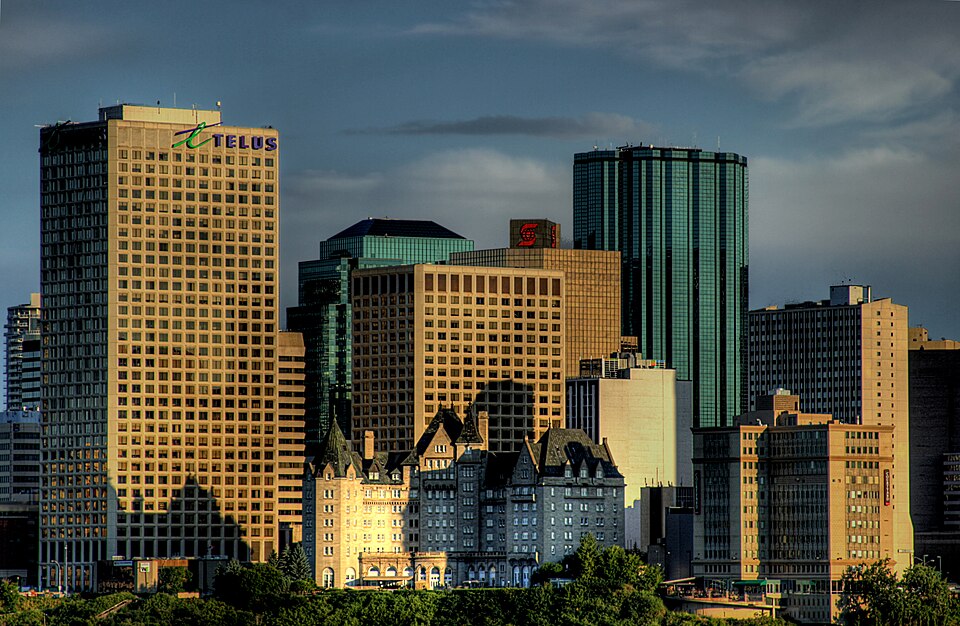
At 10065 100 Street NW, the Fairmont Hotel Macdonald looks like a French château transported to the edge of Edmonton's river valley. Its copper roofs, turrets and limestone exterior have made it one of downtown's most recognizable landmarks since it opened in 1915.
Built for the Grand Trunk Pacific Railway, the hotel represented the kind of sophistication a rapidly growing city wanted to project. Over the years it has welcomed royalty, celebrities, dignitaries and more than a few wedding receptions.
It also has a rather unexpected alleged guest: a horse.
The story behind the hoofbeats
According to a well-known local legend, a horse died during construction in 1914. Some versions say the animal fell into the foundation area. Guests have supposedly heard the sound of galloping hooves or a horse-drawn carriage passing through hotel corridors, especially near the eighth floor.
Now, if I checked into a beautiful hotel suite and heard a horse trotting past the door at 2 a.m., I'd have questions. Starting with whether it paid for parking.
The historical hotel is beyond dispute. The phantom horse is folklore. And the building itself has an inspiring survival story: it closed in 1983, was saved from possible demolition, received municipal historic designation in 1985 and reopened after restoration in 1991.
Even if the only thing you encounter is excellent architecture, it's worth admiring.
Sources: Edmonton Historical Board; City of Edmonton.
2. Alberta Block: Sam, the Opera-Singing Caretaker
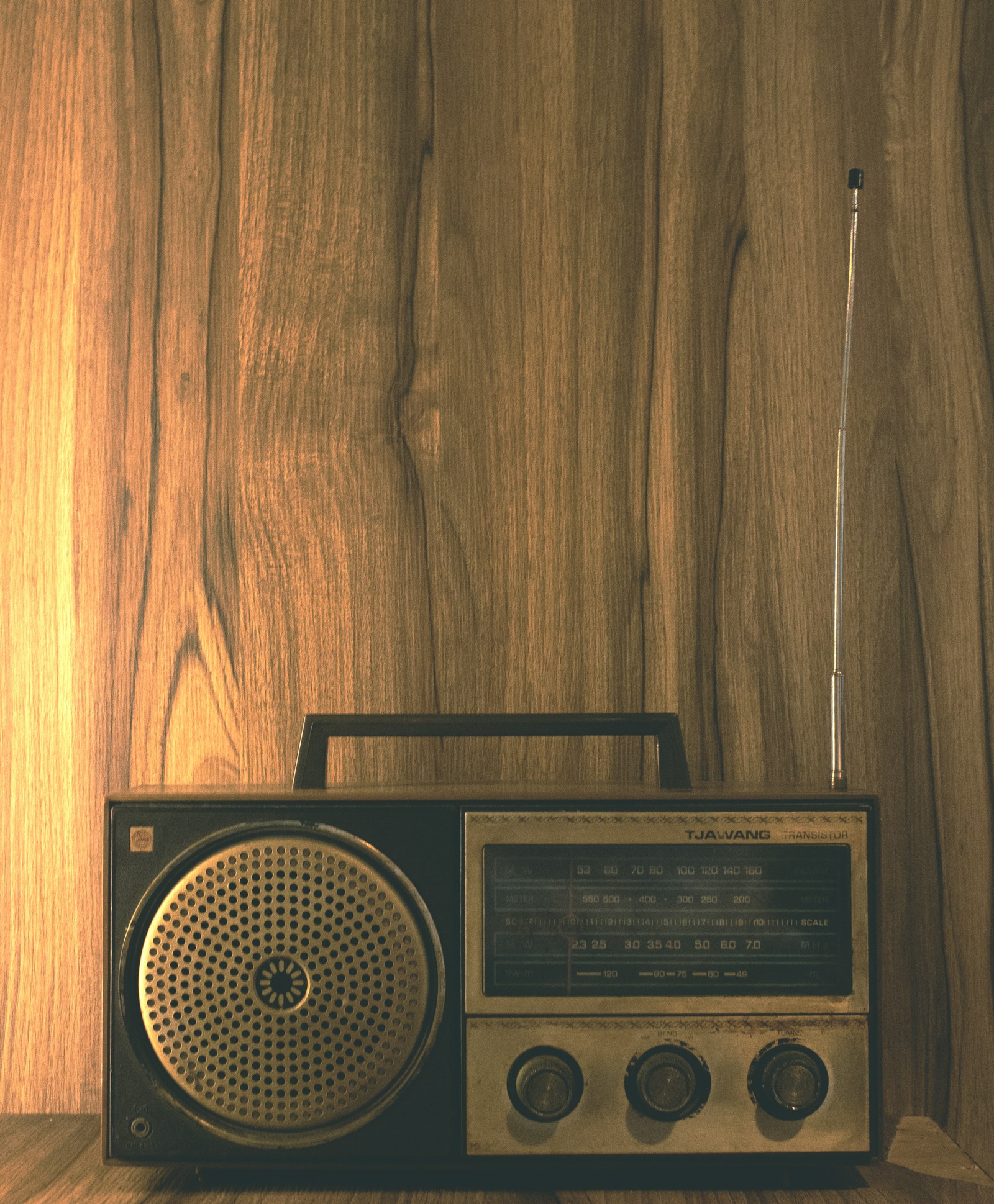
Walk west along Jasper Avenue to 10526 Jasper Avenue NW and you'll find the Alberta Block, a commercial building constructed in 1909 and expanded in 1913. For decades it was closely tied to CKUA, the radio network that helped shape Alberta's musical culture.
CKUA occupied the building from the mid-1950s until 2012. The stories collected there suggest that one former caretaker, known as Sam, was particularly reluctant to give up his workplace.
A haunting with a soundtrack
Former workers have described the smell of cigar smoke when nobody was smoking and the sound of a man singing opera in an apparently empty building. Local lore identifies the performer as Sam, who supposedly died at the property.
Compared with the usual ghost who spends eternity slamming doors, Sam sounds pretty civilized: a little opera, a cigar, and possibly some unpaid building maintenance.
Of course, an old broadcast facility—with its acoustic oddities, equipment and long working hours—can produce plenty of perfectly earthly mysteries. But the story says something important about how strongly workplaces become associated with the people who spent their lives in them.
Sources: City of Edmonton; CKUA Radio Network.

3. McKay Avenue School: A Ghost With an Unfinished To-Do List
The imposing red-brick McKay Avenue School at 10425 99 Avenue NW has one of the most impressive résumés of any building in Edmonton. Completed in 1905, it hosted the first working sessions of Alberta's Legislative Assembly in 1906 and 1907, before the present Legislature Building was completed.
McKay Avenue School, once the meeting place of Alberta’s legislature. Photo: Jeffery J. Nichols (Arctic.gnome) , CC BY-SA 3.0 . No changes made to the original photograph. | File source: Wikimedia Commons
Think about that for a moment: provincial politicians were shaping Alberta's future in a schoolhouse. It's hard to imagine modern Question Period taking place next to a classroom full of multiplication tables.
Knocking, moving chairs and mysterious hammering
Local ghost stories describe chairs shifting, lights operating unexpectedly and unexplained knocking. One story blames the activity on a construction worker said to have died during renovations. In some retellings, visitors hear the tapping of a hammer as if someone is still on the job.
The worker's identity and alleged haunting aren't firmly established historical facts. The site's political and educational significance, however, absolutely is. The property also includes Edmonton's original 1881 schoolhouse, making it an unusually rich window into the city's beginnings.
I like to imagine the ghost is simply a very conscientious contractor. But 100-plus years is a rather generous completion schedule.
Sources: City of Edmonton, “Eerie Edmonton”; City of Edmonton Archives.

4. Walterdale Theatre: The Friendly Firefighter Who Won't Retire
At 10322 83 Avenue NW in Old Strathcona stands Walterdale Theatre, a red-brick building that first opened as Strathcona Fire Hall No. 1 in 1910. Fire crews occupied it until 1954; the Walterdale theatre group took it over in 1974.
Walterdale Theatre occupies the former Strathcona Fire Hall No. 1. Photo: Arctic.gnome , CC BY-SA 3.0 . No changes made to the original photograph. | File source: Wikimedia Commons
That transformation—from a place of alarms and emergency calls into a home for live theatre—would be interesting enough on its own. But Walterdale also has one of Edmonton's more appealing alleged ghosts.
Meet Walt
According to local stories, Walt was an early firefighter who died in the building. Actors and volunteers have described bells ringing unexpectedly, lights flickering and objects turning up in strange places.
One frequently told account involves the sort of prop-related mishap that could fit right into a backstage comedy: a wig apparently moving from one part of the theatre to another without an obvious explanation.
It would be very on-brand for a theatre ghost to be more interested in wardrobe than terror.
Walt is usually described as a friendly presence, and that has made him part of the building's folklore rather than simply a scary story. Whether the cause is human forgetfulness, old wiring or something no one has identified, the tale makes a visit to this historic venue more memorable.
Sources: Alberta Historic Places; Global News.

The Princess Theatre has been a Whyte Avenue landmark for over a century. Photo: Solange Gagnebin , CC BY-SA 3.0 . No changes made to the original photograph. | File source: Wikimedia Commons
5. Princess Theatre: The Woman in White on Whyte Avenue
Just a short walk away, the Princess Theatre at 10337 82 Avenue NW has watched more than a century of changes along Whyte Avenue. Opened in 1915, it became an important destination for films and live entertainment in the growing community of Strathcona.
Old theatres have everything a good ghost story needs: balconies, dark stairwells, projection booths, backstage passages and acoustics that can make a distant footstep sound like it came from directly behind you.
The bride who allegedly never left
The Princess is associated with sightings of a pale woman wearing white. The figure has reportedly been seen near the projection room, around the lobby and on the grand staircase.
The most dramatic version claims she was a jilted bride who died during the theatre's rooming-house years. It's a powerful story, but that tragedy and the supposed identity of the apparition have not been independently established as historical facts.
As folklore, though, it's hard to beat. A beautiful old theatre, a mysterious figure on the stairs, and a tale of heartbreak that refuses to leave the building.
If I ever see a woman floating above the projection booth, I'm not sticking around to test the acoustics.
Sources: Alberta Historic Places; Global News.

The Strathcona Hotel dates to the railway era of South Edmonton. Photo: Arctic.gnome , CC BY-SA 3.0 . No changes made to the original photograph. | File source: Wikimedia Commons
6. Strathcona Hotel: The Woman at the End of the Hallway
The Strathcona Hotel at 10302 82 Avenue NW predates most of the Whyte Avenue landmarks around it. Built in 1891, it catered to travellers arriving in South Edmonton by rail and is one of the city's oldest surviving commercial buildings.
Long before Whyte Avenue was known for restaurants, pubs and late-night pizza, the hotel was part of a busy railway town. Its walls have witnessed tremendous change, including the period when Edmonton and Strathcona were separate communities.
A very unsettling apparition
Ghost-tour stories have described a female apparition with long dark hair in the hotel's hallways. The legend is sometimes connected to an alleged violent death in the 1980s. Some versions include disturbing visual details.
We should be careful here: a reported sighting is not proof of a spirit, and the connection between the apparition and any specific deceased person should not be stated as established fact.
What we can say with confidence is that this building has a genuine railway-era history and a long life at the centre of Old Strathcona. That's fascinating even before the lights start flickering.
Sources: Canadian Register of Historic Places; Global News.
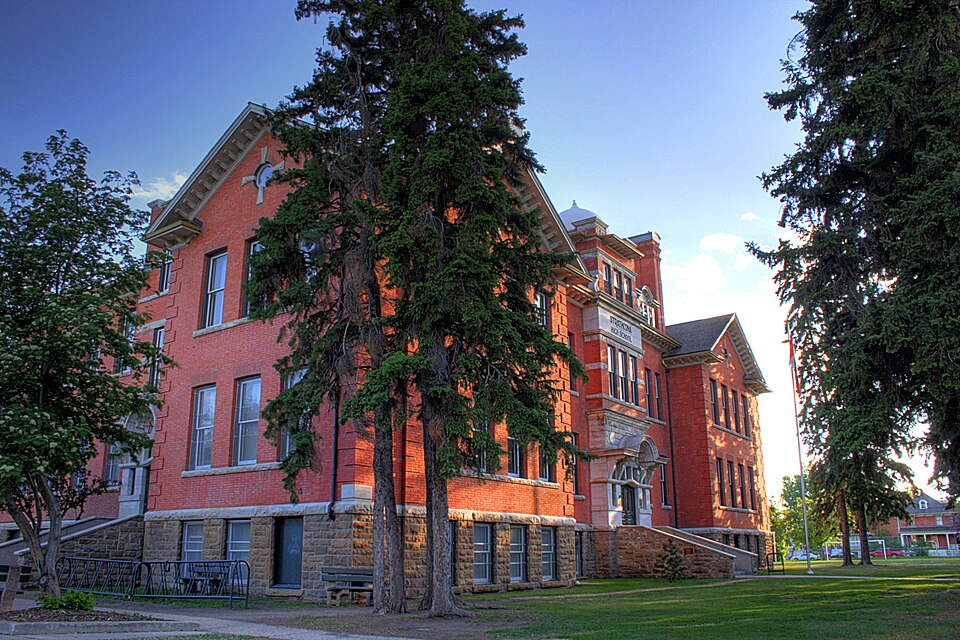
Old Scona Academic, where a long-running school legend lives on. Photo: WinterE229 / WinterforceMedia , Public domain (creator release) . No changes made to the original photograph. | File source: Wikimedia Commons
7. Old Scona Academic: The Mystery in the Foundations
A few blocks south, Old Scona Academic at 10523 84 Avenue NW is another landmark with a far more substantial history than its spooky reputation might suggest.
The building opened in the early 1900s as Strathcona Collegiate Institute. It later played a part in the early history of the University of Alberta, accommodating some of the young university's classes.
The worker who was never found
The school's best-known urban legend says a labourer died during construction and was hidden or trapped in the foundation. Versions differ on exactly how it happened. Subsequent stories attribute unexplained noises, moving desks or unusual lights to the man's restless spirit.
The problem? The lurid claim about a body concealed in concrete has not been backed up by reliable historical documentation in the sources consulted for this article.
It's the perfect example of a school legend: dramatic, faintly horrifying and easy to retell during a late-night study session. As a historical claim, though, it deserves a large question mark.
Old Scona is worth visiting for its architecture and educational legacy alone. The possible ghost is an optional extracurricular activity.
Sources: Global News; Old Scona Academic.

8. Fringe Theatre Arts Barns: The Man in Blue Overalls
Only a short walk away, the Fringe Theatre Arts Barns at 10330 84 Avenue NW are among the places that help make Edmonton a theatre city. Today they host performances, rehearsals and arts events. Their earlier life was considerably more industrial.
The building was associated with Edmonton's transit operations, serving as a bus and trolley facility. And that earlier chapter gave rise to an unusual ghost story.
A maintenance worker takes the stage
According to a story shared on Edmonton Ghost Tours and reported by Global News, a worker died during an explosion at the transit facility in the 1950s. Witness accounts in the legend describe a man wearing blue overalls who appears around the performance spaces, sometimes near the stage or in the wings.
Imagine you're rehearsing for a show when a stranger in work clothes quietly appears, watches for a moment and then seems to vanish. At the very least, you'd want to know who approved the surprise cast member.
As always, the story is a reported legend rather than proof of an afterlife. But it is also a reminder that many of Edmonton's arts venues began life as something else entirely. Those layers of history are well worth noticing.
Sources: Global News; Fringe Theatre.
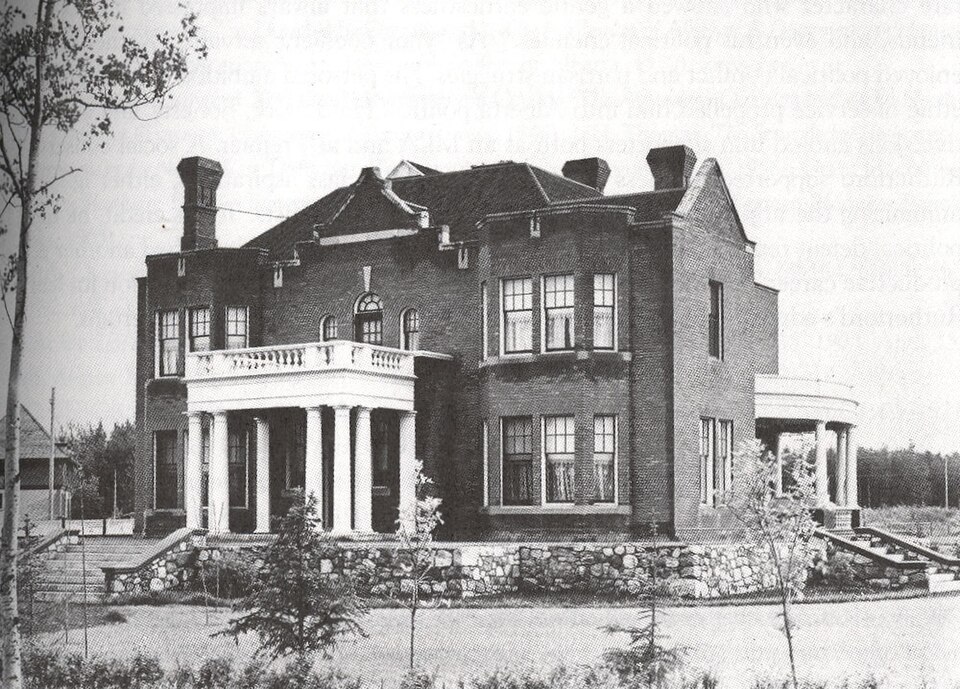
Rutherford House photographed around 1913—almost the same era as the stories it inspires. Photo: Unknown photographer / Glenbow Archives , Public domain in Canada . No changes made to the original photograph. | File source: Wikimedia Commons
9. Rutherford House: A Little Boy Running Upstairs
On the University of Alberta campus, Rutherford House at 11153 Saskatchewan Drive NW offers a glimpse into the life of Alexander Cameron Rutherford, Alberta's first premier. Built in 1911, the stately house remains one of the city's most evocative historic residences.
There's beautiful woodwork, period architecture and that unmistakable sense of a home from a very different age. And naturally, a story about an unexpected occupant.
The whistling child
Local ghost-tour accounts describe the sound of a young boy running or whistling on the upper floor. Some people have reported seeing a childlike figure who disappears before anyone can get a closer look.
Ghost-tour founder Nadine Bailey has also recounted noticing a light turn on in an upper room while conducting a tour outside the house.
Could it have been a person in the building, an electrical issue or a misunderstanding? Certainly. But the moment became another strand in the house's folklore.
As a REALTOR®, I find historic houses particularly interesting because their rooms reveal so much about the people who lived in them. It's not only about square footage; it's about how a family actually occupied the space, entertained guests and watched their neighbourhood change.
Rutherford House has more than enough real history to keep a visitor interested. The unexplained footsteps just add a little atmosphere.
Sources: Edmonton Historical Board; Global News.
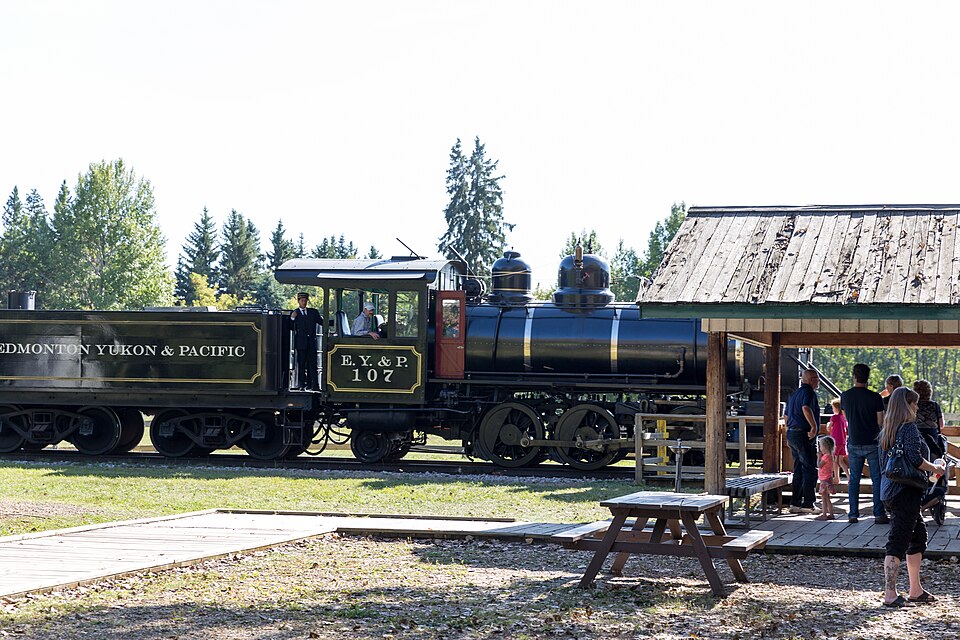
Fort Edmonton Park recreates several chapters of the city’s past. Photo: Mack Male , CC BY-SA 2.0 . No changes made to the original photograph. | File source: Wikimedia Commons
10. Fort Edmonton Park: Firkins House and the Park's Restless Residents
Fort Edmonton Park at 7000 143 Street NW is probably the city's most concentrated collection of places with a supernatural reputation. Its historic buildings and reconstructed streets make Edmonton's past tangible—and provide a wonderfully atmospheric setting for ghost stories.
Firkins House and its mysterious young visitor
Firkins House, on the park's 1905 Street, is frequently described as one of its most haunted sites. Reported experiences include a frail-looking boy, a male voice singing, unusual lights and objects that appear to have moved.
Other buildings at the park have also gathered stories. Fort Edmonton Park's own paranormal programming mentions the Rowand House, Kelly's Saloon and the Bellerose School among the places explored in investigations. The Rowand House has been linked to accounts of running footsteps and moving shadows.
The park openly acknowledges that paranormal experiences cannot be guaranteed. That seems reasonable. Ghosts, after all, are apparently under no obligation to keep appointments.
Even without anything unexplained, a visit is a great way to learn about Edmonton's fur-trade roots, streetscapes, early businesses and daily life. It's living history—with an occasional shiver added.
Sources: Fort Edmonton Park, Paranormal Tours; City of Edmonton; Global News.

11. The Gibbard Block: The Murder Story That History Can't Confirm
The Gibbard Block at 6423 112 Avenue NW is a striking early commercial building in the Highlands neighbourhood. Constructed in 1912, it was intended to combine attractive apartments with street-level businesses in an ambitious new suburb.
Decades later, many Edmontonians came to know the property as the home of La Bohème, the French restaurant and bed-and-breakfast. The building subsequently found new life through preservation and redevelopment.
A gruesome tale—and a historian's reality check
The legend claims that a jealous caretaker murdered his wife during the Depression and disposed of her remains in the building's furnace. In some tellings, the crime was discovered and the caretaker convicted.
It's sensational. It's disturbing. And there's a major problem: local historian Dane Ryksen, writing for Forgotten Edmonton, examined the story and reported being unable to find contemporary newspaper accounts confirming the alleged murder.
A crime followed by an arrest and conviction would normally leave records. That doesn't allow us to prove that no incident happened, but it does mean the familiar version should not be presented as established history.
Frankly, the genuine story of Highlands development, changing economic fortunes and the building's restoration is compelling enough. It doesn't need a fictional criminal record.
Source: Dane Ryksen, “The Gibbard Block,” Forgotten Edmonton.
12. Mount Pleasant Cemetery: Shadows, Strange Lights and Old Stories
Mount Pleasant Cemetery at 5420 106 Street NW is a peaceful south-side burial ground filled with mature trees, memorials and reminders of generations of Edmonton families.
Cemeteries naturally inspire ghost stories, and Mount Pleasant has its share. In a 2024 Global News report, historian and podcaster Craig Baird discussed accounts of shadowy figures, unusual lights and orbs. Some visitors have reportedly experienced camera batteries draining unexpectedly.
Not every orb is an apparition
Digital photographs can produce floating-looking lights when dust, insects, moisture or reflective particles catch a flash. Cold temperatures can also shorten battery life, which is hardly a rare condition in Alberta.
None of that makes the stories less interesting. It simply gives us sensible explanations to consider before declaring every suspicious speck of light a spirit.
Most importantly, this is an active place of remembrance—not a set for a haunted-house attraction. If you visit for its local history, follow the cemetery's rules, stay respectful of graves and other visitors, and keep the ghost-hunting theatrics for places that actually sell tickets.
Sources: Global News; City of Edmonton, Mount Pleasant Cemetery.
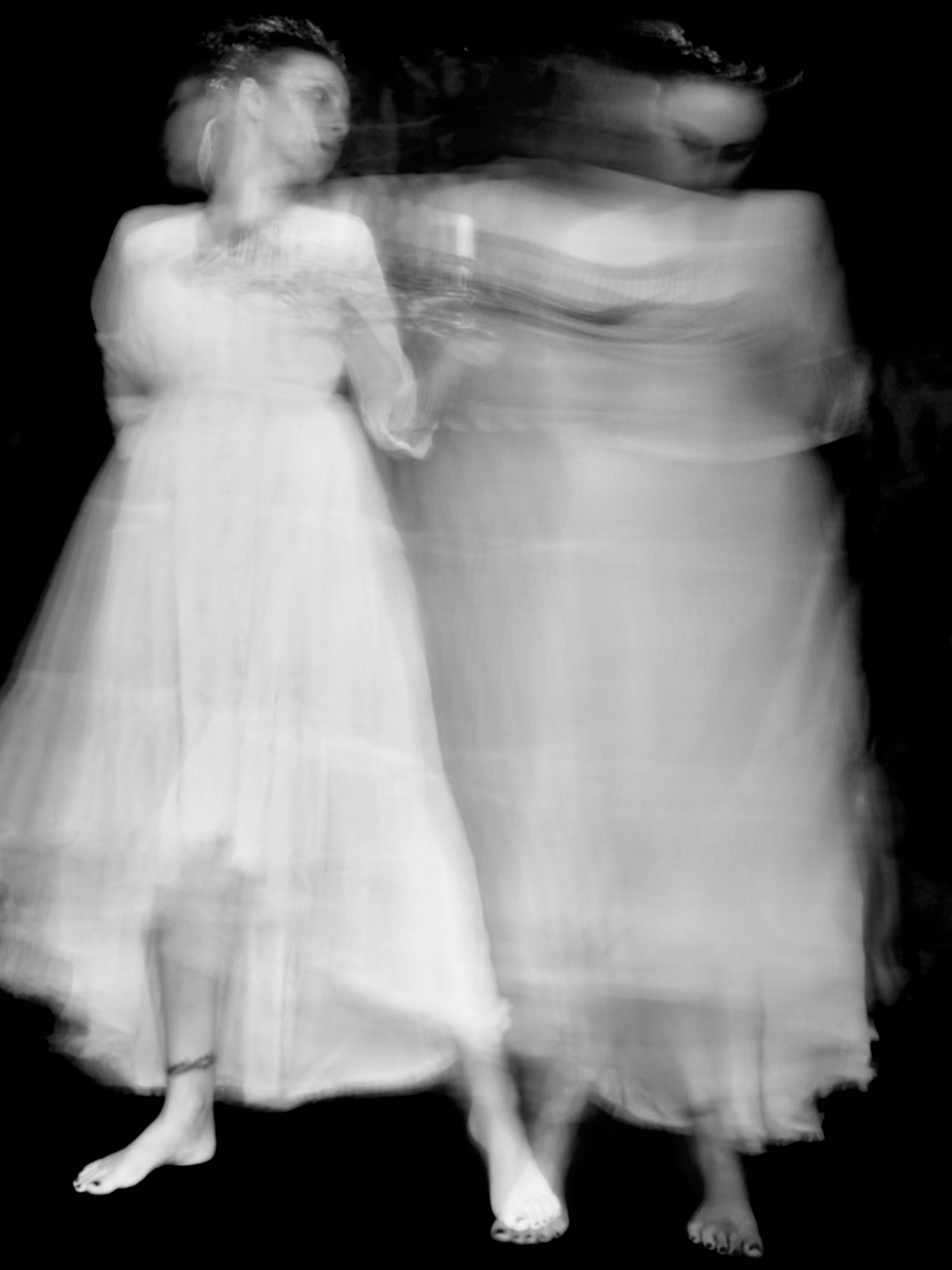
13. ATB Financial's Strathcona Branch: Ghosts in the Filing Cabinet
Even a modern workplace can accumulate a haunting reputation. ATB Financial's Strathcona branch, at 8008 104 Street NW, is a wonderful example.
In October 2018, ATB published an article based on staff accounts of strange experiences in the branch: unexplained knocking, door handles moving by themselves, doors opening unexpectedly, and oddities involving stored equipment and keys.
The ghost meets the HVAC system
Perhaps the best detail in the entire article is that an employee interrupted talk of a mysterious cold spot by pointing out the air-conditioning vent responsible.
Perfect. This is exactly how a paranormal investigation should begin.
Before you consult the spirit world, check the thermostat.
The employees weren't especially alarmed. They often joked about the building's resident ghost and occasionally blamed little everyday mishaps on it. In time, those conversations became part of the branch's own local folklore.
ATB also reported rumours involving an earlier hotel on the site, but those rumours should not be confused with verified historical accounts of a death or fire.
This one is charming precisely because its witnesses seem to have maintained their sense of humour.
Source: ATB Financial, “An ATB Ghost Story” (2018).
14. The High Level Bridge: Legends Above the River Valley
Unlike the other locations in this article, the High Level Bridge doesn't have one conventional street address. Its roadway crosses the North Saskatchewan River on 109 Street, linking the downtown side near 97 Avenue with the south side near 88 Avenue.
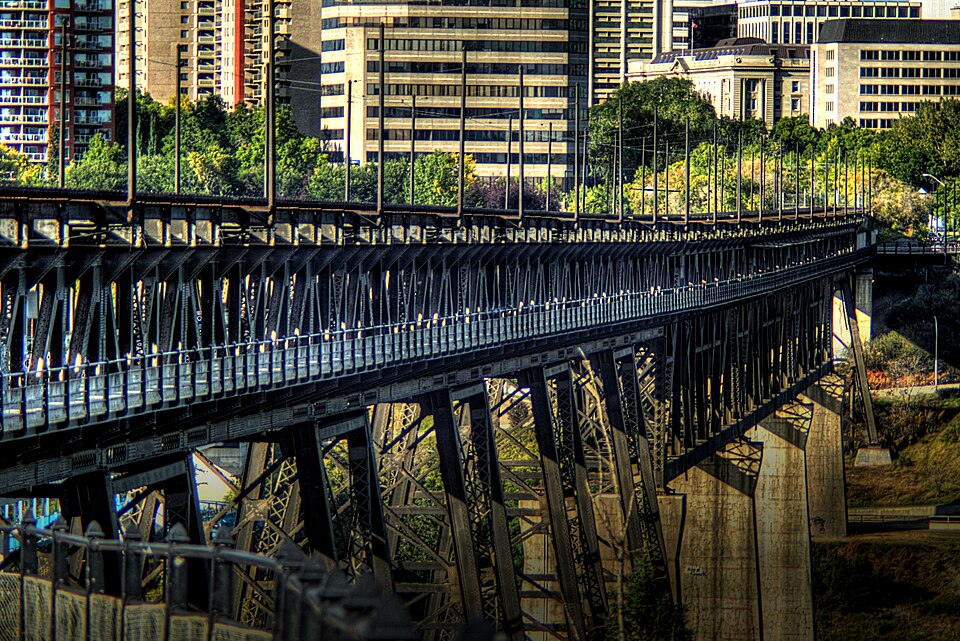
[Photo in fully illustrated HTML edition] The High Level Bridge: plenty of genuine history, plus a few ghost stories. Photo: WinterE229 / WinterforceMedia , CC0 1.0 . No changes made to the original photograph. | File source: Wikimedia Commons
Built between 1910 and 1913, the bridge accommodated trains, streetcars, vehicles and pedestrians. It remains one of Edmonton's most recognizable engineering achievements.
Its size, age and dramatic setting naturally make it a favourite for eerie storytelling. Edmonton Ghost Tours has included stories about bridge construction and the surrounding area in specialty trolley experiences.
Why the bridge is atmospheric enough without ghosts
Stand near the bridge on a grey October evening and you'll understand the appeal. There's the steel structure, the deep river valley, the wind and the knowledge that generations of Edmontonians have crossed the same span.
A little mysterious noise at the wrong moment? You have the beginning of a ghost story.
But the actual engineering history is well established, while stories about specific spirits remain folklore. There's no need to pretend otherwise.
For a memorable historical outing, check the Edmonton Radial Railway Society's streetcar operations and Edmonton Ghost Tours' seasonal offerings. A trip over the bridge is enjoyable even when the only ghostly sound comes from the brakes.
Sources: City of Edmonton Archives; Edmonton Ghost Tours.
Three Edmonton Urban Legends That Deserve a Second Look
Was there really a bride at the Princess Theatre?
The woman-in-white story is well documented as a story. The alleged tragedy used to explain it has not been demonstrated through definitive historical records in the material consulted here. Enjoy the tale—but don't treat the bride's identity as a proven biography.
Is someone buried in Old Scona's foundations?
There is a long-running story about an unfortunate construction worker. The claim that a body was concealed in the school foundations is not adequately corroborated. If that sounds like a classic schoolyard legend, that's because it has all the ingredients.
Did the Gibbard Block caretaker commit murder?
Local historian Dane Ryksen couldn't find period newspaper evidence for the lurid, often-repeated crime. It's a great example of why a good historical article needs both a storyteller and a fact-checker.
Rossdale: A Real History That Deserves Respect
Some Edmonton locations are solemn for reasons far more important than ghost stories. The historic burial ground in Rossdale, near the former power plant, is one of them.
It is connected with Indigenous peoples, Métis families and the city's fur-trade history. Its recognition and memorialization are part of a continuing effort to respect those buried there and understand a much older Edmonton.
Rather than frame it as a haunted attraction, I encourage readers to learn about the people, histories and cultural significance of the area. Not every place with a powerful past needs a ghost attached to it.
Source: City of Edmonton Archives.
How to Explore Edmonton's Haunted History
Old Strathcona: The ideal haunted-history walk
Old Strathcona is the easiest place to see several locations in one outing. Start near Old Scona Academic and the Fringe Theatre Arts Barns, wander toward Walterdale Theatre, then head to Whyte Avenue to admire the Strathcona Hotel and Princess Theatre. Everything can be appreciated from public sidewalks, even when interior access isn't available.
Combine the walk with dinner at one of Whyte Avenue's restaurants. It's a terrific Edmonton evening, ghosts or no ghosts.
Downtown: Grand hotels and political history
The Hotel Macdonald, Alberta Block and McKay Avenue School tell a different story: the growth of Edmonton as a commercial, cultural and political centre. Take your time with the architecture. You may spot details you've driven past a hundred times without noticing.
Leave the investigation to an organized tour
Edmonton Ghost Tours has long mixed local lore with history walks and special experiences. Fort Edmonton Park offers a different approach through guided paranormal investigations in selected historic buildings. Check the operators' current schedules, restrictions and accessibility details before making plans.
And a friendly reminder: historic buildings aren't open invitations to sneak around after hours. Enjoy public spaces, respect property boundaries and don't enter restricted areas.
Frequently Asked Questions About Haunted Edmonton
What is the most haunted place in Edmonton?
There is no scientific ranking of haunted sites. But the Fairmont Hotel Macdonald, Princess Theatre, Walterdale Theatre, Rutherford House and Fort Edmonton Park are among the places most often mentioned in Edmonton ghost lore.
What is the ghost story at the Hotel Macdonald?
The hotel's best-known legend describes phantom hoofbeats linked to a horse said to have died during construction in 1914. The hotel is real and historic; the supernatural interpretation is unverified.
Is the Princess Theatre in Edmonton haunted?
Local legends describe a woman wearing white near the theatre's lobby, stairs or projection area. The alleged bride's backstory has not been conclusively established.
Where can I find haunted places in Old Strathcona?
Walterdale Theatre, Princess Theatre, the Strathcona Hotel, Old Scona Academic and the Fringe Theatre Arts Barns are all associated with stories and lie within a relatively compact neighbourhood.
Can I visit these Edmonton haunted places for free?
You can appreciate the exteriors of many heritage sites from public sidewalks without paying admission. Tours, attractions, performances and interior visits may require tickets or reservations.
Are Edmonton ghost tours suitable for kids?
It depends on the operator and individual tour. Some stories involve death or violence; Fort Edmonton Park's investigation tours can have minimum-age restrictions. Always check before booking.
Are any of the ghost stories proven?
The buildings and much of their history can be documented. The ghost sightings are stories, reports or personal experiences, not verified proof of paranormal activity. Some dramatic urban legends cannot be confirmed in surviving records.
The Real Magic of Edmonton's Haunted History
After all these ghost stories, here's the thing that sticks with me: you don't have to believe in ghosts to appreciate Edmonton's past.
The Hotel Macdonald reminds us of the railway boom. Walterdale Theatre shows how an old firehall can have a remarkable second life. The Princess Theatre helps preserve a century of entertainment history. Rutherford House connects us with Alberta's earliest provincial leadership. Old Strathcona's buildings explain why that neighbourhood still has so much character.
As a REALTOR®, I spend plenty of time talking about bedrooms, bathrooms, lot sizes and property values. Those things matter. But I also believe a neighbourhood's history and personality are part of what makes it feel like home. Edmonton has an abundance of both. And sometimes an old building has a story so good that it survives generations of owners and tenants.
So the next time you walk past an old theatre, stop outside a century-old house or cross the High Level Bridge, take a second look. The building might have an incredible story. If a seller tells you a home has had the same residents for 100 years, it might be wise to confirm everyone has actually moved out.
Happy Halloween, Edmonton. If something goes bump in the night, check the furnace before calling Ghostbusters.
Looking for a Home With Character—But Preferably Without a Ghost?
I've lived in Edmonton all my life, and one of my favourite parts of real estate is helping people get to know the neighbourhoods that make this city special. Whether you love a century-old character home, a mature neighbourhood or something brand new, I'd be happy to help you find the right fit.


