Inside Edmonton

Pabian Realty Presents

Sign up below for new weekly content on the market, the charm, and the people that make Edmonton like no other city in Canada

What’s happening in the market today?

RSS

Edmonton in 2026: Everything You Can Expect Next Year

2026 is shaping up to be one of those years where you can feel Edmonton leveling up.

Major recreation projects are finally opening, Hawrelak Park is coming back to life, big policy moves are hitting the street level in a meaningful way, and the concert and festival calendar is legitimately stacked and seemingly growing every week.

Here’s a tour through some of the biggest things Edmontonians can look forward to in 2026—from new rules and rebuilt parks to stadium shows and classic “Festival City” weekends.


1. The Policy & City-Building Stuff (That Actually Affects Daily Life)

Affordable housing targets turning into real buildings

Back in 2023, Edmonton set a medium-term target of 2,700 units of affordable housing by 2026 under its Affordable Housing Strategy and related investment plans.

As of early 2025, the City has already:

  • Committed funding and/or land to support 2,922 units—surpassing that 2,700-unit target

  • Seen 260 units completed, with 2,319 under construction and 343 more in planning, spread across multiple neighbourhoods rather than concentrated in just a few areas

That means 2026 isn’t just about “policies on paper”—it’s a year when a lot of these homes are finished, occupied, and actually part of the streetscape.


Edmonton’s new zoning rules becoming refined

On January 1, 2024, Edmonton officially replaced its old Zoning Bylaw 12800 with Zoning Bylaw 20001—a major reset intended to simplify zones and allow more “gentle density” (suites, rowhousing, small-scale apartments) in more neighbourhoods.

By 2026:

  • The new bylaw is fully in force, and

  • Council and administration are in the fine-tuning phase—using real-world results to adjust things like height, unit counts, and where multi-unit housing makes sense.

What that means for everyday Edmontonians:

  • If you own a typical residential lot, there may now be more options for suites, garden/garage homes, or small-scale infill than a few years ago.

  • If you’re a buyer, you’ll see a wider mix of housing types—especially in mature areas close to transit and amenities.

It’s a big and at times, uncomfortable, change but it quietly shapes what your block looks and feels like over the next decade.


LRT: Still construction… but clearly heading somewhere

No, you’re not riding brand-new LRT lines in 2026—but the work that’s clogging up your commute is leading somewhere. The Valley Line West (downtown to Lewis Farms) construction is deep into its middle phase. The City and Alberta’s project tracker both point to construction finishing around 2028, followed by testing before opening.

  • Capital Line South (Century Park to north of Ellerslie) began major construction in 2025. The City expects 4–5 years of major work, plus testing, putting opening into the late-2020s.

In 2026 you’ll still see lane closures, detours, and pylons—but you’ll also see overpasses, trackwork, and stations taking shape, especially along 87 Ave in the west and 111 Street in the south.


2. The Big 2026 Openings: Velodrome, Pool & Hawrelak Park

This is the exciting part: big community assets actually opening.

Coronation Park Sports & Recreation Centre + Peter Hemingway Pool

In north-central Edmonton, the brand-new Coronation Park Sports and Recreation Centre is scheduled to open in early 2026 as a major sport and community hub.

Highlights:

  • A 250-metre indoor cycling track (velodrome) with spectator seating for up to 940 people

  • A walking/running track, large fitness centre, bouldering (climbing) wall, gym courts, studios, indoor play space and more

  • A direct connection to the rehabilitated Peter Hemingway Aquatic Centre, creating one integrated facility

  • A design that aims for a UCI “Category A” level—qualifying it to host major national and international cycling events if certified

For surrounding neighbourhoods like Woodcroft, Inglewood, North Glenora and the Coronation/Westmount area, this instantly becomes the rec destination—especially in winter. For the rest of the city, it’s Edmonton’s newest high-end indoor sport facility and a showcase for big events.


Hawrelak Park: Back after a three-year makeover

William Hawrelak Park closed in March 2023 for a full, above- and below-ground overhaul of aging infrastructure—everything from deep utilities to roads, buildings, amphitheater seating, and the lake.

By fall 2025, the City reported that:

  • Roadways and pathways had been repaved,

  • New playground equipment was being installed,

  • The lake had been cleaned, reshaped and refilled,

  • Power and utility upgrades were substantially complete, and

  • Construction was on time and on budget, with reopening anticipated in winter 2025/26.

Scope-wise, the rehab touches almost everything:

  • Utilities: full replacement of storm, water, irrigation, power and telecom infrastructure

  • Facilities: modernization of the main pavilion, boat house, washrooms, service yard and Heritage Amphitheatre, plus added gender-inclusive washrooms and better year-round usability

  • Open spaces: a new playground, upgraded dock, redesigned paths, improved crossings, more accessible picnic sites, and refreshed lighting and landscaping

For 2026, that means:

  • One of Edmonton’s most beloved river valley parks rejoins your weekend rotation,

  • Iconic festivals that were temporarily relocated—like Heritage Festival (the big one), Silver Skate, Freewill Shakespeare, and Symphony Under the Sky—now have a fully modernized “home base” to plan their long-term return to, even as Heritage Festival spends 2026 in its expanded Exhibition Lands/Borden Park setup

  • And over the next few years, you’ll see more programming and major events gradually shifting back to a Hawrelak that’s been rebuilt for the next several decades.

Between Coronation and Hawrelak, 2026 is a huge year for “big public spaces” in central Edmonton.

3. Winter 2025–26: Lights, Banksy, and Beating Cabin Fever

Winter spans two calendar years, so some of the coolest 2026 experiences actually start in late 2025 and roll into January.

Winterruption YEG – January 21–25, 2026

Winterruption YEG is back downtown from January 21–25, 2026, with a multi-venue mix of live music, comedy, drag, and outdoor programming.

It’s basically an excuse to fight cabin fever with wristband-style nights out in the core.


The Art of Banksy: Without Limits – until January 11, 2026

At Edmonton City Centre East, The Art of Banksy: Without Limits runs from October 17, 2025 through January 11, 2026, bringing more than 60 original works plus large-format installations from the famously anonymous street artist.

Pair it with Winterruption or a downtown date night and you’ve got a very un-boring January.


Classic winter light traditions (all wrapping in early 2026)

If you love twinkle lights and hot drinks in mittens, winter 2025–26 offers:

  • Zoominescence: A Festival of Light at the Edmonton Valley Zoo – Dec 5, 2025 to Jan 4, 2026

  • Candy Cane Lane – West-end Christmas lights along 148 St from Dec 12, 2025 to Jan 2, 2026

  • Magic of Lights – drive-through light experience at RAD Torque Raceway from Nov 20, 2025 to Jan 3, 2026

All of these spill over into early 2026, which is perfect timing as Hawrelak and Coronation get ready to reopen and winter programming ramps up.


4. Spring & Summer 2026: Festivals in Full Force

Once the snow melts, Edmonton slides right back into Festival City mode.

Edmonton Craft Beer Festival – March 6–7, 2026

At the Edmonton EXPO Centre, the Edmonton Craft Beer Festival runs March 6–7, 2026, with:

  • 150+ breweries, cideries, distilleries and RTD brands

  • 20+ local food vendors

  • Live music and tasting sessions stretched across multiple halls

If you’re a local food-and-drink person, this one is basically a calendar lock.


Taste of Edmonton – July 16–26, 2026

Downtown’s food festival, Taste of Edmonton, is scheduled for July 16–26, 2026, offering 11 days of dishes from local restaurants, live music and arts programming.

You get that classic “after work, wander through the square and graze” summer vibe right in the core.


K-Days – July 17–26, 2026

Right on top of Taste (calendar-wise), K-Days runs July 17–26, 2026 at the EXPO grounds:

  • Midway rides and games

  • Fair food in all its forms

  • A full K-Days music lineup and special theme days

If you have kids—or just a soft spot for mini-donuts—this is a must.


Edmonton Heritage Festival – August 1–3, 2026

You can’t talk about summer in Edmonton without talking about Heritage Festival.

In 2026, the Edmonton Heritage Festival is scheduled for the August long weekend – August 1–3, 2026, continuing its run as a three-day, free, family-friendly celebration of multiculturalism.

A few quick stats that show just how big this one is:

  • Up to 100 cultures and countries represented

  • 60+ outdoor pavilions and tents

  • Hundreds of performances on multiple stages

  • A massive range of traditional foods, crafts, and cultural displays, with the festival also acting as a major fundraiser for Edmonton’s Food Bank

Because Hawrelak Park has been closed for rehabilitation since 2023, the festival has been temporarily based at Edmonton Exhibition Lands and Borden Park—and 2026 event listings still show that Exhibition Lands/Borden Park footprint for the August long weekend.

With Hawrelak anticipated to reopen in winter 2025/26, 2026 becomes a bit of a “transition year”:

  • The festival continues at its expanded Exhibition Lands/Borden Park site, which was upgraded to handle large crowds during the Hawrelak closure

  • At the same time, the fully rehabilitated Hawrelak—complete with renewed utilities, paths, and amphitheatre—returns as the festival’s traditional home base for future years, supported by an agreement and “right to return” understanding between organizers and the City

Bottom line: if you’re new to Edmonton in 2026 and you only pick one major summer event to understand how multicultural and community-driven this city really is, Heritage Festival is it.


Edmonton Folk Music Festival – August 6–9, 2026

Gallagher Park’s hillside will once again host the Edmonton Folk Music Festival from August 6–9, 2026.

It’s consistently cited as one of North America’s best folk festivals, and the “blanket on the hill with the skyline in the background” experience is about as Edmonton as it gets.


Edmonton Fringe Festival – August 13–23, 2026

A week later, Old Strathcona turns into a theatre/people-watching paradise with the Edmonton Fringe Festival, running August 13–23, 2026.

Even if you don’t see a single show, just wandering the grounds and taking in the food trucks and buskers is worth it.

And that’s before you add in dozens of smaller cultural festivals, outdoor movie nights, neighbourhood events, and whatever cool thing pops up at a newly reopened Hawrelak Park.


5. Big Concerts & Stadium Moments

The 2026 concert calendar is still filling in, but we already know about some huge nights.

AC/DC – Commonwealth Stadium – August 9, 2026

Rock legends AC/DC are bringing their Power Up Tour 2026 to Commonwealth Stadium on August 9, 2026 at 7:00 p.m.

Expect sell-out crowds, packed patios, and a lot of black t-shirts on the LRT.


Guns N’ Roses – Commonwealth Stadium – August 26, 2026

Just a couple of weeks later, Guns N’ Roses bring their newly announced 2026 world tour to Commonwealth Stadium on August 26, 2026, part of a huge North American stadium run.

If you’re anywhere near Bellevue or Cromdale that night, you’ll probably hear half the set from your backyard.


Arena & theatre shows

On top of the stadium dates, you can expect:

  • A full slate of concerts and special events at Rogers Place (plus the usual Oilers and Oil Kings seasons)

  • Series like “Live at the Winspear”—for example, Reuben and the Dark with Bullhorn Singers at Winspear Centre in February 2026—and countless other mid-size shows filling the city’s venues

Check the Rogers Place and Explore Edmonton event calendars regularly—the 2026 lineup is still growing.


6. So… What Does All This Mean If You Live (or Want to Live) Here?

Put all of this together and 2026 looks like:

  • A huge year for recreation and public spaces

    • Coronation Park Sports & Recreation Centre + Peter Hemingway Aquatic Centre finally opening

    • Hawrelak Park returning after a once-in-a-generation rehab

  • Steady progress on the “boring but important” stuff

    • Affordable housing targets not just being met, but surpassed

    • New zoning rules gradually making more room for housing choice across the city

    • LRT projects moving from drawings to visible structures

  • A lifestyle calendar that makes staying home harder and harder to justify

    • Winter lights, Winterruption, Banksy, Zoominescence

    • Craft Beer Fest, Taste of Edmonton, K-Days, Heritage Festival, Folk Fest, Fringe

    • Stadium shows that pull in fans from all over Western Canada

From a housing and quality-of-life perspective, it’s the combination that matters: real investments in parks, transit and housing plus a stacked events calendar make Edmonton in 2026 feel like a city that’s very much on the front foot.


Quick FAQ: Edmonton in 2026

Q: Will all of these dates stay the same?
A: Event organizers and the City can (and do) adjust details. The openings and dates here are based on official City project pages, organizers’ websites, and event calendars as of late 2025. Always double-check directly with the event or the City of Edmonton before buying tickets or planning around a specific milestone.


Q: What are the “can’t miss” experiences if I’m new to the city in 2026?

If you’re trying to get a real feel for Edmonton in one year, I’d circle:

  • A visit to the new Coronation Park / Peter Hemingway complex once it opens

  • A lazy summer day (or festival weekend) at Hawrelak Park after it reopens

  • Heritage Festival over the August long weekend

  • Winterruption YEG in January

  • At least one summer festival pairing—Taste + K-Days or Folk Fest + Fringe

  • One big night at Commonwealth or Rogers Place (AC/DC, Guns N’ Roses, or whatever else gets announced)


Q: How do I keep up with new 2026 announcements?

  • Bookmark the City of Edmonton festivals and events schedule and Explore Edmonton’s event calendar—both are regularly updated as new shows and festivals are announced.

  • Follow key venues and festivals (Rogers Place, EXPO Centre, Folk Fest, Fringe, K-Days, Taste of Edmonton, Winterruption YEG) on social media for lineup drops and presale info.


Q: Does any of this actually matter if I’m thinking about buying or selling a home?

Absolutely. Big public investments (“Where are the cool parks and rec centres?”), better transit, and strong festival and events culture all feed into:

  • Neighbourhood desirability

  • Long-term value and stability

  • How it feels to live in a given area day-to-day

If you’re weighing a move in 2026, it’s worth lining up your short list of neighbourhoods with the projects and amenities that are coming online over the next 3–5 years, not just what exists today.

Call Mike today at 780-232-2064 for more information. If you’d like to book a tour of some of Edmonton’s best attractions, I’ll be happy to be your guide.


Read

10 Myths About Real Estate Agents—Debunked

If your picture of real estate agents comes mostly from TV shows, memes, or the odd bad experience a friend had, it’s no surprise the industry has a bit of a reputation problem. For example, George Costanza was a Realtor on Seinfeld until well into the second season and he wasn’t exactly known for his scrupulous nature. Enough said. And, if you’ve ever been on Reddit, you know that Realtors are perceived as paper-pushing door openers that failed in the corporate world and took up a license to get out of the house.

The reality is that many realtors already run successful businesses - ones you probably frequent. They’re franchise owners, tech wizards, developers and entrepreneurs that are now able to leverage their prior success and business acumen into successful careers in real estate. 

The industry chews up and spits out over 90% of real estate agents within the first 12 months. So no, it’s not an easy job. 

While you might see billboards or bus benches with shiny happy people, the reality behind the scenes is very different—and understanding that difference can help you choose the right person to represent you, or catch red flags before they turn into bigger issues.

Let’s walk through 10 of the biggest misconceptions people have about real estate agents—and what they are really all about.

Myth #1: “Agents just unlock doors and write offers.”

The misconception:
Anyone can book showings, walk through a house, and sign a contract. Why pay someone for that?

What really happens:
The visible part—opening doors and filling in paperwork—is maybe 10% of the job. Before we can ever get to that point in the process, ask yourself - how well does this person understand me, my needs, and what I’m looking for? A common pitfall among new agents is that they are overly eager, and will often skip even the most basic of pre-qualification questions. If you contact a realtor and ask them to see a property, their reaction shouldn’t be to ask what time you’re free - it should be to initiate at least a ten minute conversation. Questions they should ask include whether you’re currently working with another realtor, whether you’re pre-approved, what about this specific property stood out, how long you’ve been looking, what is important for you (location, price, access to home/work/school/gyms/etc) and on and on. Think about it - when you make any major purchase, how much research did you do? I’m guessing you didn’t just buy the first vehicle you saw online, or walk into an electronics store and say “One gaming laptop please!”

So, back to that 10% versus 90% statistic. The other 90% of the job, before we open the first door, is less glamorous and way more important.

  • Pricing and strategy: Reading the market, analyzing comparable sales, and setting a pricing strategy that actually gets results. Sure, you could pay list price but a skilled agent will be able to save you thousands, even (and sometimes especially) on new construction. We’ve seen the good, bad and scary and know what to look for.

  • Interpreting listings: Spotting red flags in listing remarks, photos, and history that a casual buyer would miss is our superpower. Even little things like the property being listed multiple times in a short amount of time, or being located next to a former drug house, or having a history of water damage or unpermitted (and therefore crappy) renovations…All things that we are trained to look out for and solve for our clients.

  • Structuring offers: Crafting conditions, timelines, and clauses to protect you if something goes wrong is something we do on a regular basis. More than just protecting you from liability, though, we also ensure that the offer you’re making is written in a way that is appealing and likely to be accepted. This can be of great benefit in a hot market like Edmonton has experienced in the past several years.

  • Negotiations: Knowing when to push, when to hold, and when to walk away. Think of us as the Kenny Rogers of deals. Personally, I have over 20 years of sales experience and have worked as a national executive sales trainer at a Fortune 500 company. That experience matters.

  • Coordination: Managing inspectors, lawyers, mortgage brokers, appraisers, tenants, other agents, and sometimes very stressed-out buyers or sellers is what we get paid to do. If your deal went smoothly, it’s likely because your realtor solved the problems in the background before you ever became aware that there was a potential challenge.

  • Problem prevention: Anticipating issues with financing, inspections, title, or timelines—and fixing them before they ever land on your plate.

A big chunk of an agent’s value is in the problems that never become your problems. We’re running defense 24/7.


Myth #2: “Real estate agents are overpaid for what they do.”

The misconception:
“Wait… they made how much from this one sale? For a few weeks of work?”

The reality behind the cheque:

  • Gross ≠ net. That commission is gross revenue. From that, agents pay brokerage splits, licensing fees, insurance, marketing, signage, photography, gas, staging, client gifts, office expenses, and more. We don’t get benefits, we pay to rent our office from our brokerage, and on and on. It’s not uncommon for new agents to incur losses of over $60 000 in their first year, just for startup fees.

  • Lots of unpaid work. Agents spend time with buyers and sellers who never end up transacting. There are months of nurturing, answering questions, and showing homes that never turn into a paycheque.

  • Income swings. There’s no salary. Some months are great, some are quiet, and the bills keep coming either way.

Is it possible to make a good living in real estate? Yes.  Is it “easy money for a few hours of work”? Not if someone is actually doing the job properly, no. The average conversion rate for most agents is between 2-3%. This means that for every “sold” sign you see, that agent had 98 interactions, prospects, or contacts with individuals that never turned into a closed deal. 


Myth #3: “All real estate agents are basically the same.”

The misconception:
“An agent is an agent. I’ll just use whoever answers their phone first.” To use another car analogy, a Yugo and a Mercedes S Class will both get you to the office on time but the experience between one and the other will be very, very different.

The reality:
There can be a massive difference in:

  • Skill level: Pricing, negotiation, marketing, contract knowledge, and problem-solving are all key factors. Does the agent have support within their brokerage? Do they have a track record of success, or are they simply maintaining a license while working full time in an office role, only able to work for you when they’re not otherwise occupied?

  • Local expertise: Deep understanding of specific neighbourhoods, builders, condo buildings, or property types. Is the agent knowledgeable about the city and the local amenities or are they coasting through life? Is this their passion? Do they have referrals?

  • Communication: How often they update you, how clearly they explain things, and how reachable they are.

  • Approach and values: Some agents are very salesy. Others are more advisory and data-driven. Some are detail-obsessed; some fly by the seat of their pants. Some are casual and will show up in shorts and a t-shirt, while others wouldn’t be caught dead without their Armani suit. Are they a fit for you and your style?

Picking “whoever is convenient” is a bit like choosing a surgeon based on who returned your call first. Technically, everyone has the same license. In practice, their experience and approach can be very different, and each individual - remember, we’re all humans - will offer a unique experience.


Myth #4: “The agent controls the price (or the outcome).”

The misconception:
“If my agent was better, they’d have got me more money,” or
“If my agent was stronger, the seller would have accepted my low offer.”

The reality:
Agents influence strategy, not the laws of supply and demand.

A good agent can:

  • Help you price strategically based on real data

  • Recommend prep and staging to boost perceived value

  • Market the property effectively to reach the right buyers

  • Negotiate terms, timing, and concessions in your favour

But they can’t:

  • Force buyers to pay more than the market will bear

  • Force sellers to accept an offer they’re not comfortable with

  • Override interest rates, inventory levels, or economic conditions

If your expectations are totally out of sync with the market, even the best agent in the world will feel like they’re “failing”—when the real problem is the gap between expectations and reality. Circling back on the previous point about pre-qualification, a good agent will be honest with you if it’s not a fit - and this is something that should be clear before you ever sign an agreement. I turn down 1-2 prospects a month simply because we don’t vibe. Why force it when I could spend more time with folks that are more aligned with what I have to offer? 


Myth #5: “Agents just want a quick sale and don’t care what I buy.”

The misconception:
“All they care about is their commission, so they’ll push me into anything.”

Let’s just stop right there. I actually take offense to this. Buying a home is the single largest financial decision you will make. I work with people going through separation. I work with families that have to sell their childhood home because their parents just lost a battle with a terminal disease. I’m there when you need to move into a bigger home to welcome your first child, and I’ll be there when you need to downsize after they’ve left for University. To be a part of such pivotal moments in the lives of my clients is a great honour, and one I take seriously. 

The reality:
Yes, there are pushy agents. But for most professionals, that approach is short-sighted and bad for business. Personally, I want a referral and a positive review far more than I want a slightly higher payday. My name is my business and my legacy, and that will always be more important than money.

A good agent is playing the long game:

  • Happy clients = referrals and repeat business. One great experience can lead to years of business.

  • Bad deals = reputation damage. If you hate your house or feel like you were pressured into something, you’re not exactly going to send your friends their way.

  • Ethical and legal duties. Agents have obligations around honesty, disclosure, and putting clients’ interests first. Ignoring those can mean complaints, fines, or losing a license.

A pro would genuinely rather talk you out of a bad deal than cash a quick cheque and spend the next decade avoiding you in the grocery store. For real, I live in The Hamptons, where most of my clients are. I don’t have the energy to be a jerk to my neighbors - most know where I live!


Myth #6: “If I use the listing agent, I’ll get a better deal.”

The misconception:
“If I go straight to the listing agent, they’ll cut the commission and pass the savings on to me.”

Woah, gear down there Big Rig! You’re about to introduce a huge amount of risk and liability to all sides of this deal…

The reality:
The listing agent’s primary obligation is to the seller—that’s who they signed a contract with.

When one agent tries to handle both sides of a deal, a few things can happen (depending on local rules):

  • Their role may shift from advocate to more of a facilitator. We call this a Transactional deal.

  • They may be limited in how much detailed pricing/negotiation advice they can give each side.

  • As a buyer, you might think you have someone fighting just for you… but that’s not actually how the relationship works.

In fact, I’ve had buyers come to me to represent them in the transaction and I’ve had to tell them no. Think about it - why would you want the same lawyer representing you and the other side in a dispute? It just doesn’t make sense.


Myth #7: “Commission is fixed and non-negotiable.”

The misconception:
“There’s a standard commission everyone has to charge by law.”

The reality:

  • In Alberta, commissions are not set by law. You’re free to negotiate a price you both feel is fair. Personally, I don’t offer discounts to friends, family, or people with cute puppies. I know that I offer top-notch service, and I am comfortable commanding the price I bill. 

  • What feels “standard” in your market is usually just what most people choose to charge, not a mandated number.

  • Focusing only on the fee ignores the bigger question: what am I getting for this? Bubba’s Steak Shack and The Keg can both cook dead cow, but when you pay more you get more.

When you talk about commission, you’re really talking about:

  • The service package (staging, pro photography, video, social media ads, open houses, print marketing, negotiating strategy, etc.)

  • The agent’s experience and track record

  • The likely net result to you (sale price, terms, time on market, stress level), not just the fee line on the statement of adjustments

The right question isn’t “Who is the cheapest?” It’s “Who is most likely to put me in the best overall position after everything is said and done?”


Myth #8: “With the internet, you don’t need an agent anymore.”

The misconception:
“I can search listings on my phone, use YouTube for advice, and download a contract template. Why involve a middle person?”

Sure, the internet can help. But if I was about to pull back from the gate on a plane to Mexico and they told me my pilot would be AI, I’d be heading for the emergency slide faster than that time George Costanza thought the apartment was on fire at that kid’s birthday party. Humans matter. Experience matters.

The reality:
The internet changed how we work—but it didn’t eliminate the need for expert guidance.

Online tools are great for:

  • Browsing listings and neighbourhoods

  • Getting a rough feel for prices

  • Learning basic terminology

But they don’t replace:

  • Experience with real transactions: What actually happens when there are multiple offers, financing issues, low appraisals, or inspection surprises.

  • Context and interpretation: Knowing which details matter and which are noise.

  • Risk management: Catching missing disclosures, vague clauses, or unrealistic timelines that could put you at risk.

  • Emotional buffer: Helping you make rational decisions when you’re dealing with your life savings or your family home.

The web gives you information. A good agent gives you interpretation, strategy, and protection.


Myth #9: “Agents hide information or ‘trick’ people into deals.”

The misconception:
“All agents are salespeople trying to spin everything and bury the bad stuff.”

The reality:
Again, there are bad actors out there—just like in every industry. But there are also:

  • Disclosure rules that require agents to share material facts about properties and relationships.

  • Ethical standards through licensing bodies and boards.

  • Serious consequences for misrepresentation or hiding key information, including fines or losing the license entirely.

  • And then there are the agents who are almost too blunt for some people’s taste. They’ll tell you:

  • When a house smells like a money pit

  • When a “great deal” is actually great for the other side

  • When your price expectations aren’t realistic

You should feel more informed, not less, after talking with your agent. If you ever feel like information is being kept from you or spun beyond recognition—that’s a sign to move on.

Myth #10: “If I talk to an agent, I’ll be pressured into buying or selling.”

The misconception:
“I don’t want to reach out yet—I’m not ready, and I don’t want a pushy sales pitch.”

The reality:
High-pressure tactics might get someone to sign a contract, but they rarely create happy clients.

The best agents:

  • Are totally fine with long timelines. They’d rather help you prepare properly than rush you into something.

  • Spend a lot of time educating—explaining steps, answering “basic” questions, and giving you a clear picture of what to expect.

  • Understand that buying or selling a home is a big deal, and that the decision has to feel right for you, not just “make sense on paper.”

If a conversation with an agent leaves you feeling rushed, guilty, or cornered, you’re not “too sensitive”—you’re just talking to the wrong person.


How to Choose the Right Real Estate Agent for You

Now that we’ve busted some myths, here are a few practical tips for finding someone who is a good fit:

  • Ask about their process. How do they handle pricing, marketing, showings, offers, and communication?

  • Look for transparency. Do they answer questions clearly and honestly, even when the answer isn’t what you hoped to hear?

  • Check local experience. Do they know your type of property and area well, or are they guessing?

  • Notice how you feel. Do you feel heard? Understood? Respected? Or talked over and pushed?

  • Talk to more than one person. You’re allowed to interview a few agents before committing. In fact, you should.

You’re not just hiring someone to open doors. You’re choosing a guide, an advocate, and a problem-solver for one of the biggest financial and emotional decisions you’ll make.


FAQ: Common Questions About Real Estate Agents

Q: Do I have to use an agent to buy or sell a home?
No. You can go directly to a builder, sell privately, or try to handle everything yourself. The question isn’t “Do I have to?” but “What risks am I taking on, and am I prepared to handle them?” For many people, the peace of mind and expertise are worth having someone in their corner.

Q: Can I work with more than one agent at the same time?
You can talk to multiple agents, but once you sign a representation agreement, you’re typically committing to work with that person or brokerage for a set period. It’s better to interview a few, choose one you trust, and then build a strong working relationship. Check referrals and online reviews.

Q: Should I always choose the agent who charges the lowest commission?
Not necessarily. It’s more important to look at the big picture: marketing plan, communication, experience, negotiation skills, and track record. A skilled agent who charges a bit more but nets you a higher sale price—or protects you from costly mistakes—can leave you better off overall than a discount option.

Q: How do agents get paid when I’m buying a home?
In many cases, the seller pays the total commission, and that is shared between the listing brokerage and the buyer’s brokerage according to the listing agreement. The exact structure can vary, so it’s important to have your agent explain how it works in your situation.

Q: What’s the best way to start working with an agent if I’m not ready to move yet?
Simple: start with a conversation. A quick call, Zoom meeting, or coffee can help you get clarity on your timeline, your budget, and the steps to take now so you’re ready later. A good agent will treat that as part of the relationship, not a waste of time.

Mike Pabian is a REALTOR® with REMAX Excellence in southwest Edmonton. He has lived in The Hamptons with his wife, Grace, and their pugs Frank and Pickles since 2010. A born and raised Edmontonian, he’s a die-hard Oilers fan and frequently gives back to several Cancer charities and Edmonton’s Food Bank.


Read

River Cree’s $200M Expansion: What It Means for West Edmonton

If you live in Lewis Estates, Rosenthal, Glastonbury, The Hamptons, Edgemont—or you drive past the River Cree on your way around the Henday—you’ve probably noticed the cranes and wondered:

“What exactly are they building out there… and what does it mean for my community?”

Let’s dig in with a bit of history, what’s coming in this $200-million expansion, where construction sits right now, the big-name acts already on the calendar, and the ripple effects for the west-end communities around it. 

About the author: Mike Pabian has spent his life living, working and playing in Edmonton and has called The Hamptons home since 2010 with his wife, Grace, and their pugs Frank and Pickles. In 2023 he completed the online non-credit course Indigenous Canada as offered by the University of Alberta. The details in this post are based on public updates and news releases published between September 2024 and March 2025, plus River Cree’s own events calendar as of November 2025. Images used are public domain except where otherwise noted.(Global News)

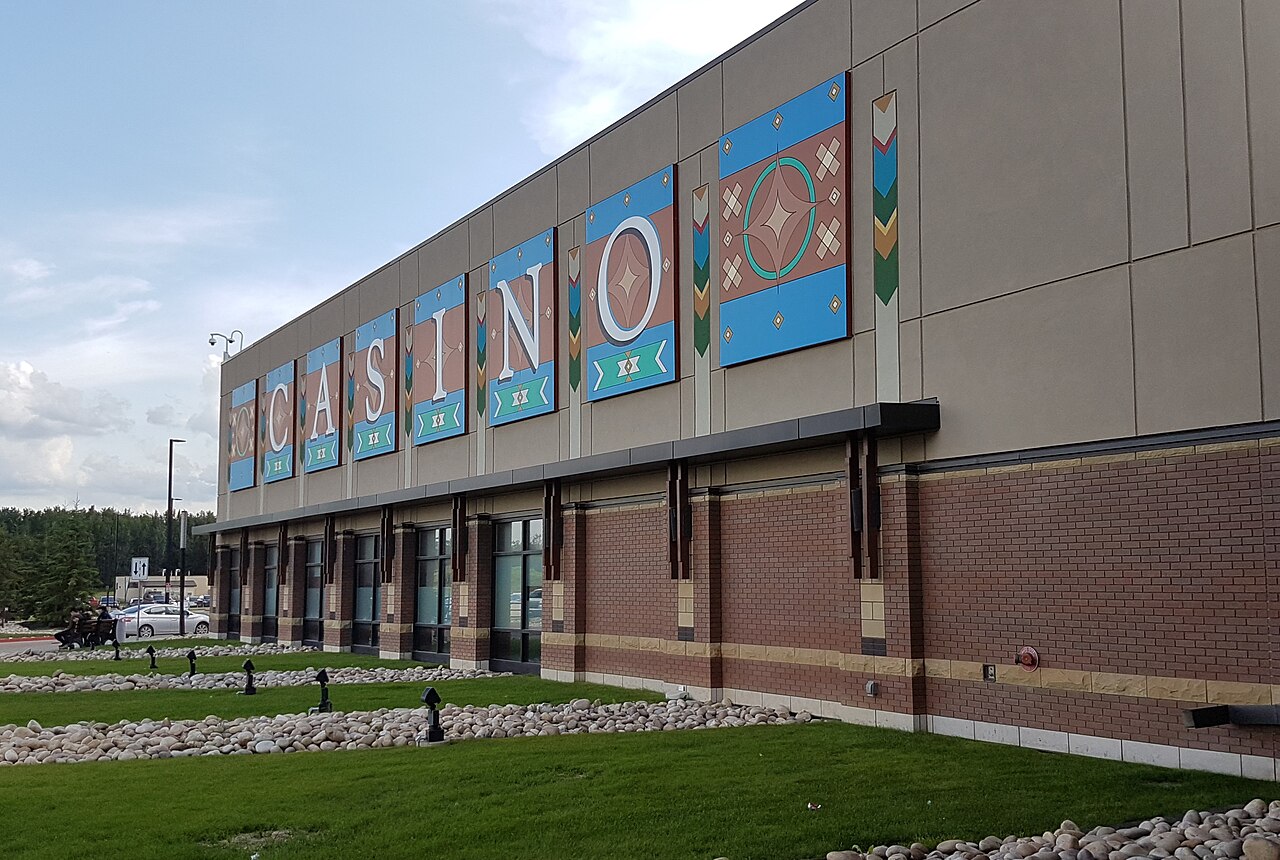
By 117Avenue - Own work, CC BY 4.0, https://commons.wikimedia.org/w/index.php?curid=80522677

A quick history of River Cree Resort & Casino

River Cree Resort & Casino opened in October 2006 on Enoch Cree Nation, just west of Edmonton, as one of the first full-scale casino-resort projects of its kind on First Nation land in Alberta. The land has a rich history, and was once used as a bombing range in WWII, a fact that resulted in a $91M settlement in 2020. (ammsa.com)

When it launched, Enoch Cree Nation partnered with Las Vegas–based Paragon Gaming and operated the on-site hotel under the Marriott flag.(Global News) The vision was clear from the start: a destination-style resort with a casino, hotel, twin hockey rinks, restaurants, and an entertainment centre that could pull in acts that might otherwise skip Edmonton.

Fast-forward to 2014, and Enoch Cree Nation bought out Paragon’s interest, taking full ownership of River Cree. That move required a major financing effort—including a landmark bond issue—but it also meant something important:

  • River Cree became a wholly Enoch-owned asset, widely described as one of the most significant First Nation economic development projects in the country.(Global News)

Since then, Enoch has layered in additional projects—medical offices, commercial plazas, and now a private surgical clinic—using River Cree’s success as a foundation for broader economic growth on the Nation’s land.(Global News)


River Cree today: entertainment hub on Enoch Cree Nation

Even before the new tower goes up, River Cree is already a busy mix of:

  • 24-hour casino gaming (slots, tables, poker)(River Cree Resort & Casino)

  • On-site dining options from casual to upscale

  • Twin ice rinks that host tournaments, practices, and events

  • A dedicated entertainment centre that consistently brings in tribute acts, classic rock bands, comedians, and specialty shows

As of late 2025, the events calendar includes:

  • International U2 Tribute – Desire – November 14, 2025

  • April Wine – November 15, 2025

  • Cirque Musica: Holiday Wonderland – December 2, 2025

  • The Debaters Live – December 3, 2025(River Cree Resort & Casino)

Third-party ticket platforms also highlight upcoming River Cree dates like Hellbourne – Ozzy Osbourne Tribute and The Tenors – Joy to the World Tour in December 2025, reflecting the range of music and comedy they’re booking into the venue.(www.livenation.de)

For west-end residents, that means you’ve got a full-blown concert and event space 10–15 minutes from home instead of a long haul across the city, and a 7 000 seat facility is being built as part of the long term expansion plans.


Gordon Ramsay’s Hell’s Kitchen: a headline addition for early 2026

On the food side, the highest-profile near-term addition is Gordon Ramsay’s Hell’s Kitchen—Canada’s first location of the brand—slated to open at River Cree in early 2026.(River Cree Resort & Casino)

According to the resort’s announcement:

  • Hell’s Kitchen will bring Ramsay’s signature dishes and theatrical open-kitchen vibe to Enoch Cree Nation.

  • It’s being built out in a dedicated restaurant space on site.

  • Reservations aren’t open yet, but River Cree has flagged “early 2026” as the target for the grand opening, with updates promised via their website and social channels.(River Cree Resort & Casino)

For nearby communities like Lewis Estates, Rosenthal, The Hamptons, and Edgemont, that’s a celebrity-chef experience essentially in your backyard—something you’d normally have to travel to Las Vegas, Lake Tahoe, or a major U.S. city to find.


The $200-million expansion: what’s actually being built?

Here’s where things get big.

In September 2024, Enoch Cree Nation and River Cree publicly launched a $200-million expansion that will see the resort nearly double in size.(Global News)

From the Global News, Hotelier Magazine, and Alberta Major Projects descriptions, the core pieces look like this:

1. A new 18-storey hotel tower

  • Over 230 additional rooms (some sources say 230, others reference ~240) in a new high-rise tower.(Global News)

  • More than 30 luxury suites with upgraded finishes.(Global News)

  • Bathrooms designed with both walk-in showers and separate bathtubs—a detail the River Cree CEO has highlighted as something that’s still rare in Edmonton hotels.(Global News)

2. Major pool and recreation upgrades

  • A new pool area with two waterslides.

  • A large hot tub and family-friendly aquatic features.(Global News)

This moves River Cree further into “full resort” territory—especially attractive for minor hockey tournaments, concert weekends, and stay-and-play casino guests.

3. 40,000+ sq. ft. of new event and conference space

  • More than 40,000 square feet of new event space across two levels.(Global News)

  • A flagship ballroom around 18,000 sq. ft., reportedly ~8,000 sq. ft. larger than the largest existing ballroom in Edmonton today located in the JW Marriott in Ice District.(Global News)

  • An additional outdoor patio of about 9,000 sq. ft., designed to support events that spill outside in the summer months.(Global News)

This is a big deal for conferences, banquets, weddings, and corporate events that currently might default to downtown hotels or resort destinations outside the city.

4. Expanded food & beverage and back-of-house capacity

  • A brand-new banquet kitchen to serve the expanded event footprint.

  • A new full-service restaurant and bar, plus additional quick-service food outlets (details still being finalized in public reporting).(Global News)

In short: more hotel capacity, bigger events, elevated dining, and family-friendly amenities—stacked onto an already busy casino and entertainment operation.


Where the project is at: construction and timelines

From a timing standpoint:

  • A formal groundbreaking ceremony took place in early September 2024, marking the official start of hotel expansion work.(Global News)

  • The publicly stated target for the new hotel tower’s opening is spring 2027.(Hotelier Magazine)

  • Canada Infrastructure Bank announced in March 2025 that it would provide $100 million in financing for “reserve enabling infrastructure”—roads, water, wastewater and other services—to support River Cree’s continued development and expansion, alongside $194 million in financing from the First Nations Finance Authority.(cib-bic.ca)

That federal infrastructure backing is a strong signal that:

  1. Construction is underway and progressing beyond ceremonial ground-breaking into real, long-term build-out; and

  2. The expansion is being treated as a key economic engine, not just for Enoch but for the wider region.

The project also appears in Alberta’s Major Projects database, which lists an 18-storey hotel addition with roughly 240 rooms as the core built element.(Alberta Major Projects) And at the federal level, there’s a dedicated entry for the River Cree expansion in the Canadian Impact Assessment Registry (Project 88984), overseen by the Impact Assessment Agency of Canada—part of the framework that reviews major projects for environmental and community impacts.(Canada)

All of that points to a project that’s funded, permitted, and actively moving through its construction life cycle, even if we don’t yet have a room-by-room progress chart in the public domain.


How this expansion ripples into nearby communities

So what does all of this mean if you live in Lewis Estates, Rosenthal, Enoch, Glastonbury, The Hamptons or Edgemont? Let’s break it down in practical terms.

1. Jobs and income close to home

The expansion is expected to create:

  • Construction jobs over several years

  • Ongoing hotel, food & beverage, events, and casino roles once the tower opens

  • Indirect jobs with suppliers, contractors, and service providers in the region(CFWE Northern Alberta)

For Enoch members, River Cree is already a major employer. For west-end Edmonton residents, it’s one more large, stable workplace within a short commute—especially appealing for hospitality workers, trades, event planners, security staff, and more.

When CTV covered the ground-breaking, leadership spoke openly about River Cree aiming to be an “economic powerhouse” for the Nation and the surrounding region—not just a standalone casino.(CTV News)

2. Stronger local business ecosystem

More hotel rooms, bigger conferences, and marquee shows don’t just benefit the resort—they spill over into neighbouring communities:

  • Visitors may fill up at the gas stations and coffee shops in Lewis Estates and Rosenthal before heading out of town.

  • Families coming for tournaments or pool-and-show weekends might explore nearby restaurants, services, and grocery stores in Glastonbury and The Hamptons.

  • Local trades and service companies based in west Edmonton may pick up contracts for maintenance, landscaping, cleaning, and specialty services as the complex grows.

Combined with other Enoch commercial developments—like medical and retail projects along the same corridor—River Cree’s expansion helps solidify the west end as a regional employment and services hub, not just “suburbs by the Henday.”(Global News)

3. Tourism profile and “destination west” effect

With:

  • A larger hotel footprint

  • A bigger event and convention centre

  • Canada’s first Hell’s Kitchen

  • A steady stream of concerts and shows

…the west side of Edmonton starts to look more and more like a destination cluster, especially when you factor in nearby anchors like West Edmonton Mall and the west-end retail corridors.

For homeowners in places like Edgemont, Rosenthal, Lewis Estates, and The Hamptons, that growing profile can translate into:

  • More out-of-town visitors choosing to stay in the west end

  • A higher demand for short-term rentals (with all the pros and cons that come with that)

  • More interest from buyers who specifically want easy access to resort-style amenities and entertainment without leaving their part of the city

From a real estate perspective, it’s another check mark in the “lifestyle and amenities” column when we’re talking about west-end neighbourhoods with buyers.

4. Infrastructure and traffic considerations

Big projects require big infrastructure:

  • The Canada Infrastructure Bank loan is specifically for “reserve enabling infrastructure”—things like roads and utilities that make development on Enoch’s land possible at a larger scale.(cib-bic.ca)

  • As those upgrades roll out, they’re likely to tie into or affect major connections like Whitemud Drive, Winterburn Road, and the ring road, which many west-enders already use daily.

Short-term, that can mean more construction and some traffic headaches near the resort.

Longer-term, better-planned access roads, upgraded servicing, and clearer traffic patterns can actually improve movement in and out of the west end, especially for event days where hundreds or thousands of people are converging on a single site.

5. Neighbourhood brand and long-term value

Neighbourhoods like Lewis Estates, Rosenthal, Glastonbury, The Hamptons and Edgemont already sell well based on:

  • Newer housing stock

  • Proximity to the Henday

  • Access to parks, paths, and west-end retail

  • Additional schools

  • A robust recreation offering when the completion of the Lewis Farms LRT expansion and recreation centre are completed in 2028

“This isn’t just a bedroom community; it’s part of a growing regional destination anchored by Enoch Cree Nation’s economic engine.”  That doesn’t mean every home suddenly jumps in value overnight. But over time, strong and diversified local economic activity is one of the pillars that helps support demand and resiliency in nearby housing markets.


What to watch as a local homeowner or buyer

If you live—or want to live—in the west end, here are a few things worth keeping an eye on as the River Cree expansion progresses:

  1. Construction milestones and timelines

    • Has the tower “topped out”?

    • Are there public updates on the 2027 opening target?

  2. New events and conferences

    • Watch River Cree’s events calendar to see the size and type of conferences booking in. More large national or regional events often means more visibility (and spending) in the area.(River Cree Resort & Casino)

  3. Transportation and access changes

    • Any upgrades to intersections, road widening, or new routing around Whitemud / Winterburn / the Henday that could improve—or complicate—your commute.

  4. Local business openings

    • Pay attention to new retail, restaurant, and service businesses popping up in Lewis Estates, Rosenthal, Glastonbury, or along key corridors; they’re often following the same growth story.

  5. Policy and planning updates

    • Both the City of Edmonton and Enoch Cree Nation will continue to make land-use and infrastructure decisions in this corridor. If you’re thinking long-term (5–10+ years), those plans matter.


FAQ: River Cree Expansion & the West End

Q: When will the new River Cree hotel tower open?
A: Public statements from River Cree and industry publications point to a spring 2027 opening for the new 18-storey tower, with construction underway as of 2024-2025.(Hotelier Magazine)


Q: Is Hell’s Kitchen part of the expansion or a separate project?
A: Hell’s Kitchen is a dedicated restaurant project within the existing River Cree footprint, but it’s very much part of the resort’s broader “step up the experience” strategy. The resort has confirmed it as Canada’s first Hell’s Kitchen, targeting an early 2026 opening.(River Cree Resort & Casino)


Q: Will this make traffic worse in Lewis Estates, Rosenthal, or The Hamptons?
A: In the short term, large builds almost always mean more construction traffic. Over the longer term, the Canada Infrastructure Bank financing is specifically meant to support improved infrastructure on and around Enoch’s lands, which can help manage event traffic more effectively than if nothing were upgraded at all.(cib-bic.ca)


Q: Does a bigger resort automatically mean higher home prices nearby?
A: Not automatically, and certainly not overnight. But strong, diversified local employers and destination amenities tend to be supportive of long-term neighbourhood demand, especially when they’re paired with good schools, parks, and transportation. River Cree’s growth is one more positive factor in that broader mix.


If you’re curious how this all plays into your specific situation reach out at 780-232-2064 or mike@pabianrealty.ca. I’mhappy to dig into the numbers with you and talk about:

  • How buyers are perceiving the west end today

  • What this might mean for resale timing and strategy

  • And whether now, mid-construction, is actually a smart window to make a move

Read

Edmonton buyers are anxious - and I have the data to prove it

“Are prices finally going to drop?”
“Should I wait for lower rates?”
“Is it really cheaper to rent than buy in Edmonton right now?”

If you’re thinking about buying your first home in 2026, you’re not alone—and you’re not imagining it. The data we have for January–October 2025 shows a city that’s still relatively affordable by Canadian standards, but caught in the same high-rate, high-uncertainty storm as the rest of the country. Buyers are stressed, and there is a lot of uncertainty - the Edmonton unemployment rate has been above 8% for most of this year, net migration remains high, and supply just can’t keep up. (nesto.ca)

In this article, I want to walk you through five big questions that keep coming up in Edmonton real estate searches and headlines, explain what the numbers actually say, and give you some context for 2026. It’s written from the perspective of someone who lives here, works here, and spends a lot of time talking to first-time buyers who are quietly overwhelmed—but still hopeful.


How this article was put together (and why the dates matter)

Everything you’re about to read is based on public data and reports available as of November 13, 2025. When I talk about “this year,” I mean 2025; when I talk about “next year,” I mean 2026.

Here’s where the backbone of the article comes from:

  • Local market stats for Edmonton (2025)

    • A fall 2025 market update from RE/MAX notes that the average residential sale price in Edmonton rose 7.2% year-over-year between January 1 and July 31, 2025 (from $429,255 to $460,405), even as sales volumes slipped and listings increased. (RE/MAX Canada)

    • A mortgage-market report pegs the average selling price in September 2025 at roughly $417,000, up 4.4% year-over-year, with detached homes up 7.5% and townhouses up 6.1% over the same period. (nesto.ca)

    • A separate September snapshot shows an average Edmonton-area price of $452,849, up 2.8% vs September 2024 but slightly down month-to-month—classic “cooling but not crashing” behaviour. (WOWA)

  • National outlooks for 2025–2026

    • CMHC’s 2025 Housing Market Outlook and summer update point to a cooler national market in 2025, with average Canadian prices expected to dip roughly 2% before stabilizing and gradually recovering in 2026 as demand and confidence improve. (Canada Mortgage and Housing Corporation)

    • A Reuters poll of housing analysts in mid-2025 echoes that message: a 2% national price decline in 2025, followed by stagnation and eventual recovery in 2026. (Reuters)

  • Rent-versus-buy and affordability analysis

    • National work from Zoocasa compares renting and buying in 21 Canadian cities, highlighting where ownership still makes long-term sense. (Zoocasa.com)

    • Local 2025 pieces titled “Is it cheaper to buy or rent in Edmonton?” and “Rent vs Buy in Edmonton 2025” break down the numbers for our city specifically, showing that buying tends to win if you stay long enough, while renting can be cheaper in the short term. (AlbertaSell Real Estate)

  • First-time buyer rules and programs

    • National consumer guidance and lender resources lay out the minimum down payment rules (5% up to $500,000; 10% on the portion between $500,000 and $1.5M; 20% at $1.5M+). (Ratehub.ca)

    • Federal program pages confirm that the First-Time Home Buyer Incentive (the shared-equity program) is no longer accepting new applications as of 2024, while tools like the Home Buyers’ Plan (HBP) and the new, higher withdrawal limits remain in place. (Canada Mortgage and Housing Corporation)

This is the landscape your Google searches are swimming in. With that foundation in place, let’s talk about what people are actually asking—and how it all fits together for Edmonton.


Question 1: “Should I wait for lower rates or buy now?”

This is, without question, the most common conversation I’ve had in 2025.

After two years of painfully high borrowing costs, rate cuts have finally started to appear, but not in the dramatic way people were quietly dreaming about. Nationally, CMHC and other forecasters are describing a gradual improvement in 2025–2026: growth picking up, sales and prices recovering from earlier weakness, and borrowing costs expected to ease from their 2023 peak—but not to pre-COVID rock-bottom levels. (Canada Mortgage and Housing Corporation)

At the same time, a Reuters survey of housing analysts in mid-2025 notes that average Canadian home prices are actually falling modestly this year, down about 2%, with the outlook for 2026 framed as “stagnation and then slow recovery.” (Reuters)

If you zoom out, the picture looks something like this:

2023: painful peak-rate environment; buyers shell-shocked.
2024: slow adaptation—more people pre-approved, fewer jumping.
2025: cautious optimism; some rate relief, lots of “should I wait?”

For an Edmonton buyer planning ahead for 2026, the uncomfortable truth is that there’s no magic month circled on the calendar. The most likely outcome, based on what we know today, is:

  • Borrowing costs that continue to ease slowly rather than collapsing. (Canada Mortgage and Housing Corporation)

  • A market that becomes more balanced, not wildly cheaper, as higher rates and rising supply tug against steady demand.

So the more practical version of the question isn’t “Will rates drop?” but:

“If rates are a bit lower but prices a bit higher next year, or vice versa, which combination makes the most sense for my budget, my job, and the way I actually live my life?”

That’s not something Google can answer for you. It’s the kind of thing you work through with a lender and a Realtor who can run side-by-side scenarios with real numbers, not just headlines.


Question 2: “Will Edmonton prices finally drop—or just keep creeping up?”

The second big search theme is some variation of “Is Edmonton going to crash?” And here again, the data paints a less dramatic picture than the anxiety suggests.

The Fall 2025 Edmonton housing update shows that between January and the end of July, the average residential sale price rose 7.2% year-over-year, even as total sales fell and listings climbed. (RE/MAX Canada) A separate mortgage-market outlook for September 2025 reports an average price around $417,000, up 4.4% over the past 12 months; detached homes are up 7.5%, townhouses up 6.1%, and condos up a modest 0.6%. (nesto.ca)

Yet another snapshot, this time from a national data provider, pegs the average Edmonton-area price in September 2025 at $452,849, 2.8% higher than the same month in 2024 but down 1.8% compared to August—suggesting some month-to-month softness even as the year-over-year trend remains upward. (WOWA)

If you imagine that as a simple trend line, it’s not a cliff; it’s more like a staircase that’s still going up, even if one or two steps dip slightly.

Nationally, CMHC expects prices to cool and growth to slow heading into 2026, rather than spiral higher; the Reuters poll I mentioned earlier is even more blunt, calling for a small overall price decline this year and flat conditions in 2026 before a gradual recovery. (Canada Mortgage and Housing Corporation)

So where does that leave Edmonton?

  • We’re still in a city where prices are rising modestly, not exploding.

  • Certain property types—especially condos and some row homes—have seen flatter or more volatile pricing, reflecting supply changes and buyer preferences. (REALTORS® Association of Edmonton)

  • The big risk for most first-time buyers isn’t “catching the exact top.” It’s waiting for a dramatic discount that never comes, while rents and carrying costs quietly nibble away at their savings and patience.


Question 3: “Is it smarter to rent or buy in Edmonton in 2026?”

This is the third major search cluster, and it’s become much more sophisticated over the past couple of years.

In January 2025, Zoocasa published a national analysis comparing the cost of renting versus buying in 21 Canadian cities, noting that in some expensive markets, renting has temporarily become cheaper month-to-month. (Zoocasa.com) At the same time, national financial publications are warning that the old “buying is always better” rule of thumb is officially dead in high-rate environments: in some cases, homeowners now need 7–9 years to break even versus renting. (Investopedia)

Where things get interesting is when you bring that conversation home to Edmonton.

Local 2025 guides and blog posts with titles like “Is it cheaper to buy or rent in Edmonton in 2025?” and “buy vs rent Edmonton cost comparison” lay out side-by-side scenarios. Their conclusions tend to converge on the same theme:

  • Renting can be cheaper in the short term, especially if you’re not putting much down and you’re comparing a bare-bones rent to a fully loaded ownership cost (mortgage, taxes, insurance, maintenance, condo fees).

  • Buying often wins over a longer horizon in Edmonton, because prices here are still comparatively reasonable and even conservative appreciation adds up over 7–10 years. (AlbertaSell Real Estate)

Think of it this way:

  • If you’re unsure about your job, your relationship, or how long you’ll be in the city, renting is still a smart, strategic move. It buys you flexibility at a time when markets are noisy.

  • If you’re reasonably settled, and you can see yourself staying put for five, seven, or ten years, ownership starts to look more compelling, especially if you buy a modest, well-located home instead of stretching to the top of your approval.

For 2026, the big shift isn’t that renting has suddenly become “good” or buying “bad.” It’s that the rent-versus-buy decision has to be made with your actual numbers and timeline, not just a rule your parents repeated because it worked in 2005.


Question 4: “How much down payment do I actually need—and what help is still out there?”

Once people get past the rate and price questions, the Google search bar usually turns to the down payment.

The rules themselves are straightforward—and they haven’t changed in any dramatic way recently:

  • For homes under $500,000, you need at least 5% down.

  • For the portion of the price between $500,000 and $1.5 million, you need 10%.

  • Once you’re at $1.5 million and above, you’re looking at 20% down and an uninsured mortgage. (Ratehub.ca)

Put another way, on a $425,000 starter home in Edmonton, the minimum down payment is 5% of $425,000, or $21,250, plus closing costs. From there, you can layer in strategies like the Home Buyers’ Plan, which allows eligible buyers to withdraw up to $60,000 from their RRSPs (per recent federal changes) to put toward a first home. (Canada)

One important update that’s easy to miss: the First-Time Home Buyer Incentive, the shared-equity program where the federal government took a slice of your property’s upside in exchange for helping with the down payment, is now closed to new applicants. Official CMHC pages and 2024–2025 buyer-incentive summaries make it clear that this particular tool is no longer on the table. (Canada Mortgage and Housing Corporation)

The narrative, though, is not “you’re on your own now.” It’s more nuanced:

  • Some programs disappear; others evolve or expand.

  • Tax-sheltered accounts like the FHSA and RRSP/HBP are becoming more important parts of the puzzle. (Ratehub.ca)

  • And in a city like Edmonton, where average prices are still lower than in many other major Canadian markets, the absolute dollar amount you need to save is smaller than it would be in Vancouver, Toronto, or even some parts of southern Ontario.

The key, again, is timing. A 2026 goal doesn’t require you to have the full amount sitting in your account today—but it does benefit from a clear savings target and a realistic monthly plan, rather than a vague hope that “it will somehow work out.”


Question 5: “Where can I still afford to buy—and will that area actually grow?”

The last major search theme is really about geography. Once people realize Edmonton is still comparatively affordable, the next question is:

“Where can I buy that I won’t regret in five or ten years?”

Provincial-level outlooks and Alberta-focused forecast pieces point out that our market is still active and growing, with MLS® systems expecting more than 530,000 homes to change hands nationally in 2025—an 8.6% jump over the prior year—and Alberta benefiting from relative affordability and ongoing in-migration. (New Homes Alberta)

Zooming in, Edmonton-specific reports talk about:

  • Inventory rising in certain segments and neighborhoods, especially where new construction is adding supply. (REALTORS® Association of Edmonton)

  • Steady price growth in typical “family home” territory—your detached houses and townhomes—combined with more mixed results in some condo pockets. (nesto.ca)

For a first-time buyer, that creates three broad lanes:

  1. Mature, central neighborhoods

    • Walkable, close to the core, often commanding higher prices.

    • Tougher entry point if you’re on a strict starter-home budget, but historically resilient.

  2. Middle-ring family areas

    • Established communities with schools, parks, and decent commutes.

    • Often the sweet spot for buyers who want both lifestyle and a reasonable price.

  3. Newer suburbs and growth corridors

    • Northeast, southeast, and pockets of west Edmonton where builders are still active and new infrastructure is coming. (REALTORS® Association of Edmonton)

    • Offer more choice and sometimes builder incentives, but demand careful homework around future transit, school catchments, and long-term plans.

No forecast can guarantee that any one neighborhood will “pop” or outperform, but the 2025 reports and projections we have suggest a city that is still growing, still building, and still relatively accessible compared to much of the country. If you line up your budget, your lifestyle, and your time horizon, there are still good bets to be made.


So what does all of this mean if you’re aiming for 2026?

Taken together, the picture for Edmonton looks something like this:

  • Rates are likely to ease gradually rather than collapse, as the national market stabilizes and economic growth improves. (Canada Mortgage and Housing Corporation)

  • Prices here have risen modestly through 2025, with more mixed month-to-month moves and early signs of a more balanced market, not a deep downturn. (RE/MAX Canada)

  • Rent vs buy has become a real question again, but in Edmonton it’s still a fair fight—especially if you plan to stay put for more than just a couple of years. (Zoocasa.com)

  • Down-payment rules are clear, and while some incentives have disappeared, others (like enhanced RRSP withdrawal limits) are very much alive. (Ratehub.ca)

  • Neighbourhood choice matters as much as ever: the right area for you is where the math, the commute, and your daily life actually line up.

In other words: if you’re considering a move in 2026, you’re not walking into a bubble or a fire sale. You’re walking into a real, functioning market with give-and-take, where the biggest advantage you can give yourself is information and planning, not guesswork.


FAQ: Straight answers to the questions behind the searches

Is late 2025 a “bad” time to buy if I’m really aiming for 2026?
Not automatically. What matters more than the calendar year is how stable your income is, how long you plan to stay in the home, and whether you’re comfortable with today’s payment at today’s rate. National forecasts suggest more of a slow normalization than a cliff; waiting purely out of fear of “buying at the wrong month” can backfire if prices and rents keep nudging upward while you wait. (Canada Mortgage and Housing Corporation)

Could Edmonton prices actually fall in 2026?
They could soften or flatten in some segments—that’s exactly what national forecasts and some local reports imply as the market moves toward balance. But a deep, lasting crash would likely require a serious local economic shock. Based on today’s data, a more realistic scenario is modest declines or sideways movement in some areas and steady growth in others. (Canada Mortgage and Housing Corporation)

How much should I actually budget for a down payment in Edmonton?
For many first-time buyers here, the starting point is 5% down on a home under $500,000, plus closing costs. On a $400,000–$450,000 home, that often means something in the $20,000–$25,000 range, before you layer in strategies like the HBP or an FHSA savings plan. Your exact number depends on your income, debts, and lender guidelines. (Ratehub.ca)

Is it actually cheaper to rent than to buy in Edmonton right now?
In the short term, often yes—especially if you’re putting very little down and comparing a simple rent payment to a fully loaded ownership cost. But multiple 2025 analyses, both local and national, show that over a longer holding period, owning still tends to win in many markets like Edmonton, provided you buy within your means and stay put long enough to let equity and modest appreciation work in your favour. (Zoocasa.com)

How often should I check in on the market if I’m targeting 2026?
A good rule of thumb is quarterly if you’re more than a year out, and monthly once you’re inside a 6–9-month window. That doesn’t mean obsessing over every new headline; it means touching base on updated pre-approvals, current inventory in your target areas, and any changes to rules or programs that could help you.


If you’ve been quietly Googling these questions and you’d rather talk them through with an actual human who lives and works in Edmonton, I’m always happy to sit down, pull up the numbers, and map out a 2026 plan that makes sense for your situation.

No scare tactics. No pressure. Just data, context, and a clear path forward.

About the author: Mike Pabian is a licensed REALTOR® with REMAX Excellence in Edmonton, Alberta. He’s a born and raised Edmontonian that has dedicated his life to serving the community. He currently lives in the west end with his wife Grace and their pugs Frank & Pickles.


Read

Edmonton Real Estate Market Update — October 2025

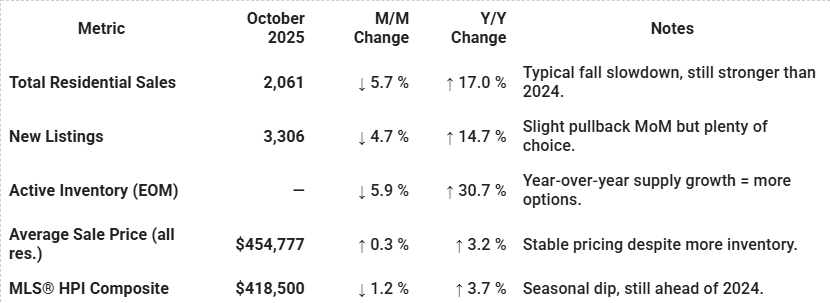
October brought Edmonton’s market a few steps closer to balance. Activity cooled slightly from September—as expected in the fall—but both sales and prices remain stronger than a year ago. The story right now: more listings, a bit more negotiation, and continued stability for well-priced homes.

At a Glance — City of Edmonton (October 2025)

Source: REALTORS® Association of Edmonton — October 2025 Market Update🏘️ Segment Breakdown — October 2025

🏘️ Segment Breakdown — October 2025

What This Means for Buyers

More balance = more breathing room. Inventory is up 30 % over last year, so you can shop and compare without the panic of 2024’s bidding frenzy. This is especially true for semi-detached, rowhouses, and condos where longer days-on-market are creating negotiation opportunities.

Detached homes remain competitive. Well-priced properties still move quickly. The difference now is that you can make decisions based on value rather than urgency.

Pro tip: Get pre-approved with a 90–120 day rate hold, then track micro-market data weekly. That’s how we spot undervalued listings before the crowd.


What This Means for Sellers

Price for today’s market — not for spring. Buyers are more price-sensitive as inventory rises. The first two weeks on market are critical: homes that launch close to recent comps see the most activity and best offers.

Presentation sells. With more competition, details matter: fresh paint, decluttered spaces, strong lighting, and professional media help you stand out. Detached sellers still see steady demand; semis and condos require a tighter marketing plan and strategic incentives like flexible possession.

Local data over headlines. Market averages hide neighbourhood differences. I’ll run a hyper-local CMA for your property and adjust pricing within two weeks if showings don’t convert.


Planning a Move in Early 2026?

The timing could be ideal. Two tailwinds are working in your favour:

  1. More inventory than last year, giving buyers time and options to find the right fit without bidding pressure.

  2. The Bank of Canada’s October rate cut (–25 bps to 2.25 %) has already boosted buyer confidence. While mortgage rates don’t move in lockstep with the policy rate, the cut helps hold borrowing costs steady heading into 2026.

If you’re buying: We may benefit from putting a focus on properties that have been listed longer than 30 days or have recent price adjustments — often your best entry points.
If you’re selling: Start prep now. Aim for a late-winter launch when active inventory is at its lowest. Well-timed, well-priced homes still command strong results.


FAQ

Is Edmonton in a buyer’s market yet?
Not yet. October’s trend shows the market balancing out, but with only around 2.7 months of inventory, it still leans toward sellers overall.

What segment offers the best opportunity right now?
Condos and some row homes offer the most negotiating power, especially in areas with higher supply and longer DOM.

Should I wait until spring to list?
Not necessarily. Motivated buyers remain active through winter — and less competition often means more attention on your listing.


Let’s Make a Plan

If you’re thinking about buying, selling, or planning a move in early 2026, now’s the time to get ahead of the market. Let’s build a custom strategy for your neighbourhood and goals that’s based on your reality and what you’re looking to achieve. Call or text Mike Pabian at 780-232-2064 or email mike@pabianrealty.ca.

Sources

  • REALTORS® Association of Edmonton, Softening Edmonton market makes a shift towards balance (October 2025 data; published Nov 3 2025).

  • Bank of Canada, Policy Rate Lowered to 2.25 % (Oct 29 2025).

Read

What Happens After You Sell? Your Alberta Home-Seller Closing Guide

You’ve accepted an offer, conditions are waived, and the countdown to possession is on. From here to keys-handed-over, a lot happens behind the scenes—lawyers, paperwork, payouts, adjustments, movers, utilities, and (yes) timing curveballs. This guide walks Edmonton sellers through what happens after condition removal, what you’re responsible for, and how to avoid last-minute stress.

1) Loop in your real estate lawyer (right away)

As soon as conditions come off, your lawyer starts “conveyancing”—coordinating documents, payoffs, and the transfer of title/funds. They’ll ask for:

  • The signed purchase contract and any amendments

  • Two pieces of government ID (for FINTRAC—more on that below)

  • Your mortgage details (lender, account, payout date)

  • Any lines of credit on title

  • A void cheque for surplus-proceeds deposit

They’ll book your signing 5–10 business days before possession to review the Statement of Adjustments (what gets debited/credited) and your payout numbers. The signing is an in-person meeting where you will discuss the final details of the transaction. You will go over who gets what, including a detailed overview of fees owing. These can include cooperating commissions to the buyer’s agent, owed back taxes, outstanding HOA fees and the cost of a Title Insurance policy, if you are offering this in lieu of a Real Property Report and compliance certificate. If you’re buying another place the same day, work with your Realtor and lawyer now so they can coordinate money flows and timing.

Why timing matters: Alberta Land Titles has had periodic backlogs that can ripple into how firms schedule and process files. The province has even adjusted counter services to help address processing delays—another reason to give your lawyer runway. (Alberta.ca)


2) Understand your key deliverables as a seller

The Real Property Report (RPR) + municipal compliance (single-family/fee simple)

In a typical Alberta resale, the standard contract requires the seller to provide a Real Property Report with evidence of municipal compliance (unless the parties agreed on a different arrangement like title insurance). Practically, that means your RPR must reflect current improvements (decks, sheds, fences, AC pads, etc.). If you built since your last RPR, you may need a new one or an update. (galbraith.ab.ca)

Quick hits:

  • “Current” refers to accuracy, not age; what matters is that the RPR shows present-day improvements. Your RPR could be considered current if no modifications have been made to the structures or features of the property, even if the document itself is several years or even decades old. (documents.lawsociety.ab.ca)

  • If compliance is tough (e.g., an old fence encroaches), your lawyer can discuss options—including whether title insurance is acceptable under your contract—before you commit to a path. (Robertson LLP.)

Condo sellers: Estoppel certificate + fee status

If you’re selling a condominium, your lawyer typically orders an estoppel certificate from the corporation. Lenders rely on it to confirm fee amounts, arrears, special assessments, and insurance particulars right up to completion. Order it early to avoid rush fees. (galbraith.ab.ca)


3) FINTRAC identity verification (yes, for sellers too)

Canada’s anti-money-laundering rules require identity checks on real estate transactions. Expect your brokerage and/or lawyer to verify and record your ID. It’s quick but mandatory—build it into your to-do list. This is absolutely non-negotiable, and the transaction can not go through until this is completed. All that your realtor will need in order to complete this on your behalf is a current copy of your ID. Buyers have this too and it is a legal requirement for all transactions nationwide. (Mike Pabian)


4) The Statement of Adjustments: where the math happens

Your lawyer prepares a statement that reconciles what you owe and what you’re owed on possession day:

  • Debits: mortgage/LOC payouts, real estate commissions, property tax share, condo fees to possession, any agreed holdbacks

  • Credits: buyer’s deposit, buyer’s share of property taxes/condo fees after the possession date (if you prepaid), any prepaid utilities that are adjustable under your contract

You’ll review and sign this at your appointment so your lawyer can disburse funds accurately on possession.


5) Mortgage payout & penalties

Your lawyer requests an official payout statement from your lender for the possession date. If you’re breaking a fixed term, there may be an interest-rate differential (IRD) or three-month-interest penalty. This comes off the sale proceeds automatically—no separate cheque required.

Tip: If you’re porting your mortgage to your next home, loop in your lender early so the “sell” and “buy” legs line up. Your lawyer can coordinate funds if both deals close the same day.


6) Tenanted properties: deposits, notices, and handover

Selling with a tenant? Alberta’s Residential Tenancies Act has rules around notice, showings, and—on sale—transferring the tenant’s security deposit to the new owner with a statement of account. Your lawyer handles the adjustments, but you’re responsible for ensuring compliance. (Alberta.ca)

Heads-up: Some buildings also require separate “building” deposits (common in condos) that may need to be adjusted or transferred on sale—your lawyer will include these on the statement. (clarklegal.com)


7) What condition must you leave the home in?

Short answer: as agreed in your contract. Practically, Edmonton buyers expect “broom-clean,” all included fixtures/chattels left in place, and systems in the same working order as when the offer was accepted (ordinary wear and tear excepted). If anything changes before possession (e.g., a leak), disclose it to your agent/lawyer immediately so you can resolve it well before key release.

While it’s not legally required that you clean the house before you leave it for the buyers, it is common courtesy. Mike works with cleaners that are able to complete a move-out clean quickly and efficiently, and Mike has also been known to provide this as a gift to his clients in the right circumstances.

Pro move: Book cleaners for the day before possession and photograph rooms once empty as proof that cleaning occured.


8) Utilities, property taxes, and final reads

  • Utilities: Call to cancel/transfer service effective possession day and arrange final meter reads (power, gas, water). Keep confirmation numbers.

  • Property taxes: You’ll be credited/debited for your share up to possession. If Land Titles registration delays mean assessment notices still come to you later, forward them to the buyer or your lawyer—municipalities note ongoing Land Titles backlogs. (HTM Law | Edmonton Lawyers)


9) Possession day: when do the buyers get keys?

Your lawyer receives the buyer’s funds. Once funding is confirmed, the buyer’s agent gets the official go-ahead to release keys. Even if the contract says noon, expect variability due to bank cut-off times, wire queues, and law-office workflows. If anyone’s closing on a Friday (or before a long weekend), small hiccups can push key release later in the day. Stagger movers accordingly. (I advise buyers and sellers to avoid Monday and Friday when possible.) Also note that it’s not possible to have a possession day during the 2 weeks that the Government of Alberta is closed over the Christmas break, as all land titles offices will be closed. (Mike Pabian)


10) Holdbacks, repairs, and “after-close” loose ends

If you agreed to complete repairs before possession, your lawyer may structure a holdback until proof of completion is provided. Keep invoices/warranties handy. For condos, special-assessment timing can also trigger adjustments or targeted holdbacks—your lawyer will advise based on your contract and the corporation’s status. Holdbacks can be contentious and aggravating to both parties, so be sure to discuss your options with both your lawyer and your realtor.  (galbraith.ab.ca)


11) What happens to your money?

After paying out mortgages/LOCs, commissions, adjustments, and any holdbacks, your lawyer deposits the net proceeds into your account (same day or next banking day, depending on timing). If you’re closing a purchase the same day, funds may move directly between trust accounts to keep everything on schedule. It’s important to note that given the amount of money that is being moved, you may not have full access to all funds for up to a week after closing, depending on your bank’s policies.


12) Common seller mistakes (and how to dodge them)

  • RPR surprises late in the game. If you added or altered structures since your last RPR, talk to your lawyer early and book the surveyor if needed. (Robertson LLP.)

  • Ordering the condo estoppel too late. Leave buffer to avoid rush fees or closing delays. (galbraith.ab.ca)

  • Friday closings with noon movers. Build in slack; keys only release after funding. (Mike Pabian)

  • Forgetting security-deposit transfer on tenant sales. It must follow the property—with proper accounting. (Alberta.ca)

  • Assuming Land Titles is instant. Backlogs happen; stay responsive to your lawyer’s requests so your file isn’t one of the ones that gets kicked back for corrections. (Law Society of Alberta)


Seller’s mini-timeline (Edmonton, typical resale)

  • Day 0: Conditions removed. Hire/confirm lawyer. Start RPR/estoppel tasks.

  • Day 3–5: Lawyer requests mortgage payout and drafts early adjustments.

  • ~1 week before possession: Sign with your lawyer; adjustments finalized.

  • Possession day: Buyer’s funds land → your lawyer confirms funding → keys released → proceeds disbursed.

  • After: Cancel utilities, keep records, and forward any stray mail or tax notices if they arrive due to Land Titles lag. (HTM Law | Edmonton Lawyers)


FAQ (For Alberta Sellers)

Do I always have to provide an RPR with compliance?
In a typical Alberta resale using the standard contract, yes—that’s the default. Parties can agree to alternate arrangements (e.g., title insurance), but that must be negotiated. If you’ve added improvements, expect to update the RPR. (galbraith.ab.ca)

How “new” does my RPR need to be?
There’s no strict age limit; it just needs to accurately show current improvements. Municipal compliance relates to what’s on the ground today. (documents.lawsociety.ab.ca)

I’m selling a condo. What’s this estoppel certificate and who pays?
It’s proof from the condo corporation about fee amounts, arrears, insurance, and financial status. The seller’s lawyer usually orders it and the seller commonly pays (check your contract). Order early to avoid rush charges. (galbraith.ab.ca)

We have a tenant. What happens to the security deposit?
It must be transferred to the buyer with a statement of account, and interest rules apply under the Residential Tenancies Act. Your lawyer will adjust it on closing. (Alberta.ca)

Why do closings sometimes miss “noon” possession?
Keys only release after funds are received and verified. Wires, bank cut-offs, and law-office workflows can push timing—especially on Fridays and long-weekend eves. (Mike Pabian)

Land Titles shows delays—does that affect me?
Registration backlogs don’t usually stop you from closing, but they can affect how municipalities route tax mail and how lawyers schedule filings. Stay responsive and expect your lawyer to double-check documents to avoid rejections. (Alberta.ca)


Final thoughts

Selling is a project with a lot of moving parts—but with the right prep (RPR/estoppel early, clean condition, utility planning) and a proactive lawyer, possession day can be smooth and drama-free. If you’d like my checklists (cleaning, utility notifications, movers) or you want me to quarterback the timeline with your lawyer and the buyer’s agent, I’m happy to make this easy.

Disclaimer: This is general information for Alberta resales and isn’t legal advice. Always confirm specifics with your lawyer and your purchase contract.

Read

Your First Home in Edmonton in 2026: What to Know & How to Plan (From a Local REALTOR®)

If you’re aiming to buy your first place in Edmonton in 2026, you’re already doing the smartest thing—starting early. Edmonton’s market rewards preparation: a clear budget, a steady plan, and a local guide who can translate policy changes (and winter-reality house details) into good decisions. Below is my complete game plan—how to prep month-by-month, what costs to expect, and how to make sure the home you choose is one you’ll love living in.


Step 1: Build a realistic 2026 money plan

First Home Savings Account (FHSA — “First Home Savings Account”).
Open and fund your FHSA as early in the year as you can. Contributions are tax-deductible, and qualifying withdrawals are tax-free when you buy a first home (annual room $8,000, lifetime $40,000). I’ll help you plan the timing so your tax refund boomerangs back into your down payment. (Canada.ca)

Home Buyers’ Plan (HBP — “Home Buyers’ Plan”).
You can withdraw up to $60,000 from your RRSP for a qualifying purchase, and you can use HBP and FHSA together if you meet each program’s conditions. We’ll map a repayment plan that keeps your monthly budget comfortable. (Canada.ca)

Down payment rules (Canada-wide).

  • Up to $500,000: 5% minimum.

  • $500,000–$1,499,999: 5% of the first $500,000 + 10% of the rest.

  • $1,500,000+: 20% (no mortgage default insurance available). (Canada.ca)

Why this matters now: Canada raised the insured-mortgage price cap from $1,000,000 to $1,500,000, and first-time buyers of new builds can access 30-year insured amortization—a combo that can lower the monthly payment on certain properties (while total interest over the life of the mortgage will be higher). (Canada.ca)

It’s also important to remember that your debt ratios (the amount of money you have versus how much you owe) will come into play. Therefore, it’s very important to be patient. Don’t go out and purchase a new vehicle, or a bunch of furniture and electronics, on credit unless you can pay these items off in full prior to your move in day. Otherwise, these wants can potentially prevent you from qualifying for the type of home you want.


Step 2: Qualify wisely (and painlessly)

Pre-approval > rate email.
A true pre-approval stress-tests your file under current underwriting rules and the Minimum Qualifying Rate (MQR)—that’s the “mortgage stress test,” which is the greater of your contract rate + 2% or 5.25% for uninsured mortgages. We’ll use that higher number to “pressure-test” your budget so you don’t get surprised later. (OSFI)

If you aren’t sure where to start, call or text Mike Pabian at 780-232-2064. He works with mortgage professionals that can help you come up with a plan, whether you’re looking to purchase now, next month, or years down the road. It’s literally our job, so don’t be shy!

Credit tune-up.
Six to nine months before you buy: pay down revolving balances, avoid new loans/credit cards, and keep clean payment history. This lines up with the best-practice lists for first-timers (and it’s exactly what lenders look at). (RE/MAX Canada)


Step 3: Choose your lane—new-build vs resale

New-build advantages (especially for first-timers).

  • Potential for 30-year insured amortization on newly built homes (first-time buyers).

  • Builder warranty, energy-efficiency upgrades, and possession dates that give you runway to save a little more.
    Trade-offs: watch for upgrade pricing, GST treatment on new homes, and possible build-delay overlap with your current rent. (CMHC applies a 0.20% premium surcharge on insured 30-year files.) (cmhc-schl.gc.ca)

Resale advantages.

  • Faster possession in established neighbourhoods (think Edgemont, The Hamptons, Secord, Rosenthal, Lymburn).

  • Mature trees, finished landscaping, and comparable sales data you can see.
    Trade-offs: older mechanicals to evaluate—insulation, windows, furnace, grading, roof/attic ventilation (Edmonton winters make these critical).


Step 4: Tour with intent (and an Edmonton lens)

Before we book showings, we’ll lock your must-have vs nice-to-have list (garage depth, parking, pet rules, commute, school access, yard). Then we’ll overlay Edmonton-specific checks: snow load on roofs, window condition, attic insulation/venting, and sump/backwater setups in areas that need them. RE/MAX’s national first-timer guides echo this structure—it’s how you avoid regret. (RE/MAX Canada)


Step 5: Offers, conditions, and timing that work

Your offer strategy should fit both the house and the week you write it:

  • Finance condition that actually gives your lender/insurer time.

  • Inspection that covers roof, attic, structure, grading, HVAC (the winterizers).

  • Condo docs (for condos) reviewed by a pro.

  • Possession dates that line up with movers (and snowstorms).


Step 6: Closing costs in Alberta (separate from your down payment)

Alberta doesn’t have a land-transfer tax, but you’ll budget for Land Titles registration fees on title and mortgage, plus legal fees, inspection, appraisal if required, and tax/utility adjustments. The provincial fee formula is $50 base + $5 per $5,000 (or portion) of value for both transfers and mortgages; I’ll quote the exact amounts for your price point before we write an offer. (Alberta.ca)


What default insurance is (and when you’ll see it)

Mortgage default insurance (CMHC, Sagen, Canada Guaranty) is typically required when your down payment is under 20%. Premiums are a percentage of the mortgage amount and usually get added (“capitalized”) to your mortgage. If you choose a 30-year insured amortization under the new-build/first-time rules, CMHC adds a 0.20% premium surcharge. We’ll price your exact scenario so there are no surprises. (cmhc-schl.gc.ca)


A do-now checklist (12 months to keys)

  • Open/fund your First Home Savings Account (FHSA); schedule contributions around tax time. (Canada.ca)

  • Map a Home Buyers’ Plan (HBP) withdrawal (up to $60,000) and the repayment. (Canada.ca)

  • Get a real pre-approval that models the MQR stress test, not just a rate e-mail. (OSFI)

  • Price Alberta Land Titles fees and inspections so your closing buffer is realistic. (Alberta.ca)

  • If new-build is on your radar, compare 25- vs 30-year insured payments and possession timelines. (cmhc-schl.gc.ca)

  • Use a simple wants/needs framework to keep search energy focused. (RE/MAX Canada)


Edmonton examples: minimum down payments (quick math)

  • $400,000 home → $20,000 minimum (5%). (Canada.ca)

  • $550,000 home → $25,000 (first $500k at 5%) + $5,000 (10% of $50k) = $30,000. (Canada.ca)

  • $700,000 home → $25,000 + $20,000 (10% of $200k) = $45,000. (Canada.ca)

  • $1,200,000 home → $25,000 + $70,000 (10% of $700k) = $95,000. (Insurable under the $1.5M limit if it meets insurer rules.) (Canada.ca)


Where this playbook aligns with national guidance

RE/MAX’s first-time buyer resources are spot-on about pre-approvals, budgeting, and a clear wants/needs list—we’re taking those best practices and applying them to Edmonton streets, winter realities, and Alberta closing fees. (RE/MAX Canada)


FAQ (First-Timer Edition, 2026)

Q: What’s the minimum down payment—really?
A: Canada’s rules are tiered: 5% up to $500,000; 5% of the first $500,000 + 10% above that to $1,499,999; and 20% at $1.5M+ (no insurance available). We’ll also confirm that your price and file meet the current insured-mortgage rules. (Canada.ca)

Q: What’s the “stress test” and how does it affect me?
A: The Minimum Qualifying Rate (MQR), often called the stress test, means lenders must qualify you at the higher of your contract rate + 2% or 5.25% for uninsured mortgages. We use that rate to make sure your payment is comfortable under different scenarios. (OSFI)

Q: Can I use both the FHSA (First Home Savings Account) and HBP (Home Buyers’ Plan)?
A: Yes—you can combine them if you qualify for each. FHSA has $8k/year and $40k lifetime limits; HBP lets you withdraw up to $60k from your RRSP. Done right, that pairing can materially boost your down payment and reduce monthly payments. (Canada.ca)

Q: What changed about insured mortgages and amortizations?
A: Two big shifts: the federal insured-mortgage price cap increased to $1.5M, and 30-year insured amortizations became available to first-time buyers of new builds (with a small premium surcharge). Those changes can help payment-sensitive buyers, especially on new construction. (Canada.ca)

Q: Is the First-Time Home Buyer Incentive still around?
A: No—the program stopped accepting new applications in March 2024. We’ll focus on FHSA, HBP, and lender options instead. (cmhc-schl.gc.ca)

Q: What closing costs should I expect in Alberta?
A: Plan for legal fees, inspection, appraisal (if required), tax/utility adjustments, and Land Titles registration fees. Alberta’s formula is $50 base + $5 per $5,000 (or portion) of value for both transfers and mortgages. I’ll run exact numbers for your target price. (Alberta.ca)

Q: Should I choose fixed or variable?
A: We’ll model both under the MQR and compare cash-flow, prepayment flexibility, and renewal risk to your comfort level. There isn’t a one-size-fits-all answer—your sleep-at-night factor wins. (OSFI)


Let’s make a 2026 plan that fits you

If you want a calm, step-by-step path to keys this year—without buyer’s remorse—I’ll quarterback the whole thing: FHSA/HBP plan, pre-approval strategy, neighbourhood short-list, and a contract/conditions game plan that fits the week you write. When you’re ready, I’ll also run side-by-side payment scenarios (5%, 10%, 15%, 20% down; 25- vs 30-year where eligible) so you can see it all in black and white.

Call/Text Mike Pabian — Pabian Realty (RE/MAX Excellence)
First-time buyer consults are zero-pressure. I’ll bring the coffee and the spreadsheets.


Sources & further reading

  • RE/MAX Canada: 5 Essential Tips for First-Time Homebuyers; 10 Tasks to Do Now if You Plan to Buy a Home in 2026; How to Buy a New Home in Canada as a First-Time Homebuyer. (RE/MAX Canada)

  • Government of Canada (FCAC/CRA): Minimum down-payment rules; FHSA contribution and deduction limits; HBP rules and $60,000 withdrawal limit. (Canada.ca)

  • Department of Finance Canada / CMHC: Insured-mortgage cap increased to $1.5M; 30-year insured amortization for first-time buyers of new builds; CMHC 30-year premium surcharge (0.20%). (Canada.ca)

  • CMHC: First-Time Home Buyer Incentive — program closed to new applications (March 2024). (cmhc-schl.gc.ca)

  • Government of Alberta: Land Titles & Surveys common document fee schedule (formula for transfer/mortgage registration). (Alberta.ca)

General information only—verify details with your lender, lawyer, and accountant. I’ll help coordinate the team so nothing falls through the cracks.

Read

Land Lease Communities in Edmonton: What They Are, How They Work, and Whether They’re a Good Fit for You

If you’re hunting for a more affordable way to get into a home in Edmonton—without giving up a yard, a driveway, and a little breathing room—you’ve likely stumbled across land lease communities. They show up under a few labels (“land lease,” “leasehold,” “manufactured home community,” “pad sites”), and for the right buyer they can be a smart, budget-friendly path into homeownership.

Here’s the full picture in plain English: what land lease communities are, how they differ from buying a condo or fee-simple townhome, how financing and Alberta’s rules come into play, and the real-world pros and cons for buyers and sellers. In the Edmonton area, there are 3 main communities - Evergreen, Maple Ridge, and Westview Village.

Quick definition: in a land lease, you own the home but lease the land underneath it from a community owner or landlord. You pay monthly pad/site rent for the lot, and you’re responsible for the house itself. (RE/MAX Blog)

What is a Land Lease Community?

At its simplest, a land lease community is a neighbourhood where residents own their dwelling (often a manufactured or modular home, sometimes site-built) but rent the lot it sits on. In Alberta, when you own the home and rent the site, your tenancy is governed by the Mobile Home Sites Tenancies Act (MHSTA)—a statute with rules specific to mobile/manufactured home sites (rent increases, notices, assignments, dispute resolution, etc.). (Alberta.ca)

Many communities include paved roads, landscaping, and basic services; some add amenities like a clubhouse or park space. You’ll typically budget for:

  • Pad (site) rent to lease the lot

  • Utilities/services (sometimes bundled)

  • Insurance, taxes, and maintenance on your home (the community owner covers land costs; your lease explains the breakdown)

Leasehold vs. Freehold (and Where Condos Fit)

  • Freehold single family/townhome: you own land + building.

  • Condominium: you own your unit plus a share of common property through the condo corporation; you pay condo fees for operations and reserves.

  • Leasehold (land lease): you own the structure but lease the land from a landlord; you pay pad rent and follow community rules.

Functionally, leasehold swaps the condo board for a landlord/community operator and swaps the condo fee for pad rent (some communities also have HOA-style fees if they offer additional amenities). RE/MAX Canada’s primers on land leases underline these differences and why buyers consider the model in the first place. (RE/MAX Blog)

How Long Are Land Leases?

Across Canada, long-term leases are common—often 20 to 99 years—with the agreement spelling out payment schedules, permitted uses, renewal mechanics, and how fees can be reviewed or adjusted. Always read those sections closely and line them up with your intended holding period. (RE/MAX Blog)

Financing: The Big Non-Negotiable

Before you shop, talk to your mortgage broker about current leasehold underwriting. For insured loans, CMHC typically requires the remaining lease term at the start of the mortgage to exceed the amortization by at least five years; importantly, renewal/option periods usually don’t count toward that test. If the lease is too short, financing can be limited or more expensive. (Your lender’s policy controls—confirm for your file.) (CMHC)


Land Lease vs. Condo vs. Freehold: The Side-by-Side

Feature Land Lease (Leasehold) Condo (Unit in a Condo Corp) Freehold Townhome
You own… The home The unit + share of common property Land + building
Monthly mandatory cost Pad rent (site), sometimes HOA Condo fee None (beyond taxes/HOA if present)
Rulebook Lease + community rules Bylaws, board rules Municipal bylaws; any HOA
Financing nuance Lease term must satisfy lender/insurer rules Standard condo underwriting Standard freehold underwriting
Exit complexity Buyer must accept lease + get landlord approval Buyer accepts bylaws/financials Typical resale process

(Details vary. Your offer should be conditional on financing and legal review of the lease or bylaws/estoppel package.)


Why Buyers Choose Land Lease (Pros)

Lower upfront price. Because you’re not buying the land, purchase prices for the home are usually lower than comparable freehold properties—one of the biggest drivers for first-time buyers and downsizers. RE/MAX highlights affordability as a core benefit. (RE/MAX Blog)

Access to better locations or amenities. Some land lease communities sit in desirable areas or package in amenities—clubhouses, greenspace, sometimes security—delivering lifestyle value without the land price tag. (RE/MAX Blog)

Simple living, community feel. Consistent standards, quiet internal roads, and a neighbourly vibe are common draws.

Budget clarity. Pad rent is known in advance and is governed by the MHSTA’s rules on notice and increases, so you can plan cash flow more confidently. (Alberta.ca)


Where Land Lease Can Fall Short (Cons)

You still have a monthly site cost. Pad rent sits beside your mortgage, utilities, and insurance. Leases can include periodic reviews or renewal adjustments—model both the likely and worst-case scenarios in your budget. (RE/MAX Blog)

Lease term risk. A short remaining term can limit financing and affect resale value (remember the CMHC “amortization + five years” rule of thumb). (CMHC)

Rules and approvals. Expect community standards: pets, parking, exterior changes, additions—all subject to the lease and operator approvals.

Resale complexity. Your buyer must qualify with both the lender and the landlord and accept the lease. Higher pad rent or restrictive rules can narrow the buyer pool vs. a similar freehold.

Appreciation dynamics. Because you’re not buying the land, your equity growth is tied more to the home’s condition, age, and demand than to rising land values. RE/MAX calls out the potential for lower appreciation relative to freehold in some markets—something to bake into your long-term plan. (RE/MAX Blog)


Seller/Homeowner Considerations

Pros:

  • Stable demand at lower price points. Separating land cost can open the door to first-time buyers and right-sizers.

  • Predictable community standards. Well-run sites maintain curb appeal, which helps values.

Watch-outs:

  • Marketability depends on the paperwork. Remaining lease term, current/forecast pad rent, and renewal mechanics are front-and-centre for buyers and lenders.

  • Renovation ROI math changes. Since land is the main appreciation engine in freehold, big upgrades in a leasehold need sharper scrutiny.


Alberta-Specific: The MHSTA (What It Means in Practice)

Alberta’s Mobile Home Sites Tenancies Act applies when a resident owns the mobile/manufactured home but rents the pad. It sets minimum standards for landlords and tenants, including rules for rent increases and notice, assignments (selling your home and transferring the lease), and dispute processes. If you’re buying or selling in a land lease community around Edmonton, your contract should reference the MHSTA and the site lease; get a lawyer to explain how the clauses interact with your possession timeline and financing. (Alberta.ca)


Where These Fit in Edmonton (and How I Help You Compare)

In West Edmonton communities I work in daily—Edgemont, The Hamptons, Secord, Rosenthal, Lewis Estates—we can put land lease homes head-to-head with condos and fee-simple townhomes. The key is an apples-to-apples total cost of ownership view:

  • Land lease: mortgage + pad rent + taxes/insurance + routine upkeep

  • Condo: mortgage + condo fee (ops + reserves) + taxes/insurance + routine upkeep

  • Freehold: mortgage + taxes/insurance + routine upkeep (+ any HOA)

From there, we layer in lease term, amenities, community rules, and your preferred lifestyle. Often the answer reveals itself once we run the numbers for your price point and timeline.


Frequently Asked Questions (FAQ)

What exactly is a land lease, again?
You own the structure (home) and lease the land (the lot) from a landlord or community owner, paying pad rent for the site. (RE/MAX Blog)

How long are land leases?
Residential land leases are commonly long-term—often 20 to 99 years—with payment schedules, use restrictions, and renewal terms spelled out in the agreement. (RE/MAX Blog)

Do banks lend on land lease homes?
Often, yes—but lease terms matter. For insured mortgages, CMHC typically expects the lease term to outlast the amortization by at least five years (renewal options usually don’t count). Confirm current policy with your lender/broker before waiving financing. (CMHC)

Is pad rent like a condo fee?
Both are ongoing monthly costs but pay for different things. Pad rent compensates the landowner and may include shared services; condo fees fund your own condominium corporation’s operations and reserve fund (future capital work).

Can pad/site rent go up?
Yes. Leases often include review and renewal mechanisms, and the MHSTA sets rules for increases and notice in Alberta. Read the clause and model both likely and conservative scenarios. (Alberta.ca)

Who pays property taxes?
You insure, maintain, and pay taxes on your home; the landowner pays taxes on the land (typically recovered through pad rent). Your lease will spell out specifics.

Are land lease homes always “mobile” or moveable?
Most are sold in place. Moving a manufactured home is possible in certain cases but costly and regulated. Plan to buy and sell on the same site, subject to landlord approval.

Is this the same as buying on Crown or Indigenous land?
Different frameworks. Some land-lease situations involve Crown or Indigenous lands with distinct authorities and policies; your lender and lawyer will treat those differently. Start the disclosure and financing conversation early. (RE/MAX Blog)


Bottom Line (and Next Steps)

A land lease can be a fantastic fit if you value lower upfront cost, amenities, and simple living, and you’re comfortable with pad rent in exchange for not tying up capital in land. It’s less ideal if you want maximum control over the land itself, dislike recurring site rent, or you’re working with a lease that’s too short for your financing.

If you’re curious about a specific community or a listing you’ve seen, I’ll:

  1. Run the math—mortgage + pad rent vs. mortgage + condo fee vs. freehold.

  2. Review the lease with you (term, assignments, renewals, scheduled increases) and coordinate the legal/financing checkpoints.

  3. Compare communities so you buy into the lifestyle you actually want.

Want a side-by-side for two properties you’re eyeing? Shoot me the links—I’ll build you a clear, Edmonton-specific comparison so you can decide with confidence.

Disclaimer: I’m a REALTOR®, not a lawyer or financial advisor. This article is general information for Alberta and may not reflect your exact situation. Always obtain legal and mortgage advice before making a decision.

Sources & references:

  • RE/MAX Canada, “What is a Land Lease?” (definition, model overview). (RE/MAX Blog)

  • RE/MAX Canada, “The Land Lease Option: An Affordable Way to Own a Home” (lease length ranges, amenities, affordability, renewal considerations). (RE/MAX Blog)

  • Government of Alberta, “Renting a mobile home site” (MHSTA overview for pad tenancies in Alberta). (Alberta.ca)

  • CMHC, “Affordable Housing Fund: Land Lease Requirements” (lease term must exceed amortization by 5 years; renewal/options typically excluded). (CMHC)

Read

Bank of Canada Rate Drop: What It Means for Edmonton Buyers, Sellers, and Homeowners Right Now

The Bank of Canada cut the policy rate by 25 bps to 2.25% today. Canada’s big banks (e.g., TD) are dropping prime to 4.45% effective Oct 30, which affects variable mortgages and HELOCs almost immediately. Fixed rates don’t follow the policy rate directly; they’re influenced by bond yields, so lender pricing may adjust in the coming days, or even weeks. If you’re renewing and uninsured, you can switch lenders at maturity without re-stress-testing (straight-switch exemption)—that can sharpen offers. Let’s walk through what that means in real monthly dollars for real people in Edmonton. (Bank of Canada)


What changed, and why it matters here

The Bank of Canada lowered the overnight rate to 2.25% and signalled it sees policy as appropriately set for now amid a softer growth backdrop. That single line translates into lower bank prime (what variables and HELOCs ride on) and, often, a small confidence bump for buyers who have been waiting for better cash-flow math. In Edmonton—where price points are still approachable compared with other major Canadian markets—even a 0.25% move can pull fence-sitters into the search. (Bank of Canada)


Fixed vs. variable: how the cut flows through to you

Variable / adjustable mortgages & HELOCs: When banks cut prime (TD has already moved to 4.45% effective Oct 30), your rate and interest costs drop in step once the change hits your account. If you’re on a true adjustable payment, the payment itself can fall; with static-payment variables, more of your payment goes to principal. Watch your lender notice for the exact effective date. (TD Stories)

Fixed mortgages: Lenders price fixed terms off Government of Canada bond yields, not the BoC rate. Bond desks will digest today’s message; if yields move, lenders may re-price fixed mortgages. That’s why you sometimes see fixed changes within days of a BoC decision rather than the same afternoon. (nesto.ca)


The Edmonton lens: buyers, sellers, homeowners (and investors)

Buyers: A quarter-point cut isn’t earth-shattering, but it’s tangible. A quick rule of thumb: ~$21/month per $100,000 of mortgage (interest component) on a variable product is what you can expect. On $450,000, that’s roughly $95/month back in your pocket once new prime takes effect. In communities like Edgemont, The Hamptons, Rosenthal, Glenridding and Secord, that small win can be the difference between “thinking about it” and writing an offer. Update your pre-approval right away so your payment and rate-hold reflect post-cut pricing.

Sellers: Expect a slightly deeper buyer pool and stronger early-weekend traffic on well-priced listings—especially in entry-level detached and townhomes. But remember: a rate cut won’t rescue over-pricing. Your first 7–10 days still make or break the sale. Presentation (staging, pro media, floorplans, drone), plus pricing to the last 2–3 weeks of comps, is how you capture the extra demand.

Homeowners not moving (renewals & Home Equity LOCs): If your renewal is within 6–12 months, start shopping the file. Thanks to OSFI’s straight-switch exemption, uninsured borrowers can switch lenders at maturity without the prescribed stress-test—which often means better offers for you without re-qualifying hoops (so long as balance and amortization stay the same). HELOC and variable borrowers should see the prime change reflected from their lender’s effective date (e.g., Oct 30 for TD). (OSFI)

Investors: Lower carrying costs can nudge your DSCR (Debt Service Coverage Ratio)in the right direction for suited homes and newer duplexes, but underwrite conservatively—rents, vacancy, and maintenance still drive the outcome. If you’ve been on the fence about a refinance to improve cash flow or fund upgrades, today’s move is a good prompt to reassess with current pricing.


Real-world math

Think in monthly cash flow, not just rates. On a $500,000 variable mortgage, a 0.25% cut is roughly $105/month in interest savings at today’s prime once it flows through (your exact payment behavior depends on whether your variable is adjustable or static). Redirect even half of that into lump-sum prepayments or winter maintenance (furnace service, insulation tune-ups, roof checks) and you’re building equity and protecting the asset—very “Edmonton-smart” during the cold months.


What to do next (your simple action plan)

  • Buyers: Refresh your pre-approval and payment model today; keep both fixed and variable scenarios on the table until you’re writing. Shortlist the neighbourhoods that match your day-to-day (schools, trails, commute), then hunt for “good bones” before “flashy features.”

  • Sellers: Price to the current market (not last quarter) and launch like a product: staging, pro visuals, a strong first-weekend strategy. A pre-listing inspection can reduce renegotiations and help justify your price.

  • Homeowners: Call your lender—or ask me for intros—to discuss early renewal, blend-and-extend, or a switch at maturity. Re-balance your budget: top up the emergency fund, tidy higher-interest debt, or make a smart prepayment.


FAQ

Did my rate drop today?
Variables/HELOCs: Yes, from your lender’s effective date (e.g., Oct 30 at TD). Fixed: not directly; watch for bond-driven lender re-pricing over the next few days. If you’re on a fixed rate, the numbers will be driven by the bond market and will not be impacted directly. (TD Stories)

So… fixed or variable?
It depends on timeline, income stability, and your “sleep-at-night” factor. We’ll model both paths for your budget and risk comfort, then align product choice with your next 3–5 years.

What’s the “stress-test” situation at renewal?
For uninsured straight-switch renewals (same balance and amortization), OSFI no longer prescribes the MQR—which makes true comparison shopping at maturity easier. If you’re changing the loan amount or amortization, you’re back in full qualification territory. (OSFI)

Will Edmonton see bidding wars again because of this?
Cuts can heat up popular price bands, but strategy still beats luck. The homes that sell fastest are the ones that are priced right and marketed properly—not just the ones on the market during a rate cut.

How long will this last?
The Bank signalled rates are appropriately set for now and is watching the data. Translation: don’t build a plan that only works if rates keep falling—make sure your numbers stand even if things wobble. (Reuters)


Sources

  • Bank of Canada decision: policy rate cut to 2.25% (Oct 29, 2025). (Bank of Canada)

  • TD prime cut to 4.45% effective Oct 30, 2025. (TD Stories)

  • Fixed vs. bond yields (how lenders price fixed terms). (nesto.ca)

  • OSFI: straight-switch exemption for uninsured renewals (no prescribed MQR). (OSFI)

  • Context/market tone (post-decision coverage). (Reuters)

Let’s put this to work for you

If you’re buying in West Edmonton, selling anywhere in the city, or renewing soon, let’s run your numbers with today’s rates and map a step-by-step plan. I’ll also connect you with a top Edmonton mortgage broker so you can compare fixed vs. variable, renewal vs. switch, and timing options—without sales pressure.

DM me on Instagram: @pabianrealty or head to PabianRealty.ca to book a quick strategy call. We’ll make the next move your best one yet.

Read

Sell in the Snow?

Why listing your Edmonton home in winter can actually be a power move

Let’s just say the quiet part out loud: Yes, houses sell in winter in Edmonton. In fact, not only do they sell — for the right seller, winter can be one of the highest-leverage windows of the entire year. I know that sounds like Realtor spin. “Now is a great time to sell” is the industry’s favorite sales slop. Instead of hype, I’m going to walk you through what actually happens in our market between November and February, why it’s different from spring, and which types of sellers can use that to their advantage.

Because the real question you’re asking isn’t “Do homes sell in winter?” You’re asking:

  • “If I list in January instead of waiting until April, am I leaving money on the table?”

  • “Is there even going to be a buyer for my house when it’s -27°C outside?”

  • “Do I have to renovate my entire life to make the house ‘show-ready’ in the snow?”

Let’s talk about it, because frankly yes - you can sell for top dollar year round if you do it right. With me, success is the only option. Like Eminem, when he lost himself…but more PG.

First, how the Edmonton market actually behaves approaching winter

Right now (late October 2025), Edmonton is in this interesting middle ground. It’s not the full-on, ultra-aggressive seller’s market we saw in past runs, where everything that wasn’t bolted down sold in 48 hours. Inventory has been rising compared to last year, which is giving buyers a bit more choice and slowing that complete chaos. This gives buyers a bit more choice, and as a seller you may need to negotiate a bit. (WOWA)

At the same time, detached homes are still moving. We’re not in a “buyers can lowball anything and get it” environment. The sales-to-new-listings ratio in the Edmonton area is sitting around 60%, down from midsummer peaks of 63%–65%. That 60% range is right on the border between “seller-favoured” and “balanced,” which tells us buyers are active and writing offers — they’re just a little more selective than they were in July. (WOWA)

That context matters, because here’s what happens next:

  • We move into November/December/January.

  • Most casual sellers tap the brakes and “wait for spring.”

  • Listing volume dips.

  • But not all buyers disappear - and the ones that remain are often highly motivated to get things done.

When you strip out the “we’re just curious” spring traffic and you’re left with the people who are out house-hunting in -20°C, you get a completely different kind of buyer.


Winter buyers are not tourists. They’re on a deadline.

Buyers in Edmonton in January and February are usually not out for fun. They’re out because, more often than not, they have to be. As a former corporate recruiter, I can tell you that most companies will hold off on promotions, relocations, and hiring blitzes until the budgets renew in January. This means that folks are moving up, moving around, and getting serious about their goals of owning the perfect home.

These are the buyers I see (and you see in the data, and hear in YouTube comments on Edmonton market update videos right now):

  • “Is this still a good time to sell my townhome? Should I wait 1-2 years?” (Translation: “We need to move but we’re terrified of timing the market wrong.”)

  • “We need a detached with a garage before the baby comes.”

  • “I just got transferred here and I start in January, I can’t renew my short-term rental again.”

  • “Our mortgage approval is locked. We have to buy before it expires.”

These are serious, pre-approved, decision-ready buyers. They are not touring 11 houses for sport and throwing you a lowball just to “see what happens.” They’re trying to solve a life problem on a clock.

That already puts you, the winter seller, in a stronger position than you think.

Because yes, traffic at your open house might be lighter. But the people who actually come through your door at -22°C, in a snowstorm, with their boots tied and their kids in car seats? Those are your real buyers.They’re not browsing. They’re shopping.


Less competition = more attention on your house

Here’s the second unlock that Edmonton sellers almost never take advantage of:

In January and February, you are not competing with 14 nearly identical listings on your street.

By spring, Edmonton does what Edmonton always does: we all thaw out, everyone panics, and suddenly every second driveway has a “For Sale” sign on it. Spring is famously high-traffic, yes — and yes, April is still treated nationally as a “golden listing window” because of curb appeal, school timelines, and demand. Listings in mid-April tend to attract more eyeballs and can sell faster at higher prices in many Canadian markets, which is exactly why so many sellers wait for that window. (New York Post)

But here’s what nobody tells you: if everyone waits for spring, spring gets noisy. In winter, it’s quiet.

And quiet is an advantage — if your house shows well. Why?

Because you are suddenly the “best available” option in your segment. You’re the only renovated 1,500+ sq ft two-storey with an attached garage in Rosenthal under $500K. You’re the only upgraded half-duplex in Secord that’s move-in ready and doesn’t have mystery condensation freezing on the windows. You’re the only west-end bungalow with a finished basement that doesn’t smell like 1987, sadness, and Vidal Sassoon.

When buyers have fewer choices, they’re less picky on micro-details and more responsive to the stuff that matters (warm, clean, taken care of, possession date that lines up with their life). That can translate into firmer offers and less “well we also saw the one down the block, so knock $15K off.”

So yes, there are fewer buyers in January. But there are also fewer competitors trying to be “the one.”

If you’re a well-prepared seller, that’s your lane.


“But Mike, don’t winter houses show worse?”

Short answer: they show different. If you prep properly, they can show better. For example, did you know that the same company I hire to hang the sign in your yard will also shovel your walks? And offer a light-up sign when we’re not enjoying 5 hours of sunlight per day? And that I only use highly reflective, borderline annoying signage? Details matter.

Here’s what’s true in an Edmonton January:

  • Curb appeal is not winning you the sale. Snow covers patchy lawn, everyone’s flowerbeds are dead, and nobody’s judging your perennials. This can work to your advantage, especially if yard maintenance isn’t your forte.

  • People care way less about the backyard in that moment. In fact, most buyers won’t even venture out there on cold days, and if they do, it’s a quick flyby.

  • People care way more about comfort, cost-to-carry, and “Is this place a problem at -30°C?”

That last point is huge.

In spring, buyers get distracted by “Ooo, nice deck.” In winter, buyers are scanning for red flags:

  • Drafts around windows and exterior doors, including frost and cold spots

  • Condensation or frost forming on window sills (they’re thinking humidity/mould/maintenance).

  • Ice ruts and unsafe steps at the front entry (they’re thinking liability and “does this place get icy?”).

  • Furnace noise, furnace smell, furnace age.

  • Air that’s bone-dry, smells stale, or smells like someone’s been running the humidifier at 60% and now the window trim is swollen.

If you pass that scan, you’ve already separated yourself from the competition.

And here’s the part where you have full control as a seller.


How to make your home “winter-show-ready” in Edmonton (this is where the money is)

This is the checklist I walk sellers through before we list in winter. None of it is cosmetic fluff. All of it is signal.

1. Warm, even heat.
The house should feel consistently warm on all levels. I don’t give a crap if your basement is unfinished, we’re opening those vents and setting the thermostat at 21 - we’re trying to sell a house after all. No cold bedrooms upstairs. No icebox basement. Get your furnace serviced before we list, replace the filter, and have that receipt sitting on the counter for buyers to see if we want to showcase it. Can’t afford it? Call ATCO, they’ll do a mechanical “safety inspection” at no charge.

A basic furnace tune-up in Edmonton typically runs around $150–$200 ahead of winter, and buyers love seeing proof it was done this season because they know emergency furnace calls in January can run $195–$400+ and go four figures fast if something serious fails. Not to mention the stress of having the furnace go out on one of the coldest days of the year.

That receipt is not “a small thing.” It’s a trust builder. You’re telling them, “This home is not going to strand you at -27°C.”

2. No window drama.
Do a humidity check. In Edmonton’s deep cold, you cannot blast 40% humidity and expect your windows not to ice up. Local guidance for our climate is simple:

  • When it’s normal cold (about –5°C to –10°C outside): 30%–35% indoor humidity feels good.

  • When it’s deep cold (–10°C to –20°C): drop closer to ~20%.

  • When it’s extreme cold (below –20°C): you may need to be in the 15%–25% range to avoid condensation that turns into frost ridges on the sill.

Why does this matter? Because buyers see moisture on a window and their brain goes straight to “mould, rot, future repair.” If we walk into your primary bedroom and the windows are clear and the trim is dry in January, you just won that round.

3. Safe, clean entry.
Your front steps, walkway, and driveway need to be shoveled, de-iced, and lit. Period. In winter showings, if I have to skate a buyer up to your door, the first impression is “maintenance issue,” not “cozy family home.” Edmonton winter prep advice is very blunt about stocking ice melt and keeping approaches clear early in the season because once the first real dump hits, supplies sell out and you’re stuck.

Show them a house that feels safe and cared for, not one that says “hope you brought boots.”

4. Zero weird smells.
Winter traps air. If there’s damp basement smell, pet smell, or stale air, it’s louder in January because you’re not airing the place out for eight hours with all the windows open at -20°C. Run the HRV (or furnace fan on circulate), keep humidity appropriate, and deep clean carpets. You want “fresh, warm, dry,” not “Febreze cover-up.” If it’s really bad, ask me about an ozone treatment.

5. Paper trail of care.
This is underrated. On the kitchen counter (yes, literally) we can lay out a simple “Home Care This Winter” sheet:

  • Furnace serviced: [date], [company]

  • Humidifier set to: [x%] during last cold snap

  • Eavestroughs cleaned and downspouts extended before freeze

  • Exterior taps shut off and sprinkler system blown out this fall

Why is that powerful? Because you’re not just staging the home, you’re staging confidence. And buyers in January, the deadline buyers, absolutely pay for peace of mind.


“Will I get less money if I sell in winter?”

ARE YOU EVEN PAYING ATTENTION? NO! This is the part where people get the most anxious, so let’s slow down.

Here’s what we know:

  • Spring is loud. Across Canada, mid-April traditionally lines up with peak eyeballs, faster sales, and slightly stronger sold prices because everyone comes out of hibernation at once and there’s this emotional “we’re moving this year” push. (New York Post)

  • Edmonton is not Toronto or Vancouver. We’re not in a situation where you must list in April to get action. Our demand cycle is more practical and more life-driven. We see serious buyers all year, and the ones who are shopping in January are often under pressure to write something. We’re still one of the most affordable major cities to call home in Canada, by a wide margin. And our hockey team actually clears the first round most years, which is nice.

On top of that, look at where Edmonton sits right now:

  • Sales-to-new-listings ratio around 60% heading into fall — still leaning seller-friendly, but cooling toward balanced. (WOWA)

  • Inventory is up compared to last year, so buyers finally feel like they can breathe, but we are not flooded with unsold homes. (WOWA)

  • Detached homes are still moving. People still want garages, still want a yard for the dog, still want that west-end lifestyle near future amenities like the Lewis Farms Rec Centre and Valley Line West LRT corridor. 

You are not trying to sell in a dead market.

So, will you “leave money on the table” by selling in winter?

Here’s the honest answer:

  • If your house is a mess (humidity issues, furnace sounds angry, ice everywhere, smells like stress), yes — winter will punish you, but no more than it would any other time of the year. If you’re not willing to put the effort in to compete, don’t be surprised if your listing just isn’t competitive.

  • If your house is clean, warm, tight, and documented? You can absolutely defend a strong number in January because you’re the one listing that checks the “safe and move-in ready” box while everyone else waits for April. I’ve got an extensive and diverse background loaded with senior sales experience, so your negotiation is in good hands. My goal is to make negotiation an afterthought - we’ll be prepared to counter any offer and secure you maximum value.

In other words: winter doesn’t automatically discount you - presentation and preparation does.


Who should seriously consider selling this winter (instead of waiting)?

Let me be very specific here, because this is where people either win or regret waiting four months.

You should at least talk to me about a winter listing if:

1. You’re already planning to list “in spring.”
Here’s the twist: If you’re already mentally out of the house, why donate November, December, January, and February to stress? List earlier, with less competition, and be done before everybody else scrambles to hit that mid-April “best week to sell” window that national sites push. (New York Post)

2. You’re carrying a property that’s starting to feel expensive.
Property taxes in Edmonton are going up ~5.7% for 2025. Utilities in deep winter are not gentle. Insurance isn’t getting cheaper. (WOWA) If you’re thinking “We can afford it, but…barely,” that “barely” is a conversation starter, not a moral failing. Sometimes the play is: sell now while demand is still healthy and before carrying costs eat you alive for another four months.

3. You own something move-in ready in a starter segment.
Half-duplex with a garage. Townhouse that doesn’t need $30K in updates. Bungalow with a finished basement that actually smells dry. The buyers for those products are classic deadline buyers — first kids, first winter with two cars, relocations — and they’re hunting in January.

4. You’ve already done the work.
If you’ve serviced the furnace, fixed drafts, cleaned gutters, blown out sprinklers, managed humidity, and generally looked after the place, you are exactly the type of listing that performs well in winter. You’re literally solving buyers’ fear profile in real time.

Who maybe shouldn’t list in winter

Also important. Winter is not magic for everyone.

You might want to wait until spring if:

  • Your exterior is half-done (siding project mid-reno, missing fascia, etc.). Snow won’t hide that from an inspector.

  • Your home depends heavily on outdoor lifestyle for value (massive new deck / outdoor kitchen / huge landscaped yard / pool-style setup). Those features show 10x better when people can actually see them, smell fresh lumber, and picture July BBQ — not when they’re under 40 cm of wind-packed snow.

  • You physically cannot maintain safe access. If you’re not realistically going to keep the walks cleared, salted, and lit for every showing, winter’s probably not your window. Buyers will judge.

This is where we’re honest together and make a plan, not where I just tell you what you want to hear.


FAQ: Selling Your Edmonton Home in Winter

“Do houses even sell in winter here, or is that just something Realtors say?”
They sell. Edmonton stays active year-round. The market is cooling toward balanced, not collapsing. The sales-to-new-listings ratio is roughly 60% heading into fall 2025 — down from summer highs but still in seller-leaning territory. That means buyers are still writing offers; they’re just a little pickier. (WOWA)

“Won’t I get way less money in January than in April?”
Not automatically. Spring can bring more eyeballs across Canada, and mid-April is often considered a “sweet spot” for list price and speed because curb appeal and urgency spike. (New York Post)
But Edmonton winter gives you something April can’t: less competition. If you’re the only clean, move-in ready option in your category, deadline buyers will fight for you in January just to solve their problem before their approval expires, their possession deadline hits, or their baby arrives.

“Are winter buyers just bargain hunters?”
Some are. Most aren’t. The typical January/February Edmonton buyer is on a deadline: job transfer, rate hold, possession timing, baby, “we need a garage now.” They’re serious, pre-approved, and they’re out in -20°C. That is not a tourist. Those buyers are often more decisive than May looky-loos.

“How do I make my place show well in winter?”
Lean into comfort and proof-of-care, not flowers and patio staging.

  • Get the furnace serviced and have the paperwork available — emergency furnace calls in January can run $195–$400+, so buyers love seeing that you’ve already handled it.

  • Keep humidity appropriate so you don’t have ice rings on your bedroom windows. In deep cold (-20°C and below), Edmonton guidance says you might need indoor humidity in the 15%–25% range to stop condensation and frosting.

  • Shovel, salt, and light the entry. I cannot stress this enough. If you’re unable due to physical limitations, or you just struggle to find the time, let’s talk about it - I have vendors that can and will keep your walks clean, clear, and under control like a Clearisil ad.

  • Make the house feel warm, even, and safe. Warm lighting - I can and will go out and buy hundreds of dollars in lightbulbs if you don’t listen to me on this, so save us both the time and trust the expert.

“Should I wait until I finish renos?”
Depends on the reno. If you’re half-drywalled and missing trim, winter buyers are going to ask for a discount. If you’re already basically move-in ready (clean furnace, no leaks, no humidity drama, tidy exterior) you don’t need to rebuild the kitchen to sell in January. You need to prove “this home will not be a headache in February.”

“Be real with me. Why would you, as a Realtor, tell me to list in winter instead of waiting for spring?”
Because most people wait for spring. That creates a lineup. A lineup means you’re suddenly fighting five other “similar” homes on your own block, and buyers know it. In winter, if your place is well-prepped, you’re not fighting. You’re the answer. You’re in control, you’re empowered, and you WILL kick some serious butt.


Let’s talk timing — quietly, before everyone else wakes up

If you’re already saying things like:

  • “We’re going to list in spring,”

  • “Our carrying costs are getting tight,”

  • “We honestly don’t need this much house anymore,”

  • “We have to be somewhere else by March,”

then you and I should be talking in November, not April.

Here’s what I’ll do for you, no pressure and no commitment:

  • Walk through your home and point out what actually matters for a January buyer (furnace, humidity, ice, comfort), and what doesn’t.

  • Tell you if you’re better off listing this winter — or if your property really will perform better once Edmonton thaws and patios photograph well.

  • Give you a realistic winter pricing lane based on what’s moving right now in Edmonton, not six-month-old headlines. Our market is shifting toward balance, not crashing, and detached is still moving. (WOWA)

  • Build a timeline that lines up with your life, not just “the traditional spring market.”

If you’re even 10% curious about selling but you’re telling yourself, “We’ll figure it out in March,” let’s talk before you give up four months of sleep for nothing. You don’t have to guess this. Winter can suck, but it doesn’t have to.

Call or text me today at 780-232-2064 and Let’s Get Moving.

Read

Your Edmonton Winter Home Survival Checklist

15 things to do before the deep freeze to protect your house, your wallet, and your sanity

Edmonton winter doesn’t roll in gently. It drops a shoulder, gets those elbows up, and goes straight through you.

By late October, we’re already flirting with freeze-up. Then, from November through March, we live in a climate where –20°C is normal, and –30°C (or worse with windchill) happens often enough that everyone owns a block heater and two backup space heaters. Temperatures as low as –40°C are not unheard of, including –43.6°C at the International Airport during the February 2021 cold wave and historical records down near –49°C. (Wikipedia)

That level of cold is not just uncomfortable. It’s a stress test for your furnace, your windows, your plumbing, and your home’s resale value. A well-prepped Edmonton house feels warm, quiet, and trustworthy in January, and buyers absolutely pay attention to that.

This guide will help you:

  • Stay warm without lighting money on fire,

  • Avoid plumbing disasters,

  • Show buyers (or appraisers) that your home is cared for,

  • Sleep through those first -30°C nights instead of pacing the hallway in slippers.

Let’s get started with 15 essential steps, why they matter here specifically, and what they cost if you don’t do them.

1. Book a proper furnace tune-up (not just “I changed the filter”)

Your furnace is about to work nonstop. In Edmonton, HVAC companies openly market true 24/7 emergency response in winter because a furnace dying at –25°C is a safety emergency: pipes can freeze, interior temps can crash in hours, and you’re suddenly on the phone in the middle of the night. Local furnace repair companies advertise round-the-clock emergency service specifically to restore your heat quickly, because losing the ability to heat your home isn’t just annoying; it’s an emergency. (furnacefamily.com)

Remember that emergency calls in the cold are more expensive than preventative care. Furnace repair in Edmonton commonly runs around $195–$400 per visit, and serious failures (blowers, heat exchangers) can jump into four figures, with full replacements easily in the $5K–$7K+ range. (alwaysplumbing.ca)

Compare that to a fall furnace service. A normal tune-up is typically quoted around $150–$200 in Alberta/Edmonton, which lines up with broader Canadian/US averages of roughly $70–$200 for a tune-up and ~$150–$500 per year for full annual maintenance. (alwaysplumbing.ca)

Ask your tech to:

  • Clean and test the burners and flame sensor (that tiny sensor failing is a classic “furnace won’t fire at 2 a.m.” situation),

  • Confirm the blower motor isn’t drawing too much current,

  • Check for carbon monoxide leaks,

  • Make sure the humidifier and furnace fan settings are dialed for winter circulation. (atcoenergy.com)

For resale: Being able to tell a January buyer, “Yes, the furnace was serviced this fall, here’s the receipt,” instantly lowers their fear.

2. Swap your furnace filter now — and check it every month in winter

Clogged filters choke airflow. When airflow is restricted, the furnace runs hotter and longer to hit the same thermostat setting, which raises your bill and increases wear. Poor airflow is one of the reasons furnaces lock out in cold snaps — exactly when you can’t afford downtime — and also one of the most common causes for those middle-of-the-night emergency calls. (Sunny Edmonton)

A decent filter is $10–$30. A middle-of-the-night callout in January is not.

Bonus: Clean filters = quieter system = the house “feels newer” during a showing.

3. Hit the drafts: weatherstrip doors and seal around windows

In our climate, uncontrolled air leaks are money leaks.

Windows, doors, and skylights can account for up to roughly 25–35% of a home’s total heat loss in Canada, and cold-climate energy guidance says that sealing gaps and weatherstripping can reduce heating and cooling costs by 10–20% (sometimes more) while immediately improving comfort. (Natural Resources Canada)

Even tiny gaps around a back door or a settling crack at a window trim can drive up your winter gas bill. In Edmonton, that’s not theoretical — we spend literal months below freezing, sometimes over 100 straight days where the average daytime high doesn’t crack 0°C. (The Weather Network)

What to do today:

  • Add fresh weatherstripping to the door between the garage and the house. That door is often the single coldest air pathway in newer west-end homes, and sealing garage air off the house keeps –20°C air from dumping into your kitchen.

  • Physically lock all operable windows. Locking pulls the sash tighter against the seal.

  • Run exterior-grade caulking where siding meets trim if you see daylight. Alberta home maintenance and energy-efficiency guidance specifically recommends caulking and weatherstripping as fast, high-impact DIY moves. (The Department of Energy's Energy.gov)

Buyers feel this. A house that’s warm at the edges in January signals “cared for,” not “drafty and overpriced money pit that’s going to bleed gas money forever.”

4. Clean your gutters and confirm downspouts are extended

Here’s classic Edmonton winter physics:

  1. Chinook-y warm afternoon melts rooftop snow.

  2. Meltwater hits a clogged eavestrough and has nowhere to go.

  3. Overnight it drops to –20°C again, that meltwater freezes and forms an ice dam.

  4. Water backs up under shingles, down behind fascia, and (in bad cases) into the attic and drywall.

Local roofing and home-maintenance guidance for Edmonton is blunt: clean gutters and downspouts before freeze-up to prevent ice dams, overflow, and interior leaks. Debris like leaves and needles blocks water flow, which leads to ice forming in those troughs. (Gutter Dunn Eavestroughing Ltd.)

Also make sure every downspout actually extends away from the foundation. Winter melt pooling beside your basement wall is a slow, quiet problem buyers will ask about.

5. Shut off and drain exterior water lines — including sprinklers

Water expands when it freezes. If there’s water trapped in an exterior hose bib, irrigation line, or any plumbing that runs through or near an exterior wall, that line can split. You might not notice until you thaw, at which point it’s a basement surprise.

Edmonton fall checklists say:

  • Disconnect garden hoses.

  • Close the interior shutoff to each exterior tap.

  • Open the outside tap to let any remaining water drain out.

  • Blow out underground sprinkler lines before we hit a hard frost. Edmonton irrigation services advertise fall blowouts “starting at about $100–$150,” using high-powered air to clear the lines so they don’t crack underground. (inlinemudjacking.ca)

  • Insulate any exposed pipe in unheated areas (garage, crawlspace, unfinished basement) with foam sleeves or wrap. Alberta plumbing and winterization guidance specifically recommends wrapping pipes near exterior walls and cold spots to keep them from freezing and bursting. (EPCOR)

If you’re leaving town over winter, Edmonton’s water utility (EPCOR) advises:

– Do not turn your heat off.
– Keep the thermostat at about 12°C or higher.
– Ask someone to come in and run all taps, including showers, for a few minutes each visit to keep water moving so pipes don’t freeze. (EPCOR)

This is not just about comfort. A plumbing flood from a burst line is brutal for resale. Buyers see fresh drywall patches and immediately start asking, “Has there been water down here?”

6. Check your attic for air leaks and insulation gaps

In our climate, attic moisture is serious.

Here’s what usually causes those brutal ice dams you see hanging off people’s gutters in January:

  • Warm, humid indoor air leaks into the attic through gaps around light fixtures, attic hatches, bathroom fan penetrations, etc.

  • That trapped warmth melts roof snow from the underside.

  • Meltwater runs down to the colder eaves, refreezes, and forms an ice dam that can force water back up under shingles and into the house. (Roe Roofing)

Canadian cold-climate guidance is consistent: sealing attic bypasses and topping up insulation keeps heat where you actually want it (in the living space), reduces ice damming, and lowers how hard the furnace has to work. It’s one of the most cost-effective comfort and efficiency upgrades in a northern city like Edmonton. (The Department of Energy's Energy.gov)

Quick homeowner test: Pop the attic hatch on the first truly cold morning. If you see frost halos or dark, damp-looking rings around pipe penetrations or pot light boxes, that’s warm, moist house air leaking into the attic. Deal with it before deep winter.

7. Fix grading and drainage before the ground locks

Walk the perimeter of your house and look for:

  • Soil sloping toward the foundation,

  • Settled pockets under steps or decks where meltwater will sit,

  • Downspouts dumping right beside the wall.

Edmonton fall prep advice is clear: once the frost line sets, you’re basically stuck with whatever grading you’ve got until spring. If meltwater pools beside your foundation all winter and then freeze-thaws there, your basement is at higher risk for seepage — and basement staining is one of those instant “hmm, what happened here?” buyer red flags. (Gutter Dunn Eavestroughing Ltd.)


8. Test carbon monoxide (CO) and smoke alarms

Natural gas heat + closed windows + vehicles warming up in attached garages = higher CO risk in winter. You want:

  • CO alarms on every sleeping level,

  • Working smoke alarms,

  • Fresh batteries.

Alberta safety and HVAC guidance treats CO monitoring in winter as critical because combustion appliances are running constantly and houses are sealed up. A clean safety story (“We test our alarms every fall”) gives buyers confidence that they’re stepping into a responsible, well-maintained home, not a science experiment. (atcoenergy.com)

9. Dial in your humidity (this is where Edmonton gets picky)

This is the part most homeowners get wrong, and it’s the part buyers see the second they walk in: condensation.

Warm indoor air holds moisture. When that moist air hits a cold surface (like a –25°C-facing bedroom window), the moisture condenses. That’s the fog, droplets, and sometimes even ice you see at the sill. Over time, that causes mould, swelling trim, peeling paint, and stained drywall — and that screams “maintenance issue” to buyers. Alberta home-maintenance pros warn that blocking airflow at windows with fully closed blinds in extreme cold traps that moist air and actually makes condensation worse. They recommend keeping blinds/curtains cracked and running the furnace fan to move air across the glass. (Lambert Brothers)

So what’s “healthy” humidity here?

Baseline guidance for Alberta / Edmonton homes in winter:

  • Aim for roughly 30% to 35% relative humidity in normal cold winter weather. Alberta HVAC providers and local home maintenance guides point to that ~30–35% RH range for winter comfort. (Alberta Mountain Air)

  • That range keeps the air from feeling painfully dry and helps protect wood floors and furniture, but still avoids most everyday condensation.

But — and this matters — you cannot keep it that high on true deep-freeze days.
Local furnace / HRV advice in Alberta is that you must dial humidity down as the outdoor temperature drops, or you’ll ice up your windows and door frames:

  • Around 0°C to –10°C outside: keep indoor RH around 25%–30%.

  • Around –10°C to –20°C outside: aim closer to ~20% RH.

  • When it’s colder than –20°C (which Edmonton absolutely hits): you may need to push humidity down toward 15%–25% RH to stop condensation and frost buildup on glass and trim. (Alberta Mountain Air)

That feels dry, yes. Your skin will complain. But if you try to sit at 40% humidity when it’s –25°C outside in Edmonton, you’re basically feeding moisture into your window frames, sills, and even wall cavities. High indoor humidity against very cold exterior surfaces can lead to mould, damaged trim, and even hidden moisture in walls and attic spaces. Local guidance warns that as outside temps plunge, indoor humidity has to come down to avoid long-term rot and mould. (Lambert Brothers)

Two very Edmonton-specific tips:

  • Keep blinds and curtains at least partially open in deep cold. Preventing airflow to the glass is “a sure way to cause condensation problems.” Cracking blinds and letting warm room air wash the glass helps, and letting sunlight hit the panes during the day can warm the glass surface so moisture doesn’t form. (Lambert Brothers)

  • Run the furnace fan / HRV. Running your furnace fan on “circulate,” or using your HRV (heat recovery ventilator) on a dry/cold setting, helps move air, scrub moisture, and keep humidity uniform — which keeps the windows clear. (Lambert Brothers)

This is huge for resale. Walk a buyer into a January showing with bone-dry windows and clean sills? They relax. Walk them into a house with black moldy corners under every bedroom window? They start mentally subtracting from your price.

10. Walk your driveway, walks, and steps

Any place water can sit and then freeze becomes a slip-and-fall zone later.

Before the freeze:

  • Look for settled/low spots in concrete that will turn into glare ice,

  • Check railings and exterior lights at the front door,

  • Make sure your exterior entry feels safe and well-lit.

From a liability standpoint, clearing ice and keeping walks safe is your responsibility. From a buyer standpoint, a clean, ice-free, well-lit entry in January reads “cared for,” not “project.” Local winter prep checklists in Edmonton specifically emphasize stocking ice melt and keeping high-traffic paths clear because once the first real snowfall hits, those supplies sell out fast. (Current Results)


11. Buy your ice melt, shovels, and blower fuel now

The first real snowfall in Edmonton hits and suddenly:

  • All the decent ergonomic shovels are gone,

  • Ice melt is sold out in a 20-block radius,

  • Everyone’s at Canadian Tire trying to get small-engine service.

Local winter prep advice is boring but true: get stocked before the first dump. You’ll want pet-safe ice melt (people absolutely check this during showings if they’ve got dogs or strollers), and you’ll want fuel stabilized for your snowblower while it’s still above freezing. (Current Results)

Also: during showings, nothing kills first impressions faster than “sketchy icy front steps.”


12. Check the weatherstripping on the garage-to-house door

That door is often where you feel the biggest blast of cold air. If the seal is worn or missing at the bottom or sides, you’re pulling –20°C garage air directly into your living space, which forces the furnace to work harder and contributes to drafts that buyers notice instantly.

Replacing door weatherstripping is cheap and, combined with sealing window/door gaps, is one of the easiest ways to cut heat loss and lower gas use in an Alberta winter. The U.S. Department of Energy and Canadian efficiency programs both call basic air sealing (caulking, weatherstripping) one of the fastest payback moves — often within a year — and note it can reduce heating bills by 10–20% or more in drafty homes. (The Department of Energy's Energy.gov)


13. Re-caulk penetrations and cold corners

Any spot where something passes through an exterior wall — hose bibs, electrical, cable, gas line, HRV vent, bathroom fan duct — is a chance for cold air in and warm/moist air out.

Plumbing and home-maintenance guidance for Edmonton and Alberta says to seal those penetrations and insulate pipes on exterior walls to prevent freezing. That’s especially important for kitchen sinks and basement bathrooms that sit on an outside wall; those are classic freeze points in older Edmonton layouts. Experts here also advise opening cabinet doors under sinks during extreme cold so warm air can reach those pipes, and to keep interior doors open so heat circulates into colder zones. (EPCOR)

Also check corners and the rim-joist area in the basement (where the main floor framing meets the foundation wall). Frost there is a sign of air leakage + high humidity.


14. Get the outdoor stuff handled before it’s entombed in snow

Before the first serious snowfall and freeze/thaw cycle:

  • Bring in patio cushions and furniture.

  • Drain and store hoses.

  • Tie down bins if you’re in a windy west/southwest pocket (Secord, Rosenthal, parts of Edgemont and The Hamptons get gusts across open fields).

  • Put away kids’ bikes / outdoor toys unless you want to chip them out in March.

A shocking number of “mystery basement leaks in March” start because a forgotten, still-connected hose line froze and split. Edmonton winterization providers flat-out warn that any trapped water in exterior or irrigation lines will freeze, expand, and crack fittings or valves, which can lead to leaks toward the foundation once things thaw. (inlinemudjacking.ca)

This is less about resale and more about not being mad at yourself in February.


15. Build and label your emergency kit

When we get a true Arctic high over the city, furnaces fail. That’s just honest.

You want:

  • A safe portable space heater,

  • Heavy blankets,

  • Flashlights,

  • The number of the plumber / HVAC company you trust,

  • Written instructions for how to shut off main water and gas.

Why write it down? Because if you’re not home and someone else is housesitting, you don’t want them guessing while the house drops from 20°C to 10°C. Local plumbing and HVAC pros warn that frozen pipes plus delayed action equals major damage and insurance drama. The faster you act, the less likely you are to end up with a burst line, soaked drywall, and an insurance claim you now have to disclose. (EPCOR)

If you’re selling: having a “home binder” that shows maintenance, emergency plans, and receipts is a surprisingly strong trust-builder with buyers.


Why all of this matters for resale

Buyers here don’t just look at paint color. They look at survival.

When someone walks into your house in January and notices:

  • It’s evenly warm,

  • The air doesn’t feel desert-dry or sauna-humid,

  • The windows aren’t sweating,

  • There’s no ice hanging off the eaves,

  • The basement smells dry, not “thawed snow,”

  • The furnace sounds smooth, not desperate,

…they immediately assume you’ve taken care of the expensive parts of homeownership in Edmonton — heat, moisture, structure. That is literally what you’re selling.

This is how you protect your asking price in winter.


Edmonton Winter FAQ

Q: What’s a healthy indoor humidity target for Edmonton in winter?
For typical cold (say –5°C to –10°C outside), aim roughly 30%–35% RH. Alberta HVAC providers and local home-maintenance pros recommend that range for winter comfort because it helps with dry skin, static, hardwood shrinkage, etc., without instantly fogging every window. (Alberta Mountain Air)
When we’re in a deep freeze, drop it. Around –10°C to –20°C outside, run closer to ~20% RH. At colder than –20°C (which Edmonton absolutely hits multiple times most winters), you may need 15%–25% RH to stop condensation and ice on glass and door frames. Local guidance stresses that you must step humidity down with the outdoor temperature or you risk mould and rot in framing and window wells. (Alberta Mountain Air)
If you see beads of water or frost at the bottom of your windows in the morning, your humidity is too high for that outdoor temperature. Lower it a few percent at a time until the glass stays clear, crack blinds to let warm air wash the glass, and run the furnace fan/HRV to move air. (Lambert Brothers)

Q: Why do my windows “sweat” at night and then freeze?
At –20°C, your window glass is cold enough that warm indoor moisture condenses instantly. Overnight, that moisture can freeze into ice ridges along the sill. That trapped moisture can rot trim or feed mould. Edmonton home-maintenance pros warn that fully closing blinds in extreme cold traps moist indoor air against freezing glass and makes condensation worse. Cracking blinds, letting sunlight warm the glass during the day, and dialing humidity down on the coldest nights are all standard Alberta advice. (Lambert Brothers)

Q: I’m leaving for a week in January. Can I just turn the heat way down to save money?
Do not kill the heat. EPCOR, which handles water for Edmonton, says you should never shut the heat off in winter. If you’re going away, keep the thermostat at about 12°C or higher and have someone come in and run every tap and even showers for a few minutes each visit. The goal is to keep water moving so pipes don’t freeze and burst while you’re gone. (EPCOR)

Q: Do I really have to blow out my sprinklers? It’s already off for the year.
Yes. Turning the controller off does not empty the lines. Edmonton irrigation companies warn that any water left in underground lines can freeze, expand, and crack pipes, fittings, and valves, and that blowouts (often starting around $100–$150 here) are specifically meant to clear every zone with compressed air before a hard freeze. (inlinemudjacking.ca)

Q: Can I just sell “as-is” in winter and let the buyer deal with all this?
You can — but here’s the truth. Winter buyers in Edmonton are serious and usually pre-approved, but they’re also cautious. If they see ice dams, sweating windows, funky smells in the basement, or a furnace that sounds rough, they’ll price in “risk.” That usually means a lower offer. If your place feels tight, warm, dry, and maintained, you keep leverage. (Gutter Dunn Eavestroughing Ltd.)

Need Help?

If you’re finding this information to be a bit overwhelming, don’t stress! Mike Pabian has partnerships with several local service providers, and will be happy to help you get your home in tip-top condition for winter. Whether you want to know what your house is worth, need help organizing, or just want to bounce ideas off of someone that does this for a living, reach out! Call or text Mike at 780-232-2064 today.

Read
Data last updated on November 6, 2026 at 03:30 PM (UTC).
Copyright 2026 by the REALTORS® Association of Edmonton. All Rights Reserved.
Data is deemed reliable but is not guaranteed accurate by the REALTORS® Association of Edmonton.
The trademarks REALTOR®, REALTORS® and the REALTOR® logo are controlled by The Canadian Real Estate Association (CREA) and identify real estate professionals who are members of CREA. The trademarks MLS®, Multiple Listing Service® and the associated logos are owned by CREA and identify the quality of services provided by real estate professionals who are members of CREA.